Monday, November 16, 2009

Olaf Otto Becker, Above Zero @Amador

JTF (just the facts): A total of 13 color works (including one diptych and one portfolio of 17 images plus a map), framed in white, and hung throughout the gallery space. All of the prints are archival pigment prints, taken in 2007 or 2008, and subtitled with GPS coordinates. Each of the prints in the River 1 portfolio is 16x20, and the portfolio itself is available in an edition of 7. The other single images are either 26x30 or 44x52 (the diptych is a pair of 26x30 images); all of these are made in editions of 6. A monograph of this work has recently been published by Hatje Cantz (here). (Installation shots at right.)

Comments/Context: German photographer Olaf Otto Becker is a throwback to the intrepid landscape photographers of the 19th century. Like Muybridge, Watkins, and O'Sullivan before him, he takes his cumbersome 8x10 view camera out into the unexplored (and often dangerous) wilderness to capture its vast glories. Becker's previous project took him to the coastal areas of Greenland, where he photographed monumental icebergs and glaciers via an inflatable Zodiac boat. This recent project finds him further inland, trekking out into the icy unknown to document the paths of newly formed glacial rivers.
.
Becker's images are a complicated confluence of science, politics and art. Beyond the views of the research station itself, the details of the melt water pictures ask all kinds of scientific questions (mostly hows and whys) concerning the formation process of the holes and pock marks, the carving of channels, the layers and stratification of the ice, and the eventual gathering into large lakes, both above and below ground.
.
The politics of the larger climate change and global warming questions are also obviously embedded in the works: black dust and soot from industrial pollution blankets the landscape, capturing heat much faster than the reflective ice normally would, accelerating the pace of melting, and thus driving the formation of these rivers. And hordes of eco-tourists taking pictures of themselves out on the dirty ice are a surreal reminder how intimately involved we actually are in transforming this faraway landscape.
.
In a purely artistic sense, the unexpected color palette of these images is what is most striking: there are no earthy colors at all, no greens, or browns, or yellows, even in the tiniest amounts. These are landscapes made entirely of white, grey and black, with pure strands of luminous light blue water winding through the canals of ice; in a sense, they are almost like negative prints - light where they should be dark and dark where they should be light. In composition, the works are relatively straightforward, carefully composed to heighten the grandeur of the gradual sweep of the rivers.

In general, in a time when images of the arctic have become a bit hackneyed, Becker seems to have found ways to keep the work fresh and unexpected, successfully mixing surprising beauty and serious commentary.

Collector's POV: The prices for the works in the show are as follows: the portfolio of 17 prints is $18000 (sold as a single unit), the large 44x52 prints are either $6000 or $7000, the smaller 26x30 prints are $3500, and the diptych is $5250. Becker has virtually no secondary market track record, so gallery retail is really the only option for interested collectors at this point.

While we are not landscape photography collectors, we can certainly appreciate the decorative quality of these pictures, as well as the many subcontexts and connections to the issues of our times that they represent. I think it would be an interesting juxtaposition to dig up some similar long exposure images of rivers by O'Sullivan and other 19th century expedition photographers from the American West and hang them side by side with Becker's works.

Overall, these images are particularly memorable as a group, and will therefore work well in book form where the individual images can play off each other. I can also imagine a few of the largest prints being hung dramatically on their own, the otherworldly blue of the water catching a viewer's eye from across a room.

Rating: * (one star) GOOD (rating system described here)

Transit Hub:

  • Artist site (here)
  • Interview @Conscientious (here)
  • Broken Line book review @5B4 (here)
Olaf Otto Becker, Above Zero
Through January 9th

Amador Gallery
41 East 57th Street
New York, NY 10022

Friday, November 13, 2009

Olaf Breuning: Small Brain Big Stomach @Metro Pictures

JTF (just the facts): The entry and first two large gallery spaces are filled with Breuning's monochrome wood sculptures and wall drawings. The third gallery contains the photography: a total of 11 color images, spotlit and hung against black walls. Eight of the works are framed in black with no mat; they are printed in editions of 3 and are all 25x33. The other 3 works are much larger (each 62x77, also printed in editions of 3), and are framed in white with no mat. All of the images are c-prints mounted on sintra and were made in 2009. (Installation shots at right.)

Comments/Context: While the main attractions in this playful exhibit are Breuning's quirky, childlike sculptures and wall drawings, the real reason I came was for the photography (no surprise there I'm sure). In these images, Breuning has been experimenting with paint in primary colors (red, blue, yellow, and green), laid against contrasting black and white backgrounds; the photographs are documents of the results.
.
The smaller images in the show all begin with a black palette and indistinct black backgrounds. Many use models painted/clothed entirely in black (with black hair/wigs) who are then variously splattered with blotches of the primary colors. There are alternately colored painted faces (eyes and mouths), figures covered in paint ball polka dots, a reclining nude with bold stripes poured over her body, and model moving her arms like a snow angel, smearing the colored paint across the wall. The interleaved images are long stripes of dripped paint in alternating colors, one with a series of concentric circles scratched in the center. The final black-based image depicts bubbles, flying through lights in the same four primary colors.

The larger works are all variations on the idea of a geometric wood grid, painted white against a white background wall, and then sprayed and splattered in bright color, either by painting in horizontal lines (creating a plaid, interwoven effect) or by dripping blobs of color onto the grid (as seen from both the front and back). To my eye, these abstractions are reminiscent of the energetic all-over feel of Mondrian's Broadway Boogie Woogie (here), and are generally more successful than the black pictures.

Breuning calls these photographs "color studies", and indeed, that's what they feel like - explorations into the nature of color and how it reacts in different situations. The bold and patterned images are light-hearted and fun, just like the wild sculptures and striking drawings in the nearby galleries.

Collector's POV: The photographs in this show are priced based on size: the smaller ones are $8000 and the larger ones are $15000. Breuning's photographs have been only intermittently available in the secondary markets; prices have ranged between approximately $1000 and $5000.

Rating: * (one star) GOOD (rating system described here)

Transit Hub:

  • Artist site (here)
  • Video interview @Cool Hunting (here)
Olaf Breuning: Small Brain Big Stomach
Through December 5th

Metro Pictures
519 West 24th Street
New York, NY 10011

Thursday, November 12, 2009

Auction: Photographies, November 20, 2009 @Sotheby's Paris

Sotheby's upcoming various owner photographs sale in Paris is conveniently scheduled to coincide with this year's Paris Photo. The auction is anchored by a large group of 74 lots that are being sold to benefit the Auer Photo Foundation (here); 32 are photographs from their collection, 30 are books/lithographs (also from their collection), and 12 others are donated images. The auction also includes a strong group of Eugène Atget prints (including some hard to find nudes). Overall, there are a total of 207 lots on offer, with a Total High Estimate of 2615100€. (Catalog cover at right, via Sotheby's.)

Here's the breakdown:

Total Low Lots (high estimate up to and including 7500€): 118
Total Low Estimate (sum of high estimates of Low lots): 473100€

Total Mid Lots (high estimate between 7500€ and 35000€): 78
Total Mid Estimate: 1427000€

Total High Lots (high estimate above 35000€): 11
Total High Estimate: 715000€

The top lot by High estimate is lot 84, Irving Penn, Mouth, New York, 1986, at 80000-100000€.

Here is a short list of the photographers who are represented by three or more lots in the sale (with the number of lots in parentheses):

Eugene Atget (14)
Seydou Keita (5)
Robert Mapplethorpe (5)
Weegee (5)
Henri Cartier-Bresson (4)
Rene Groebli (3)
Eikoh Hosoe (3)
David LaChapelle (3)
G. Martin (3)
Nadar (3)
Helmut Newton (3)
Irving Penn (3)
Sebastiao Salgado (3)
Joel-Peter Witkin (3)

There are quite a few excellent fits for our collection in this sale. (No pictures are included, as the new Sotheby's catalog format doesn't allow for easy reuse of images.) Some of the notable lots for us include:

Lot 10 Charles Aubry, Nature Morte Aux Chardons, 1850
Lot 11 Anna Atkins, Asperula Odoater, 1852 and Aspidium Jamaica, 1852
Lot 34 Tina Modotti/Manuel Alvarez Bravo, Calla Lilies, 1924
Lot 35 Karl Blossfledt, Chrysanthemum Carinatum, 1915-1925
Lot 37 Albert Renger-Patzsch, Auf Dem Ozeandampfer Resolute, 1929
Lot 49 Florence Henri, A La Foire De Paris, 1929
Lot 126 Bernd and Hilla Becher, Chateaux D'Eau, 1974

The complete lot by lot catalog can be found here.

Photographies
November 20th

Sotheby's
76, Rue Du Faubourg Saint-Honoré
75008 Paris

Auction: Signature Photography, November 19, 2009 @Heritage

Heritage's photography sale in Dallas next week is a selection of mostly lower end material, all with starting bids at half the Low estimate. There are a total of 187 photography lots on offer, with a Total High Estimate of $516100. (Catalog cover at right, via Heritage.)

Here's the breakdown:

Total Low Lots (high estimate up to and including $10000): 184
Total Low Estimate (sum of high estimates of Low lots): $471100

Total Mid Lots (high estimate between $10000 and $50000): 3
Total Mid Estimate: $45000

Total High Lots (high estimate above $50000): 0
Total High Estimate: NA

The top lot by High estimate is lot 77075, Tom Kelley, Marilyn Monroe, 1949/Later, at $14000-18000.

Here is a short list of the photographers who are represented by three or more lots in the sale (with the number of lots in parentheses):

Michael Kenna (15)
Jim Marshall (10)
Anne Brigman (9)
Eliot Porter (8)
Berenice Abbott (5)
Ansel Adams (5)
Paul Caponigro (5)
Annie Leibovitz (5)
Jacques Lowe (5)
Barbara Morgan (4)
Hank O'Neal (4)
Jock Sturges (4)
Wynn Bullock (3)
Elliott Erwitt (3)
Andre Kertesz (3)
Brett Weston (3)

While not much caught our eye amid this less than inspiring bunch of lots, the best fit for our collection in this sale would be lot 77172, John Vanderpant, Castles at the Seashore, 1930s. (Image at right, bottom.)

The complete lot by lot catalog can be found here.

Signature Photography Auction
November 19th

Heritage Auctions
Design District Annex
1518 Slocum Street
Dallas, TX 75207

Wednesday, November 11, 2009

Lillian Bassman: Women @Staley-Wise

JTF (just the facts): A total of 26 black and white images, framed in either black or white (with or without mats), and hung in the winding main gallery space, the back viewing room, and the reception area. The recent prints are executed in three different processes: pigment, palladium-platinum, and gelatin silver. There are 20 pigment prints, either from 1950s/1960s negatives or from more recent 1990s/2000s negatives, in editions of 25. These prints range in size from approximately 30x40 up to 42x62, with many intermediate/individual sizes. There are 5 palladium-platinum prints, again either from the 1950s or the 1990s, in editions of 15. All of these prints are 26x30. And there is one gelatin silver print, from the 1950s, in an edition of 25. It is 20x24. The monograph of this show (published by Abrams) is available from the gallery for $50. (Installation shots at right.)

Comments/Context: One of the great mysteries of photography is how the character of an image changes in relation to its printed size. While preferences between big and small vary, it's clear that the impact of an intimate picture will be undeniably transformed when blown up to wall sized proportions. Most contemporary photographers have experimented with big prints at one time or another (to hold the wall with the same authority as paintings of the same size), and many have come to the conclusion that bigger is generally better, within some limits, especially if they are targeting contemporary art collectors, rather than those primarily interested in traditional photography.
.
In recent years, we have seen another variation on this theme more and more often: the reprinting of vintage negatives by older photographers (living or posthumously) in these "modern" sizes. Having seen quite a few of these kinds of prints from various artists, I think they fall into two distinct and separate categories: exciting new interpretations that force the viewer to rethink the originals and posterish cliches that cross the line into overdone "too much".
.
Lillian Bassman's fashion images from the 1950s were, in their vintage form, already bleached and blurred; they were shadowy, delicate pictures with a strong essence of confident femininity. The new prints on view in this show are even more contrasty, the images in some cases looking almost like monochrome watercolors or ink paintings. Flowing gowns, strappy heels, feathered hats, and lace veils have all become even more polarized and grainy, dark eyes and indistinct faces made even more ethereal by the blinding whites and the obscure blacks.
.
For the most part, I think these large striking prints succeed at highlighting Bassman's innovations in fashion photography, without becoming caricatures of themselves. Her ghostly heads and figures become even more indistinct and hallucinatory writ large, making the subtle gestures and penetrating looks she captured even more bold and assertive.

Collector's POV: The images in this show are generally priced based on size and printing process. The pigment prints are either $6000 or $8000, the palladium-platinum prints are either $15000 or $17500 and the lone gelatin silver print is $4000. Again, these are all recent prints, made much larger than any of Bassman's previous work. Her vintage and later silver prints, approximately 11x14 or smaller for the most part, are available from time to time in the secondary markets; prices have ranged between $4000 and $15000 in the past few years.

Rating: * (one star) GOOD (rating system described here)

Transit Hub:
  • NY Times feature, 2009 (here)
  • Lillian Bassman: Women book (here)
Lillian Bassman: Women
Through November 28th
.
560 Broadway
New York, NY 10012

Clifford Ross @Sonnabend

JTF (just the facts): A total of 18 black and white images, framed in white with no mat, and hung in the entry and 3 back rooms of the gallery. All of the prints are archival pigment prints, made in 2009, in editions of 5. The works are either 48x68 or 48x82, and all are titled "Hurricane" followed by a roman numeral. There are 4 images in the smaller size and 14 images in the larger size on display. (Installation shots at right.)

Comments/Context: Clifford Ross' images of hurricane force waves are unlike any other images of breaking surf that I have seen previously. From afar, they look a little mundane and routine; repeated black and white shots of waves cresting, smashing down into the sand, spraying water into the air and creating a frothy white soup of backwash. But up close, something altogether unexpected and magical occurs.
.
Within a few feet of the images, their staggering, extreme detail becomes apparent; every flying drop, every rolling curve, every ounce of spray is crisp and clear. The works feel like scientific studies of the physical properties of water, reminiscent of the stop motion photography of Harold Edgerton (here), but on a much grander scale. The crashing waves are revealed as intricate layers of volume, dark tubular forms and curtains of water, piled on top of each other and intermixed. The texture and color of the water is also suddenly of interest, sometimes smooth, sometimes rough and bubbled, the colors ranging from pure white to intense black. It's easy to stand in front of one of these images and get lost in the minutiae.
.
At the same time, there is a powerful sense of narrative drama in these pictures; the fury and danger of the ocean is on display. While these aren't the massive deep sea waves that engulf entire ships, there is still plenty of excitement and energy in these smaller cousins. Compositionally, the works merge the romance and awe of Winslow Homer (here) and Hiroshige (here) with the meditative simplicity of Hiroshi Sugimoto's bisected seascapes. Circling the gallery, the works prove that there is infinite variety and interest in this altogether straightforward subject.

Collector's POV: The works in the exhibit are priced at either $32000 or $35000 based on size. While Ross' work has not appeared much in the secondary markets, an earlier image from the same series (2002) sold at Christie's this past summer for £10000.
.
For once, I think the large size of these photographs makes them work better. I can clearly imagine one of these big wave studies successfully filling an entire huge wall. That said, I also think that these images would make a terrific book, as the subtle changes in patterns and textures across the series are a compelling theme and variation fugue.
.
Rating: ** (two stars) VERY GOOD (rating system described here)
.
Transit Hub:

  • Artist site (here); make sure to look under "Process" to see shots of Ross taking the pictures in the surf
  • Photos from opening @Guest of a Guest (here)
  • New Yorker feature, 2006 (here)
  • NY Times review, 2005 (here)
Through December 19th

Sonnabend Gallery (artnet page here)
536 West 22nd Street
New York, NY 10011

Tuesday, November 10, 2009

Auction: Ilse Bing, November 16, 2009 @Millon

In the past few years, the French auction season has often been highlighted by sales that span the entire estates of relatively well known European photographers. We participated in the Brassaï sale before we began this site, and we covered the Blanc & Demilly sale last fall (here) and the Sasha Stone sale this past summer (here).

This sale focuses on Ilse Bing and draws photographs and ephemera from her entire career. The vast majority of the works on offer are from 1930s Paris and New York, and many of her iconic images are represented. (Hardback catalog cover at right, via Millon. By the way, the catalog itself is an excellent reference book on Bing, with a biographical essay, a detailed bibliography and exhibition list, and copies of all her hand stamps.)

There are a total of 286 lots on offer, with a Total High Estimate of 470200€. Only a handful of lots have a high estimate over 3000€, so there is plenty of low priced material to dig through. In general, I have found the estimates to be ridiculously low compared to the prices we have encountered for her work in galleries or at auction in the past few years; this is of course a result of bringing so much Bing material to market at once and hoping to have it all absorbed. Given what's in the catalog, I'd say that if you ever wanted an Ilse Bing for your collection, now would be the time to go after it.

Here's the breakdown:

Total Low Lots (high estimate up to and including 7500€): 285
Total Low Estimate (sum of high estimates of Low lots): 450200€
.
Total Mid Lots (high estimate between 7500€ and 35000€): 1
Total Mid Estimate: 20000€
.
Total High Lots (high estimate above 35000€): 0
Total High Estimate: NA
.
The top lot by High estimate is lot 56, Ilse Bing, Le Moulin Rouge, Paris, 1931, at 15000-20000€.

We already have several Ilse Bing images in our collection (here), and there are variants or duplicate prints of most of our images up for sale. There are of course others in this auction that would fit nicely with our existing holdings. (The easily accessible thumbnails on the website are quite small, so I have not reproduced them here.) A few of interest include:

Lot 12, Gear, Frankfurt, 1930
Lot 91, Le 14 Juillet, Paris, 1933
Lot 109, Amboise, 1935
Lot 135, Nature Morte, Paris, 1931
.
The complete lot by lot catalog can be found here.
November 16th

5, Avenue D'Eylau
75116 Paris

Sidewalk Barrier as Expensive Art

During my last whirlwind tour of photography galleries in Chelsea, I found myself walking up 10th Avenue, between 22nd and 23rd Streets, on the left side of the street going uptown, where a construction site has walled off the sidewalk. To make a passageway for pedestrians, some unassuming barriers have been put out in the road, strung together to make a small path; the other side is a plywood wall, now covered with concert posters. The barriers are made of old railroad ties, two by fours painted a red and white candy stripe, and often some orange plastic netting. As I was walking along, writing down some last minute thoughts from the previous show, I looked down and noticed one of the barriers was a little different:


There's a small little plaque mounted to the base of one of them; easy to miss if you're rushing past or talking. So I peered down to see what it said:


This for me was an "only in Chelsea" kind of moment. Paul Richard's website can be found here, with many more of these random street-side designations, among other artistic projects. I realize that this isn't photography, but it made me smile nonetheless.

Auction: Photographs, November 14, 2009 @Phillips

Phillips has switched the order of its New York and London photographs sales this year, putting the London photographs sale right next to Frieze (and generally in line with the New York photographs season earlier in October) and the New York photographs sale later this week, right on the heels of the main New York Contemporary Art season. Both moves reinforce the house's positioning of photography away from the traditional vintage crowd and more toward the world of contemporary art.

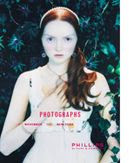
This sale has echoes of Phillips' other recent photographs sales, as it is bookended by a further installment of Mapplethorpe prints from Lisa Lyon's collection, as well as another sampler of vintage Japanese work from the Jacobson/Hashimoto collection. In the middle, a selection of images (many celebrity/fashion) by Albert Watson can be found. There are a total of 294 photography lots on offer, with a Total High Estimate of $3461100. (Catalog cover at right, via Phillips.)

Here's the breakdown:

Total Low Lots (high estimate up to and including $10000): 203
Total Low Estimate (sum of high estimates of Low lots): $1121100

Total Mid Lots (high estimate between $10000 and $50000): 81
Total Mid Estimate: $1655000

Total High Lots (high estimate above $50000): 10
Total High Estimate: $685000

The top lot by High estimate is lot 105, Thomas Ruff, Nude ox03, 2006, at $60000-80000.

Here is a short list of the photographers who are represented by three or more lots in the sale (with the number of lots in parentheses):
.
Robert Mapplethorpe (14)
Albert Watson (11)
William Eggleston (10)
Iwao Yamawaki (8)
Horst P. Horst (7)
Shikanosuke Yagaki (7)
Ansel Adams (6)
Nobuyoshi Araki (5)
Diane Arbus (5)
Peter Beard (5)
Larry Clark (5)
Patrick Demarchelier (5)
Yasumasa Morimura (5)
Koyo Okada (5)
Minayoshi Takada (5)
George Tice (5)
Joel-Peter Witkin (5)
Bill Brandt (4)
Nan Goldin (4)
Irving Penn (4)
Sebastiao Salgado (4)
Wolfgang Tillmans (4)
Berenice Abbott (3)
Helena Almeida (3)
Edward Burtynsky (3)
Henri Cartier-Bresson (3)
Emmet Gowin (3)
Sally Mann (3)
Thomas Ruff (3)
Flip Schulke (3)
.
For our particular collection, there are a few lots that caught our eye. They include:
.
Lot 210 Dennis Hopper, Double Standard, 1961
Lot 244 Edward Weston, Nude, 1927 (at right, bottom)
Lot 289 Iwao Yamawaki, On the street, Germany, 1930s (at right, middle)

The complete lot by lot catalog can be found here.

Photographs
November 14th

Phillips De Pury & Company
450 West 15 Street
New York, NY 10011

Monday, November 9, 2009

Mariah Robertson, I Am Passions @Marvelli

JTF (just the facts): A total of 17 works, framed in white with no mat, and hung in the single room main gallery space. There are 3 gelatin silver prints, 7 c-prints, and 7 photograms; all of the prints are unique (not editioned). Sizes range from approximately 14x11 to 56x48; many are 24x20. All of the works were made in 2009 and are untitled. (Installation shots at right.)
.
Comments/Context: For the taxonomists and list makers out there, it is clear that one large wing of the world of contemporary photography can be labeled "process"; under this title would fall all of the photographers who have dug into any number of image making techniques and explored the edges of what the old school combination of light and chemicals can produce. Under "process", we might further divide the huge pile into those who are interested in photograms, or camera obscura images, or collaged found images, or multiple negatives, or chemical chance and manipulation in the darkroom (and on and on from there).
.
Mariah Robertson is yet another young photographer who has looked deeper into process, but she is the first that I have come across who has really destroyed the physical boundaries of these individual technical disciplines and mashed them together in single, densely layered almost sculptural works. Working on long rolls of paper (that are later roughly cut apart), she alternates between contact printing, enlargements, and photograms, one on top of the other, with the chemicals that underpin each one mixing together in an unexpected stew.
.
The works in the show offer a theme and variation experience; certain motifs arise again and again, in different combinations and colors: 3D cubes, boxes, grids and other 80s era computer graphics (some apparently drawn from quilt patterns), silhouetted palm trees and leaves, and rephotographed male nudes. These subject matter themes are then mixed with saturated colors and chemical drips to generate contrasts, irregularities, and filters. There are certainly parallels here to Robert Rauschenberg's use of silkscreening and additional over painting to get his collaged combines; the processes in this case are variously photographic, but the strata of juxtaposed symbols are related.
.
For works like these, the question then becomes: did the string of chance elements and image snippets somehow come together into something visually striking and thought provoking? I think the answer is "sometimes"; for the best of the experiments, the overlapping layers of imagery create striking patterns from afar and still work as interconnected all-over collages up close. In others, the randomness is more chaotic and the relationships between objects is more obscure; the "artfulness" trumps the content. It will be interesting to see where these processes take Robertson in the future, as she seems to be standing amidst the rubble of the broken walls between long discrete approaches to photographic picture making.
.
Collector's POV: The prints in the show are priced between $2400 and $7500 based on size, with many at $3000. This is Robertson's first show with Marvelli Gallery; she was previously represented by Guild & Greyshkul, which is now closed. Her work has not yet made it to the secondary markets in any real way, so gallery retail will be the only follow-up option for interested collectors.

Rating: * (one star) GOOD (rating system described here)

Transit Hub:
  • Artist site (here)
  • Reviews: Artforum (here, scroll down), NY Times (here, scroll down)
Mariah Robertson, I am Passions
Through November 14th
.
Marvelli Gallery
526 West 26th Street
New York, NY 10001

Rinko Kawauchi, Condensation @Mountain Fold

JTF (just the facts): A total of 34 color images and 1 video, displayed in a small, one-room gallery space. 29 of the images (all c-prints, mounted on Plexiglas) have been hung in an uneven installation across several walls, clustered together in varying sizes without frames. The other 5 images are much larger and have been traditionally framed in white with no mat. All of the works are printed in editions of 3, except 2 of the large prints, which are in editions of 6. The images come in three sizes, irrespective of their size in the installation: small (10x10 or 8x12), medium (20x20 or 20x23), and large (40x40 or 30x45). The show is a mix of old and new work, going back to 2006. The color video runs 20 minutes, and is as yet untitled. (Installation shots at right.)

Comments/Context: Rinko Kawauchi's photographs are deceptively simple. At first glance, they are easily mistaken for fleeting snapshots of unassuming moments and everyday objects: a flower in the rain, a tree trunk, a bag of gold fish, a squirt gun, the tail lights of a car, a waterfall, a baby nursing, an empty swing, or a glittering diamond. Seen together in this installation, these modest images take on a different character; they are like a breath of fresh air, a life affirming and wholly original look at the natural cycles around us.
.
In an age where photography has often become weighed down in conceptual frameworks, depressing realities and ironic commentaries, Kawauchi's work is remarkably guileless; it is light and optimistic, even in moments of melancholy or meditation, with a child-like openness to exploring the world. Many of the images share an enveloping bright glare (not harsh but somehow soft), natural light pouring out of the pictures, obscuring their details. Others have an uncorrupted clarity, an overlooked fragment of life suddenly coming into view. The video takes this same aesthetic and applies it to movement (via snippets of film): ants in a hole, a bubbling hot pot, kids playing soccer, a helicopter taking off, crowds on the street, wind across dunes, a hair band of colored marbles, fans at a stadium, koi being fed in a pond, a child playing with a flashing toy. Perfectly commonplace moments are somehow connected via a surplus of attention; it's as if Kawauchi is noticing the wonders of these things for the very first time.
.
Not every image in this show is truly able to hold its own as a stand alone object (or deserves to be blown up to 40x40), but when these works are placed together in groups or clusters, they function well in creating an overall mood. Kawauchi has a singular point of view, extraordinary in its simplicity and lightness, a surprisingly refreshing foil to the dominant trends in the medium.

Collector's POV: Prices in this show are based on size: the smallest prints are $3500, the medium ones are $6500, and the large prints are $10000. Kawauchi was previously represented by Cohan and Leslie in New York, which is now closed; I don't believe this show signals a new permanent relationship. Until her representation is re-established in New York, her work can also be found at FOIL Gallery in Tokyo (here). Kawauchi's work has only recently entered the secondary markets; with just a handful lots sold (in various sizes), it is hard to draw much pricing history from these few data points.
.
Rating: * (one star) GOOD (rating system described here)

Transit Hub:
  • ICP Infinity award, 2009 (here)
  • Interview: Kopenhagen, 2006 (here)
  • Aila exhibit @UCR, 2004 (here)
Through November 28th
.
Mountain Fold Gallery
55 Fifth Avenue
New York, NY 10003

Friday, November 6, 2009

The Edge of New York: Waterfront Photographs @MCNY

JTF (just the facts): A total of 39 black and white and color images hung in a hallway display area and side viewing room on the second floor. The 20 contemporary prints (from 2002-2005) are framed in white and matted and hung in the hallway space; the 19 vintage images (from 1935-1949) are framed in black and matted and hung in the adjacent room. The exhibit was curated by Sean Corcoran. (Marginal installation shots at right.)

The following photographers are included in the exhibit, with the number of images on view in parentheses:

Berenice Abbott (5)
Diane Cook (10)
Andreas Feininger (7)
Len Jenshel (10)
David Robbins (7)

Comments/Context: I give the Museum of the City of New York quite a bit of credit for working hard to find ways to stay relevant and fresh. Given its historical collection of New York ephemera, it's only real option is to build connections between the past and the present. This small show of waterfront photographs does just that: it juxtaposes older photographs from the permanent collection with contemporary works of the same subject matter, a sort of "before" and "after" comparison of docks and wharfs, a time travel lesson on how these areas have evolved over the years.
.
The show begins in the side room, with groups of pictures by Andreas Feininger, Berenice Abbott, and David Robbins from the 1930s and 1940s. This was the boom time for the New York waterfront, with busy docks and piers full of longshoremen, bustling fish markets and boat yards, and big ships being helped along by tugboats; trade via the waterfront was the city's economic engine. Most of the images have a gritty WPA/FSA realism, with a touch of simple Modernist composition.
.
The contemporary view of the waterfront is altogether different: for the most part is an abandoned and decaying wasteland, in some places being "revitalized" and redeveloped for new uses. While big containers do enter and pile up at the port facility, there are plenty of lonely piers, ship graveyards and overgrown weeds nearby. The husband and wife team of Cook (in black and white) and Jenshel (in color) have documented this post-industrial environment with an eye for hidden beauty and unlikely romance: bright fireworks in the sky, artfully decomposing ferry posts, dark steel skeletons reflected in the water, and the underside of George Washington bridge lit up at night.
.
Taken together, the two groups of works provide an interesting contrast in both content and style, and remind us of a continuing thread in the history of the city.

Collector's POV: The vintage material in this show strays away from the usual images, and dives deeper into the work of both Abbott and Feininger, digging out some lesser known pictures of the waterfront. Prior to the show, I was completely unaware of David Robbins, but his "Along the Waterfront" project from the 1930s seems to merit some further investigation.
.
Diane Cook and Len Jenshel are represented by Kathleen Ewing Gallery in Washington D.C. (here) and Joseph Bellows Gallery in La Jolla (here). Their work has not found its way into the secondary markets much (if at all), so gallery retail is likely the only option for interested collectors.
.
Rating: * (one star) GOOD (rating system described here)

Transit Hub:
  • Cook/Jenshel artist site (here)
  • Review: NY Times Lens blog (here)
1220 Fifth Avenue
New York, NY 10029

Thursday, November 5, 2009

Legacy: The Preservation of Wilderness in New York City Parks, Photographs by Joel Meyerowitz @MCNY

JTF (just the facts): A large show comprising two sets of prints: 1.) a total of 74 color images, framed in white with no mats, hung in groups (organized by NYC borough) in a large gallery space with a center wall divider, and 2.) a group of 13 extra large scale color works printed on Tyvek, and hung as wavy tapestries in the first two rooms of the exhibition (several are also printed directly on divider screens and one is mounted on the floor.) All of the images were taken between 2006 and 2009. The regular pigment prints come in a variety of sizes, including panoramas; the smallest prints are often hung in pairs, two high. (Marginal installation shots at right.)

Comments/Context: I think Joel Meyerowitz' big show of images from New York City's many parks caught me a bit off guard; it wasn't what I was expecting, and as a result, I found myself wandering through the galleries with questions bouncing around in my head. The punch line is that I think this show is less about the art and more about the parks, so my frame of reference was meaningfully out of kilter.

As you enter the exhibit, you are engulfed in a small room with floor to ceiling waterscapes of the Bronx River in various seasons, covering every inch of the space, including the floor (see picture at right, top). While these are photographs, they are printed on non-traditional surfaces and materials, making them feel a bit like trade show decor rather than art. The second room continues with these huge fabric images, now mostly of specimen trees, albeit in a more traditional gallery like setting, adorned with park benches (see picture at right, middle). While this two room prelude certainly succeeds at being both unexpected and eye catching, I was left a little perplexed by its kitchy theatricality.


The main gallery spaces bring you back down into the traditional world of a museum, with normal sized images hung in frames on white walls. The exhibit is organized by borough (Manhattan, the Bronx, Brooklyn, Queens, Staten Island), and depicts the various parks in those locales, across the seasons.

One of the first questions that I began to consider when seeing these images was "what is a park anyway"? There are no grand Ansel Adams vistas here, no majestic mountains, broad canyons, or sinuous deserts. These are straightforward, mostly deciduous forests (common across the Northeast), often connected to local waterways, and hemmed in by urban sprawl. Much of the landscape depicted is new growth forest; there are lots of spindly young trees recapturing land that was once cleared, making it "wilderness" once again. These are close-up spaces that have been protected against the thundering herds of humanity that threaten to overrun them; some are open for public use, while others are hidden and left generally alone. They all provide opportunities for residents to get out of the concrete canyons and spend time in "nature", although that word seems to have a relatively broad definition in these pictures; while there are plenty of glimpses of beauty on view here, there are also odd juxtapositions, boring and mundane views, and more than a few remnants of human alterations left behind to rot.

Which brings me to the second question in my head: "what is landscape photography in the 21st century"? Meyerowitz' images of NYC parks are surprisingly lacking in a common view point. In some pictures, there are the astonishing colors and delicate compositions of Eliot Porter, unfortunately veering into the realms of calendar art from time to time. In others, we see the sawed off tree trunks, worn ruts, and ugly remains of Robert Adams, reminding us of how we have carelessly destroyed many of these pristine environments. Still others have the claustrophobic feel of Lee Friedlander's dense thickets, overgrown with vines and underbrush. And a few have the subtle grace of Joel Sternfeld's landscapes, images taken with the knowing eye of a local, who can appreciate the nuances of change across the seasons, even in unspectacular terrain. Where Meyerowitz was in all this was harder to discern; while the good and bad of the subject matter certainly had an impact on the options the photographer had for making the pictures, I had a hard time finding Meyerowitz' own point of view in this exhibit.

As a stood in the galleries, I heard several other visitors proudly exclaim "I've been there!" and I think this is actually the keystone for appreciating this show; for folks who live in New York, this exhibit will end up being less about Joel Meyerowitz and his particular artistic vision for the landscape form, and more about the parks themselves and the various experiences they offer to visitors. Many of us will discover new places to explore, or be reminded of places we haven't been in years and should go back to. In this way, the show is quite satisfying; it succeeds in reintroducing the land to its inhabitants. As memorable art, I'm not sure it rates quite so highly; while these images are undeniably well crafted, I think the only way these pictures stand up to the tests of the canon of great landscape photography is if we redefine what the genre is based on the realities of our current time, placing a greater weight on those pictures which tell the ongoing story of the coexistence of land and man.

Collector's POV: Joel Meyerowitz is represented by Edwynn Houk Gallery in New York (here). Meyerowitz' work is routinely available in the secondary markets, dominated by prints made in large editions (75 or even 100) of his 1970s images, particularly his series of porches on Cape Cod. Prices have typically ranged from $1000 to $14000, mostly on the lower end of that range. I have heard several times from different people over the past year or so that there is a movement afoot to "reposition" Meyerowitz, putting more emphasis on his early street work and his relationship to other early adopters of color. How that relates to this current body of landscape work is less clear.

.

Rating: * (one star) GOOD (rating system described here)

Transit Hub:

  • Artist site (here)
  • Aperture book (here) and box set (here)
  • New York City Department of Parks and Recreation site (here)

Museum of the City of New York
1220 Fifth Avenue

New York, NY 10029

Auctions: Contemporary Art, Parts I and II, November 12 and 13, 2009 @Phillips

Phillips is last in line in the Contemporary Art sales this Fall season. While the two sales have Phillips' usual complement of fresh contemporary work, there are few "lightning rod" pictures on offer; many top names are represented, but the works available are mostly second tier. There are 5 photographic lots in Part I (Evening); the rest of the contemporary photographs can be found in Part II (Day). There are a total of 60 photography lots for sale across the two auctions, with a Total High Estimate of $2436000. (Catalog covers at right, via Phillips.)

Here's the breakdown:

Total Low Lots (high estimate up to and including $10000): 18
Total Low Estimate (sum of high estimates of Low lots): $129000

Total Mid Lots (high estimate between $10000 and $50000): 36
Total Mid Estimate: $927000

Total High Lots (high estimate above $50000): 6
Total High Estimate: $1380000

The top lot by High estimate is lot 8, Richard Prince, Untitled (four women with their backs to the camera), 1980, at $400000-600000.

Here is a short list of the photographers who are represented by more than one photo lot in the two sales (with the number of lots in parentheses):
.
Matthew Barney (3)
Paul McCarthy (3)
Richard Prince (3)
Cang Xin (2)
Gregory Crewdson (2)
Hai Bo (2)
David LaChapelle (2)
Vik Muniz (2)
Andres Serrano (2)
Wolfgang Tillmans (2)
Massimo Vitali (2)

There really aren't any perfect fits for our particular collection in this sale. I did however enjoy the Gerhard Richter overpainted photograph, lot 112, Untitled (20.2.96), 1996.
.
The complete lot by lot catalogs can be found here (Part I) and here (Part II).
November 12th

November 13th
450 West 15 Street
New York, NY 10011

Auction: Photographs, November 10, 2009 @Bloomsbury London

Bloomsbury's upcoming London Photographs sale is a lower end mix of mostly lesser known vintage material, with a handful of photo books thrown in for good measure. While there are very few stand out contemporary works on offer, there will almost certainly be some bargains to be found here (the vast majority of lots have a high estimate of £2000 or lower). There are a total of 239 lots on offer, with a Total High Estimate of £470500. (Catalog cover at right, via Bloomsbury.)

Here's the breakdown:

Total Low Lots (high estimate up to and including £5000): 225
Total Low Estimate (sum of high estimates of Low lots): £324500

Total Mid Lots (high estimate between £5000 and £25000): 13
Total Mid Estimate: £118000

Total High Lots (high estimate above £25000): 1
Total High Estimate: £28000

The top lot by High estimate is lot 230, Hiroshi Sugimoto, Mediterranean Sea, Crete, 1990, at £22000-28000.

Here is a short list of the eclectic group of photographers who are represented by four or more lots in the sale (with the number of lots in parentheses):

Willy Ronis (10)
Osvaldo Salas (9)
Elliot Erwitt (6)
Thurston Hopkins (5)
Bob Willoughby (5)
Jack Eden (4)
Cornel Lucas (4)
Steve Pyke (4)
Chris Steele-Perkins (4)
Antanas Sutkus (4)

While this sale doesn't have too many works that fit well with our collection, the cover image, lot 222 Irving Penn, Lily Melridge, New York, 1971/2007, would certainly match nicely with our other florals.

The complete lot by lot catalog can be found here. A 3D version is also available.

Photographs
November 10th

Bloomsbury Auctions
24 Maddox Street
Mayfair
London WS1 1PP

Wednesday, November 4, 2009

Auctions: Contemporary Art Evening and Day Sales, November 11 and 12, 2009 @Sotheby's

Sotheby's Contemporary Art Evening and Day sales follow directly on the heels of those at Christie's this season. There is only one photographic lot in the Evening sale (a Baldessari); the rest of the contemporary photographs can be found in the Day sale. Quite a few of the images up for sale come from the collection of Martin Margulies (here). There are a total of 55 photography lots on offer across the two sales, with a Total High Estimate of $4139000. (Catalog covers at right, via Sotheby's.)

Here's the breakdown:

Total Low Lots (high estimate up to and including $10000): 0
Total Low Estimate (sum of high estimates of Low lots): NA

Total Mid Lots (high estimate between $10000 and $50000): 32
Total Mid Estimate: $859000

Total High Lots (high estimate above $50000): 23
Total High Estimate: $3280000

The top lot by High estimate is lot 40, John Baldessari, Life's Balance, 1986, at $300000-400000.
.
Here is a short list of the photographers who are represented by more than one photo lot in the two sales (with the number of lots in parentheses):
.
Hiroshi Sugimoto (5)
Thomas Struth (4)
Rineke Dijkstra (3)
Andreas Gursky (3)
Candida Hofer (3)
Florian Maier-Aichen (3)
Vik Muniz (3)
John Baldessari (2)
Bernd and Hilla Becher (2)
Thomas Demand (2)
Philip-Lorca DiCorcia (2)
Andres Serrano (2)
Zhang Huan (2)
.
For our collection, we'd likely choose lot 312, Bernd and Hilla Becher, Industrial Facades, 1998.

The complete lot by lot catalogs can be found here (Evening) and here (Day).

November 11th

November 12th

1334 York Avenue
New York, NY 10021