Friday, November 9, 2012

Abelardo Morell: Rock, Paper, Scissors @Benrubi

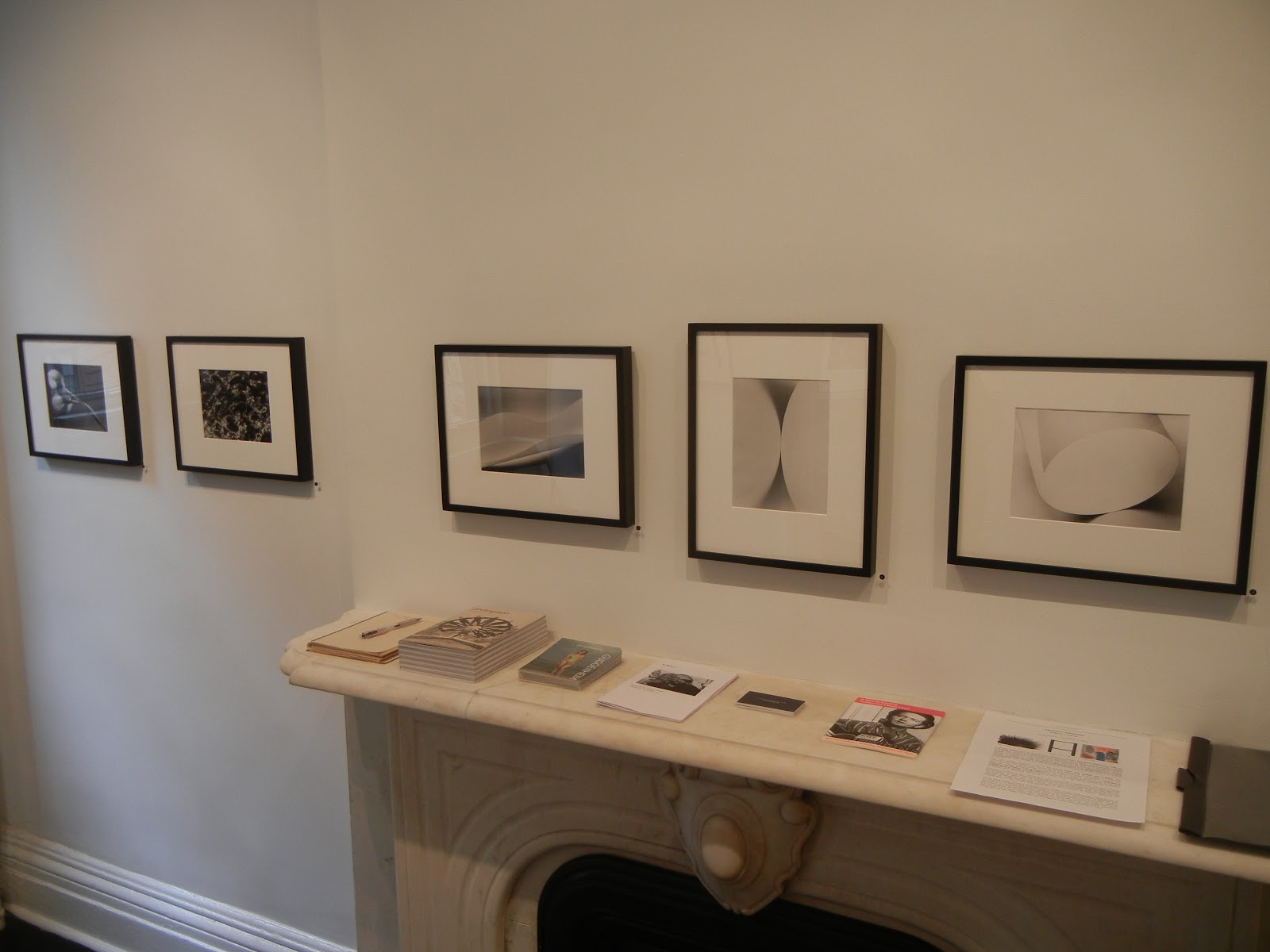
JTF (just the facts): A total of 15 large scale photographs, framed in black and unmatted, and hung in the entry area, the main gallery space, and a smaller side room painted blue. All of the works are archival pigment ink prints, made in 2011 and 2012. The images are available in three sizes, with varying edition sizes depending on whether the works are in color or in black and white: 24x30 (in editions of 10 for color and 8 for black and white), 30x40 (in editions of 8 and 6), and 50x60 (in editions of 6 and 4). There are 2 works in the smallest size, 9 in the middle size, and 4 in the largest size on display. (Installation shots at right.)

Comments/Context: This show brings us up to date with Abelardo Morell's most recent work, bringing together images from three distinctly separate photographic projects. In the past two years, Morell has clearly been busy: out on the road with his ingenious tent camera, in the studio making meticulous cut paper collages, and in the darkroom playing with water drop photograms.

While Morell has been working with his periscope tent camera for a few years now, I think the these textural landscapes continue to get better and better. I like the combined experience of the picture postcard views and the rougher reality of the physical location of the viewer: the iconic silhouette of the Golden Gate Bridge is decorated with scrubby weeds, star-shaped dandelions and hard packed dirt, while the epic grandeur of the Grand Canyon is underlaid with a rock slab and loose scree. The two simultaneous views outward and downward are flattened together, with recognizable landmarks like Old Faithful and Yosemite Falls interrupted by rocky gravel, pine needles, and delicately strewn flower petals. It's as though the images have been hand painted out of the ordinary, overlooked path around your feet; they're "grounded" in more ways than one.

Back in the studio, Morell has been channeling Frederick Sommer and MC Escher, picking apart 18th century Piranesi etchings and creating complex collaged fantasies of buildings made of impossible colonnades and swirling vortices of prisons and architectural facades. His book plate constructions play with perspective and angle, twisting and clashing in crisp black and white. Morell's photograms have a more Berenice Abbott scientific feel, with water droplets shaped into a perfect triangle and transformed into a starry landscape of tiny round bubble orbs. Human profiles make appearances in both projects, a negative space self portrait is pushed into a ream of white paper, while another face is gently arced in water bubbles.

What holds these three bodies of work together is an interest in both the edges of photographic texture and the underpinnings of process. Morell displays craftsmanlike control over his varied tools, seemingly at ease with any combination of image making methods. Overall, this show is strong evidence of an artist actively and successfully exploring multiple complementary approaches and thought patterns, rather than being satisfied with following just one.

Collector's POV: The prints in this show are priced as follows. The color works are $11000 each (24x30), $17000 each (30x40) or $24000 each (50x60); the black and white works are $5000 each (24x30), $9000 each (30x40) or $16000 each (50x60). Morell's work has become more consistently available in the secondary markets in recent years, with prices at auction ranging between $2000 and $17000.

Rating: * (one star) GOOD (rating system described here)
 
Transit Hub:
  • Artist site (here)
  • Features/Reviews: TimeOut New York (here), The Two Percent (here), NY Photo Review (here)
Through December 22nd

Bonni Benrubi Gallery
41 East 57th Street
New York, NY 10022

Thursday, November 8, 2012

The Checklist: 11/8/12

Current New York Photography Shows
New reviews added this week in red.
(Rating: Artist/Title: Venue: Closing Date: link to review)

Uptown

No reviews at this time.

Midtown

ONE STAR: Ray K. Metzker/Ruth Thorne-Thomsen: Laurence Miller: November 17: review
ONE STAR: New Photography 2012: MoMA: February 4: review
TWO STARS: The Shaping of New Visions: MoMA: April 29: review

Chelsea

No reviews at this time.

SoHo/Lower East Side/Downtown

TWO STARS: Tina Barney: Janet Borden: November 21: review

Elsewhere Nearby

No reviews at this time.

Forward Auction Calendar
New auctions added this week in red.
(Sale Date: Sale Title: Auction House: link to catalog)

November 8: Photographs (London): Phillips de Pury: catalog
November 12: Andy Warhol (New York): Christie's: catalog
November 13: Photographies Collections et Propositions (Paris): Millon: catalog
November 13: Contemporary Art Evening (New York): Sotheby's: catalog
November 14: Contemporary Art Day (New York): Sotheby's: catalog
November 14: Post-War & Contemporary Art Evening (New York): Christie's: catalog
November 15: Post-War & Contemporary Art Morning (New York): Christie's: catalog
November 15: Post-War & Contemporary Art Afternoon (New York): Christie's: catalog
November 15: Contemporary Art Evening (New York): Phillips de Pury: catalog
November 16: Contemporary Art Day (New York): Phillips de Pury: catalog
November 16: Photographies (Paris): Sotheby's: catalog
November 16/17: Photographies (Paris): Christie's: catalog
November 17: Photographs Signature Auction (New York): Heritage: catalog
November 23: Photographs (London): Bloomsbury: catalog
November 23: 7th Photo Auction (Vienna): WestLicht: catalog
November 28: Modern and Contemporary Photographs (Berlin): Villa Grisebach: catalog
November 29: Photographie (Cologne): Lempertz: catalog

Wednesday, November 7, 2012

New Photography 2012 @MoMA

JTF (just the facts): A group show of the work of six contemporary photographers (4 individuals and 1 partnership), variously framed and matted, and hung in a divided two room gallery on the 3rd floor. The exhibit was curated by Eva Respini. (Installation shots at right.)
 
The following photographers have been included in the show, with the number of works on view and image details in parentheses:
  • Michele Abeles: (9 pigmented inkjet prints, framed in white and unmatted, from 2009-2012)
  • Birdhead (Ji Weiyu and Song Tao): (1 group of 71 gelatin silver prints, tacked directly to the wall in a grid, overlaid with 8 additional photographs set in mahogany frames, from 2012)
  • Anne Collier: (4 chromogenic color prints, framed in white and unmatted, from 2009-2012)
  • Zoe Crosher: (1 group of 11 chromogenic color prints (including 1 set of 15 images mounted together), mostly framed in white with no mat (two are mounted and unframed), from 2012)
  • Shirana Shahbazi: (4 chromogenic prints, 3 gelatin silver prints, and 1 wallpaper lithograph with applied pigment, framed in white/black and unmatted, from 2011-2012)
Comments/Context: This year's annual roundup of new photography at the MoMA follows in the footsteps of its predecessor and opts for inclusive diversity as its overriding theme. Given the explosion of image making triggered by the digital revolution and coupled with the loosening definitions and boundaries of the medium, this would seem like a safe and prudent choice. But with today's backdrop of tumultuous innovation and risk-taking experimentation, I have to say I was surprised at how dull and expected this show is. It covers bases and samples styles (especially those with a conceptual bent), but ultimately fails to get out to the edges and bring back something fresh and brilliant.
 
In my view, the overwhelming standout in this show is Michele Abeles. What's exciting about her work is that it both collapses several discrete genres (nude, still life, studio staging) and throws the results into the digital mixer, flattening out the space and cutting it into misaligned strips and layers. Odd juxtapositions of male bodies, plywood, printed fabrics, potted plants, wine bottles, engineering drawings, and colored filters lead to puzzlingly complex groupings, which are then further upended by digital stitching and rework, creating woven plaids and jittering lines of image fragments. I like the clash of ideas in these pictures, as well as the smart integration of digital wizardry; the photographs feel like the beginnings of something truly original and invigorating.
 
The other four bodies of work are all accomplished, of course, but don't really offer wildly compelling or particularly new paths forward. Anne Collier sharply recontextualizes printed ephemera (album covers, magazine ads, a MoMA event calendar with a Weston nude), forcing the viewer to reconsider embedded stereotypes and biases. Zoe Crosher immerses herself in the appropriated archive of a 1970s woman, rephotographing and altering her subject's Mae West poses and fantasy lives in a Cindy Sherman-esque study of identity. Birdhead furiously snaps offhand black and white images of the vitality of everyday Shanghai, finding the energy of self-centered youth in a city of bridges, TV towers, and palm trees. And Shirana Shahbazi pairs commercial-style abstractions in bold color with the parallel visual motifs of a jagged mountain or a diver in flight.
 
So while this show certainly covers many of the key themes in today's photographic dialogue (it's all appropriately "on trend"), the overall feeling of the exhibit is more like a checklist of the topics we're supposed to be discussing rather than a discovery or championing of groundbreaking ideas. As we might expect, there's China, and appropriation, and archives, and digital manipulation, and image proliferation, and commercial approaches, and crossing medium boundaries, but aside from the impressive chaos of Michele Abeles, much of the output is less than memorable.
 
Collector's POV: Given this is a museum show, there are of course no posted prices. The photographers in the exhibit are represented by the following galleries:
  • Michele Abeles: 47 Canal (here)
  • Birdhead: ShanghART Gallery (here)
  • Anne Collier: Anton Kern Gallery (here)
  • Zoe Crosher: Perry Rubenstein (here)
  • Shirana Shahbazi: Galerie Bob Van Orsouw (here)
None of these artists has any meaningful history in the secondary markets, so gallery retail will likely be the best option for those collectors interested in following up.

Rating: * (one star) GOOD (rating system described here)
 
Transit Hub:
  • Exhibition site (here)
  • Features/Reviews: New Yorker (here), Time LightBox (here), New Yorker PhotoBooth (here), Capital New York (here)
  • Michele Abeles artist site (here)
  • Zoe Crosher artist site (here)
Through February 4th 
 
11 West 53rd Street
New York, NY 10019

Tuesday, November 6, 2012

Ray K. Metzker and Ruth Thorne-Thomsen, Two of a Mind @Laurence Miller


JTF (just the facts): A two artist show containing a total of 40 black and white photographs by the husband and wife pairing of Ray K. Metzker and Ruth Thorne-Thomsen. The works are framed in white or blond wood and matted, and hung against white walls in the entry space and main gallery area. All of the photographs by Metzker (there are 23) are from the series Pictus Interruptus and are displayed in the main gallery space. They are vintage gelatin silver prints made between 1976 and 1981, sized either 11x14 or 16x20, and available in editions of 5, 15, 20, 25, or 30. The works by Thorne-Thomsen (there are 17) are from four different series: Expeditions, Door, Prima Materia, and Songs of the Sea and are on view in the entry area. They are toned vintage gelatin silver prints, sized 4x5, and available in editions of 25. (Installation shots at right.)

Comments/Context: While the premise of this show is that there are connections and relationships between the photographs of Ray K. Metzker and Ruth Thorne-Thomsen, the reality is that these are two very different bodies of work and aesthetic sensibilities. Yes, the two artists are married to each other, and yes, both have placed objects in front of the camera in these particular images, but that's where the superficial similarities end I think.

Metzker's Pictus Interruptus series is a masterful study of flat, two dimensional abstraction. Starting with something vaguely identifiable (a street sign, a gutter, a parking lot, a city view, a set of stairs, a marble faced wall), he has then quickly waved a piece of paper, a face in a magazine ad, a folded edge, or some other perforated object through the image area, creating blurred frenetic forms that interrupt the compositions. When juxtaposed with the original views, lines and angles slash through the frame, bright white trapezoids and dark fields of dots cutting in front of the found shapes. The result is images that mix crispness and softness, hard edged geometry with the passing glance of a model's eyes. They're restlessly inventive, unexpected, and routinely engrossing.

Thorne-Thomsen's intimate pinhole photographs are dark and dreamlike, full of oversized surreal heads, floating airships, silhouetted figures, and broad sweeps of land. Female statues perch on columns engulfed in fog, a man made of dots stands on a rocky seashore, and a hot-air balloon hovers near the Leaning Tower of Pisa. While these fabrications are indeed fanciful and unreal, their mystery seems a little too obvious and self-conscious to me. They successfully conjure up a mythical world, but from my perspective, it was almost like the artist was trying a little too hard to be magical.

Overall, this show is a quirky pairing, held together by a simple bonds but largely non-competitive. I think the Metzker abstractions continue to be visually challenging and exciting (even three decades later), largely due to their smart understanding and manipulation of the way a camera sees.

Collector's POV: The works in this show are priced as follows. The Metzker prints range in price from $7500 to $25000, based on the place in the edition. The Thorne-Thomsen prints are $4000 each. Metzker's work has only been intermittently available in the secondary markets over the years; recent prices have ranged between $1000 and $23000. Thorne-Thomsen's prints have not yet reached the second markets, so gallery retail is likely the best option for those collectors interested in following up on her work.

Rating: * (one star) GOOD (rating system described here)

Transit Hub:
  • Review: New Yorker (here)
Ray K. Metzker and Ruth Thorne-Thomsen, Two of a Mind
Through November 17th

Laurence Miller Gallery
20 West 57th Street
New York, NY 10019

Monday, November 5, 2012

Tina Barney, Small Towns @Borden

JTF (just the facts): A total of 13 large scale color photographs, framed in black and unmatted, and hung against white walls in the divided gallery space. All of the works are chromogenic color prints, made between 2005 and 2011. The prints come in two sizes: 30x40 (or reverse) in editions of 5, and 48x60 (or reverse) in editions of 10; a couple of images have been printed even larger (70x88) and these prints are “included” in the 48x60 edition. A 6:55 minute video, entitled Tina Barney, Small Towns, runs on a monitor in the back room. (Installation shots at right.)

Comments/Context: Tina Barney’s photographs are nearly always built on small human nuances. Her pictures follow gestures, highlight overlooked details, chart invisible relationships and explore hidden emotional landscapes. At first glance, her pictures can seem offhand, but immersion in the details generally opens up something unexpected, where a knowing stare, the style of a piece of clothing, the distance between people, and the presence of a house all become the evidence of subtle but discernible social patterns.

While most of Barney’s previous photographs have centered on her intimate family and friends, her newest pictures find her wandering through nearby small towns, watching parades and historical reenactments, visiting farms, and interacting with strangers. Each scene tells the story of how we value traditions and customs, how we embrace small rituals that give our lives structure and meaning, and how we both present ourselves and see each other. Apparel and attire offer important clues: the howling wolf t-shirt and checkerboard skinny pants of a teenage bike rider, the standard issue red polo shirt and denim skirt of a bored waitress, the white shirt and black tie (collar unbuttoned) of a 4H kid showing off a rooster, and the slightly too long in the arms uniform of a marching band trumpeter waiting under a tree. Costumes are also a reminder of our shared history: the puffed out skirts and modest bonnets of young girls in a colonial reenactment, the tricorn hat and red, white, and blue coat of a serious boy from a fife and drum band standing stock still in a parking lot puddle, and the oversized striped bow and black silk parasol of a witchy Victorian woman standing in front of a cornfield. The best images in the show take these visual cues and surround them with even more elaborate found compositions: a young woman tries on a bridal dress, flanked by a triangle of blond flower girls, a tower of shoes, and a judgmental mother reflected in the mirror, and a grimacing farm kid does shoveling chores, his straight arms angling one way, the tilt of the falling down shed behind him going the other.

Even though Barney likely works fast with her large format camera, these pictures have just enough of a pause in them to let the scenes settle and come to rest. Her light touch “do what you were doing” staging ensures that her wall-sized tableaux stay firmly in the realm of reality, rather than veering off into overly contrived fiction. It is this attentive believability that makes the pictures successful for me; her photographs gently burrow into the in-between spaces in her subjects’ lives, uncovering the coded details that help explain who they are.

Collector's POV: The prints in this show are priced as follows. The 30x40 prints are $20000 each, while the 48x60/70x88 prints are $30000 each. Barney's work is remarkably absent from the secondary markets; very few prints have come up at auction in recent years. Prices have ranged from $3000 to $42000, but these data points may not be entirely representative of the real value of her work. As a result, gallery retail likely remains the best option for those collectors interested in following up.

Rating: ** (two stars) VERY GOOD (rating system described here)

Transit Hub:
  • Features/Reviews: New Yorker PhotoBooth (here), Time LightBox tumblr (here)
Tina Barney, Small Towns
Through November 21st

Janet Borden, Inc.
560 Broadway
New York, NY 10012

Monday, October 29, 2012

Brett Weston @Kasher

JTF (just the facts): A total of 73 black and white photographs, framed in black and matted, and hung against white walls in the divided North and South gallery spaces. All of the works are gelatin silver prints, made between 1920 and 1985. Most of the prints are vintage, and range in size from roughly 7x9 to 11x14 (or reverse). No edition information was available on the checklist. (Installation shots at right.)

Comments/Context: According to the press release, it's been more than a decade since the last time Brett Weston had a show in New York. The various galleries that have represented the estate have been skimming the cream off the archives for years now, so perhaps it was once again time for a set of fresh eyes to scour the flat files and storage boxes in search of some overlooked or under appreciated treasures. The exhibit that has emerged from this process has the thematic scope of a retrospective but with the feel of something slightly more jumbled and eccentric, with both known and unknown examples from sixty years of picture making densely mixed together on the walls.

Given his famous father, and even though Brett was appropriately labeled a child prodigy (and if you don't believe the label, search out the gnarled cypress trees made when he was 9 or the lily stalk from when he was 14, both on view here), I feel like Brett often gets taken for granted. Fairly or unfairly, his father's shadow is extremely long, and especially when they shot the same subject matter, it's nearly impossible to see Brett's work without making mind's eye comparisons to his father's. Brett was more routinely fond of high contrast, deeper blacks, and all-over abstraction (using natural forms), but crisp formalism and superlative, sometimes astonishing craftsmanship are never far from view, regardless of the subject matter and even when he drifts a little too far toward derivative cliche. This show includes a little of everything: dunes, cacti, and California desert landscapes, New York bridges, buildings, storefronts and city streets from the 1940s, vegetal forms and specimen trees from various locales, and visual abstractions made from ice, mud, rock formations, water drops, and smeared paint. In Brett's hands, climbing vines, air vents, hub caps, scrubby yucca, vertical poplars, and a black window, they all become bold sculptural motifs, and he had strong eye for compositions that were simultaneously pared down and complex.

Regular readers here will know I'm a lover of strict chronology, since I think it helps clarify how an artist has changed over time, so few will be surprised that I found the subject matter groupings here less effective in terms of showing Brett's overall aesthetic evolution. Many of his images also have the emotional volume turned up a notch or two via extended contrast, so they feel a bit cramped and manic when hung so close together as they are here. I'm guessing that this a result of wanting to unearth as many gems as possible, at the expense of giving the photographs more competition from their neighbors and a little less room to breathe.

In general, while this show doesn't teach us anything particularly new about the career of Brett Weston, I certainly enjoyed seeing such a robust sampler of his vintage work. Fans of 20th century Modernism and black and white excellence will find much to admire.

Collector's POV: The prints in the show are priced between $4000 and $20000, with most under $10000. Brett Weston's prints are routinely available in the secondary markets. Recent prices have ranged between $1000 and $66000, with the vast majority finding buyers under $10000.

Rating: * (one stars) GOOD (rating system described here)

Transit Hub:
  • Brett Weston archive (here)
Brett Weston
Through November 3rd

Steven Kasher Gallery
521 West 23rd Street
New York, NY 10011

Friday, October 26, 2012

Robert Adams, On Any Given Day in Spring and Light Balances @Marks

JTF (just the facts): A total of 75 black and white photographs, framed in white and matted, and hung against white walls in the main gallery space and a smaller second room in the back. All of the works are made up of gelatin silver prints, made between 2002 and 2012. There are single images, diptychs, triptychs, and groups of 4 prints. There are a total of 19 works (made up of 50 individual prints) in the main room from the series Light Balances, and a total of 13 works (made up of 25 individual prints) in the back room from the series On Any Given Day in Spring. Individual prints range in size from roughly 5x8 to 8x12 (or reverse). All of the works are unique. (Installation shots at right.)
 
Comments/Context: Robert Adams' newest photographs are works of slow motion patience. Drained of the simmering frustration that inhabits much of his earlier work, these recent pictures are among his most meditative and subdued. They settle in for a long attentive look, letting the distractions of the day melt away and a heightened sense of respectful engagement with nature come forward.
 
Adams wanders through the Oregon forest in the images from Light Balances. Grouped into small bunches, they have the pace and rhythm of an ambling hike, with new views of the woods around each turn of the trail. The dense leaves and evergreens provide a backdrop for a study in the endless variation of sunlight and shadow. Adams peers through the canopy at silhouettes, examines the mottled surface of the forest floor, follows dark pinpricks of light through the undergrowth, and watches as the light turns trunks into imposing vertical forms. The pictures move in and out, catching a burst of light in an otherwise shaded glen, or waiting in the cool cover while the sun illuminates a nearby grove. The photographs play with collapsed distance and layered, overlapping branching, often looking gently up into a mixture of dappled, crisscrossing blackness.
 
The On Any Given Day in Spring series finds Adams on the Washington coast, watching the shorebirds peck at the sand as the waves move in and out. Between the sea, the sky, and the ever changing clusters of birds, these pictures are full of cycles and repetitions, following the peaceful cadences of nature. The flocks fly through the air in dark masses, wheel and spread, and settle into black bands on the beach. They gather in clusters, thin into dots, and soar into slashes against the muted grey of the seashore, leaving tiny footprints and tracks in the sand.
 
While I can certainly appreciate the richness and craftsmanship of these photographs, I think their hushed deliberateness makes them somewhat forgettable as individual artworks. Together, they are extremely successful at setting a mood and conveying a reflective mindset, but that intense absorption led me to daydreaming rather than specific engagement. In the end, in my mind, they all washed together into a wistful memory. Perhaps the answer is that these photographs will function better in book form, where their intimacy and delicacy can be savored more introspectively.
 
Collector's POV: The works in this show are priced as follows. The single image works range from $14000 to $17500, the diptychs from $25000 to $35000, the triptychs from $35000 to $40000, and the groups of 4 prints are $50000 each. Adams' photographs have become increasingly available in the secondary markets in the past decade, with prices ranging between $5000 and $87000.
 
Rating: * (one star) GOOD (rating system described here)
 
Transit Hub:
  • Features/Reviews: NY Times (here), New Yorker (here), ARTINFO (here)
  • Exhibit: The Place We Live, Yale University Art Gallery, 2012 (DLK COLLECTION review here)
Through November 3rd
 
523 West 24th Street
New York, NY 10011

Thursday, October 25, 2012

The Checklist: 10/25/12

Current New York Photography Shows
New reviews added this week in red.
(Rating: Artist/Title: Venue: Closing Date: link to review)

Uptown

ONE STAR: Artie Vierkant: Higher Pictures: October 27: review

Midtown

ONE STAR: Andres Serrano: Edward Tyler Nahem: October 26: review
ONE STAR: Judy Fiskin: Greenberg Van Doren: October 27: review
ONE STAR: Gordon Parks (Centennial): Howard Greenberg: October 27: review
TWO STARS: Gordon Parks (Ligon): Howard Greenberg: October 27: review
ONE STAR: Yasuhiro Ishimoto: Parker Stephenson: November 3: review
ONE STAR: Sally Mann: Edwynn Houk: November 3: review
TWO STARS: The Shaping of New Visions: MoMA: April 29: review

Chelsea

TWO STARS: Bernd and Hilla Becher: Sonnabend: October 27: review
ONE STAR: Robert Frank: Danziger: October 27: review
ONE STAR: Barney Kulok: Nicole Klagsbrun: October 27: review
ONE STAR: Richard Misrach: Robert Mann: October 27: review
ONE STAR: Lucas Samaras: Pace: October 27: review
ONE STAR: Shen Wei: Daniel Cooney: October 27: review
ONE STAR: James Welling: David Zwirner: October 27: review

SoHo/Lower East Side/Downtown

ONE STAR: Bruce Haley: Anastasia: October 26: review
ONE STAR: Sam Samore (1973): Team: October 27: review
ONE STAR: Daniel Joseph Martinez: Simon Preston: October 28: review
ONE STAR: Kate Steciw: Toomer Labzda: October 28: review

Elsewhere Nearby

THREE STARS: Robert Adams: Yale: October 28: review

Forward Auction Calendar
New auctions added this week in red.
(Sale Date: Sale Title: Auction House: link to catalog)

October 30: Photographs (New York): Bonhams: catalog
October 30: Photographs - Man Ray (Barcelona): Soler y Llach: catalog
October 31: Photographs (London): Christie's: catalog
November 5: Photographs (New York): Doyle: catalog
November 8: Photographs (London): Phillips de Pury: catalog
November 12: Andy Warhol (New York): Christie's: catalog
November 13: Photographies Collections et Propositions (Paris): Millon: catalog
November 16: Photographies (Paris): Sotheby's: catalog
November 16/17: Photographies (Paris): Christie's: catalog

Wednesday, October 24, 2012

Robert Frank, From the Penwick Foundation Collection @Danziger

JTF (just the facts): A total of 42 black and white photographs, framed in dark brown and matted, and hung against white walls in the two room gallery space. All of the works are gelatin silver prints (some vintage, some later), taken between 1949 and 1962. No physical dimensions or edition sizes were available on the checklist, but many of the prints looked to be roughly 9x13 (or reverse). All of the prints come from the Penwick Foundation Collection, which acquired them in 1978. (Installation shots at right.)
 
Comments/Context: This show brings together prints from three of Robert Frank's classic geographies (Paris, London/Wales, and America), mixing the known with the unknown in equal measure. Drawn from a single collection amassed in the late 1970s, the prints provide a concise, lively summary of Frank's photographic approach.
 
The handful of Paris pictures capture some of the city's romance (a box of tulips, a baguette-holding child, a couple taking a posed photo with the camera perched on a metal chair) without becoming overly saccharine. A burly weight lifter balancing a pole on his chin and a tiger at the zoo provide some unexpected grittiness. The London and Wales images are a parade of chauffeurs and fancy cars, flanked by serious men in long black coats and top hats. A perplexing flying dog, somehow hurled through a back alley courtyard, upends the upper class sense of decorum.
 
The back room contains images from Frank's travels through America, some of which found their way into The Americans, while others are more surprising and obscure. A sea of audience faces peer forward (with one hiding behind a program), a man holds an armful of quirky plastic dolls on a sidewalk, Park Avenue awnings cover a building with geometric precision, and the fins of a Cadillac poke out from the back of a Chicago parking garage. Better known images like the juxtaposition of Jesus and a beer drinking woman, the endless line of mailboxes, and the cigar smoking rodeo cowboy provide familiar anchor points for Frank's overall mood.


As a single owner collection, this group of Frank prints is certainly an impressive gathering; as a show, I'm not sure it really teaches us anything we didn't already know about the artist. That said, there's never anything wrong with seeing a well-edited selection of Frank's superlative photographs, and the few lesser known gems found here offer some unusual revelations.

Collector's POV: The prints in this show are priced between $25000 and $195000, with the majority under $40000. Frank's work is routinely available in the secondary markets, where recent prices have ranged between $5000 and $600000.

Rating: * (one star) GOOD (rating system described here)

Transit Hub:
  • Features/Reviews: New Yorker (here), Le Journal de la Photographie (here)
Robert Frank, From the Penwick Foundation Collection
Through October 27th

Danziger Gallery
527 West 23rd Street
New York, NY 10011

Tuesday, October 23, 2012

Richard Misrach, The Desert Cantos @Mann

JTF (just the facts): A total of 20 large scale black and white and color photographs, framed in white and variously matted/unmatted, and hung unframed against white walls in the main gallery space. 16 of the works are chromogenic dye coupler prints (1 has a laminate surface), made between 1984 and 1999. The other 4 works are vintage split-tone prints, made between 1975 and 1977. Physical dimensions generally range from 14x14 to 48x60; no edition information was available. (Installation shots at right.)

Comments/Context: Spanning more than 15 years, made up of literally hundreds of photographs, and divided into 20 separate and distinct thematic subsections, Richard Misrach's Desert Cantos were a huge artistic undertaking. Such a broad body of work can't possibly be jammed into a single gallery show without trade-offs, omissions, and sacrifices, and so what we have here is really more of a jumbled appetizer plate of Desert Cantos ideas rather than anything comprehensive or in-depth. These core images have been bracketed by a few early and a few more recent photographs, spreading the focus of the exhibit even wider. For those unfamiliar with Misrach, the show provides a succinct overview-style introduction to his output over three decades.

A preliminary scan of the gallery provides a striking sense of tone and color; Misrach's palette is full of expansive pastels and soft yellow sands. The intensity of a fire, the stillness of a flood, the wispy gradient of a massive sky or a clearing storm, all of these natural events are exercises in luscious color. But a closer inspection of the pictures opens up multiple lines of thinking beyond pure aesthetics: an abandoned atomic bomb pit, a burned out bus, a dead animal, a buried rocket, a deflated oversized globe (a Burning Man leftover), a Playboy magazine shot full of holes, these are the evidence of an active, not necessarily benign human presence in the desert. Misrach's famous image of the orange dining sets in the middle of the blistering white salt flats caps this sense of puzzling intervention in the unforgiving landscape.

The show also includes several early flash lit night images (palms, monumental rocks), a vast, tumultuous Golden Gate Bridge vista, and even one of the Louisiana pipeline photographs from the recent Aperture show, albeit on a much smaller scale (review here). These pictures provide a skeleton framework for Misrach's artistic evolution, perhaps overly simplified but at least offering a few reference points to help generate a continuum.

Overall, this little of this, little of that gathering is a solid reminder of the enduring strength of the Desert Cantos project. These pictures are now forever part of the history of the American landscape, still fresh and relevant even decades later.

Collector's POV: The prints in this show are priced as follows. The chromogenic dye coupler prints range in price from $12000 to $50000 (some are already sold), while the split-tone prints are either $22000 or $35000. Misrach's work is routinely available in the secondary markets, with prices ranging from roughly $2000 to $80000, with his newer, much larger prints at the top end of that scale. Misrach is represented in New York by Pace/MacGill Gallery (here) and in San Francisco by Fraenkel Gallery (here).

Rating: * (one star) GOOD (rating system described here)

Transit Hub:
  • Features/Reviews: Wall Street Journal (here), PDN Photo of the Day (here)
Through October 27th

Robert Mann Gallery
525 West 26th Street (new location)
New York, NY 10001

Monday, October 22, 2012

Lucas Samaras: XYZ @Pace

JTF (just the facts): A total of 17 large scale color photographs, mounted and unframed, and hung against white walls in the main gallery space and the smaller front room. All of the works are pure pigment on paper mounted on Dibond, made in 2012. Each print is sized 35x62 and is unique. The works come from four separate series: Flea (6 works), Pixel Cock & Bull (3 works), Chinoiserie (2 works), and Razor Cut (6 works). (Installation shots at right.)

Comments/Context: Given Lucas Samaras' history as a consistently innovative photographic manipulator and his repeated use of chaotic distortions and bright psychedelic colors, it seems only natural that he would eventually fully embrace the power offered by the digital realm. His newest works show his gradual conversion to the religion of Photoshop, starting with relatively tame and simple effects and quickly progressing to wilder and more outlandish all-digital flights of fancy. Like Gerhard Richter (here) and Alfred Leslie (here), Samaras is yet another well established artist extending his aesthetic into computer-based imagery.

The works in the front gallery still have some ties to a real world camera. Starting with photographs taken at flea markets, Samaras has used mirroring and partial pixelization to deform the existing images. Army coats, colorful fabrics and leather boots are broken up into small tiles, almost like irregular painted mosaics or armadillo skin. Sophisticated Photoshop jockeys will likely be underwhelmed by these transformations.

Samaras has completely abandoned his camera in the works in the main gallery, diving into the uncharted depths of in situ digital creation. In the Pixel Cock & Bull series, a radiant rainbow of colored squares is twisted and squished into a dense kaleidoscope of graphics. The same pattern is wrapped around an orb, wallpapered down a perspective driven hall, and mirrored into slashing Xes. In the Chinoiserie series, multiple layers of undulating lines are woven into monochome grids and plaids, which are then punctuated by beaming blobs of psychedelic brightness. Samaras takes these ideas even further in the Razor Cut works, where vaguely human forms have been built out of abstract graphics and gradients. Is that a pirate with dreadlocks standing on a flat line beach? Or a feathered Native American dancing like a digital Kachina doll? Are those other "bodies" insectile aliens with long fingers? The graphics explode with unreal neon craziness, the hint of a face traced onto a spinning cluster of flashy lines. He takes the most risks with these images, and the best ones get beyond winking, paint program trickiness to something more fast and furious.

One of the challenges I think a lot of artists are facing when using Photoshop and other digital manipulation tools is that the resulting pictures become tool-driven rather than artist-driven. What I mean is that the artist is so excited and energized by what the software engineers have developed that they fail to really make the tools their own. The danger is work that ends up looking like a great example of how the tool can be used rather than something personal and durably original. With the benefit of hindsight in a few years, I think we will see these particular works by Samaras as a transition point, caught between the old and the new and not yet fully realized in terms of a true and radical Samaras vision of digital composition. But as signposts pointing to the future, I think we can now expect something appropriately remarkable yet to come.

Collector's POV: Each of the works in this show is priced at $38000. Samaras' work has only been sporadically available in the secondary markets in recent years. Aside from the Polaroid sale a few years ago, where a new record was set for his work ($194500) and many of his other vintage images sold for five figure prices, Samaras' work has been relatively affordable, with most lots selling at auction for under $10000.

Rating: * (one star) GOOD (rating system described here)

Transit Hub:
  • Reviews/Features: W (here), Garage (here)
Lucas Samaras: XYZ
Through October 27th

Pace Gallery
508 West 25th Street
New York, NY 10001

Friday, October 19, 2012

Yasuhiro Ishimoto, Gifts to a Friend @Stephenson

JTF (just the facts): A total of 22 black and white and color photographs, framed in black and matted, and hung against white walls in the main gallery space and the smaller viewing room. The images in the show were taken between 1948 and and 1996 and are a mix of vintage and later prints. There are 19 gelatin silver prints and 3 Type C prints on view. Sizes range from 8x10 to 11x14 (or reverse); no edition information was available. 15 of the prints come from a single collection and were gifts directly from Ishimoto. (Installation shots at right.)

Comments/Context: Yasuhiro Ishimoto is probably best known to American audiences for his 1940s/1950s Chicago street photography. Ishimoto studied at the Institute of Design under Harry Callahan and Aaron Siskind, and returned to the city on an artistic fellowship a decade later. This small show brings together a few prints from this early period and a tight cross section of work he made in subsequent years while living in Japan. It's a terrific one-stop introduction to a photographer who smartly harmonized his Japanese and American aesthetic influences.

Ishimoto's street shots cover familiar territory, but with an eye for layered compositions of people at different depths. Kids wear Halloween masks and pose on sidewalks or front stoops, while other images flatten adjacent strangers into intricate, interlocking spatial relationships. The later works on display here cover a broad swath of photographic genres: cut paper and light-on-water abstractions, elegant up-close still life florals, ephemeral melting footprints in snow and flimsy grass silhouettes, and even a single nude/rock study with echoing rounded forms. These pictures feel rooted in both his American artistic education and the intrinsic natural beauty of unbalanced Japanese forms. The exhibit also includes a few experimental multiple exposure color works that merge dark trees and cloudy skies with bright washes of overlaid expressionistic color, showing that Ishimoto continued to innovate even when he was exploring relatively traditional subject matter.

It's great to see an Ishimoto sampler on view here in New York, since his work has generally been more accessible in Chicago (where he has long been represented by Stephen Daiter (here)). He is a bridge figure, one who fills in gaps in the ID history, as well as connecting to Japanese photographic ideas. Overall, this small overview covers a lot of ground, but is full of intimate, well crafted 20th century photographs.

Collector's POV: The prints in the show are priced as follows. The black and white prints range in price from $2500 to $6000; the color prints are $800 each. The entire set of 15 gift images (sold as a single collection) is priced at $22000. Ishimoto's work has only been intermittently available in the secondary markets over the years; his well regarded book Chicago, Chicago is more often found in photobook sales. Prices have generally ranged between $500 and $3000, but this may not be entirely representative of his best or most notable work.

Rating: * (one star) GOOD (rating system described here)

Transit Hub:
  • Obituary: Le Journal de la Photographie, 2012 (here)
Yasuhiro Ishimoto, Gifts to a Friend
Through November 3rd

L. Parker Stephenson Photographs
764 Madison Avenue
New York, NY 10065

Thursday, October 18, 2012

The Checklist: 10/18/12

Current New York Photography Shows
New reviews added this week in red.
(Rating: Artist/Title: Venue: Closing Date: link to review)

Uptown

ONE STAR: Artie Vierkant: Higher Pictures: October 27: review

Midtown

ONE STAR: Fazal Sheikh: Pace/MacGill: October 20: review
ONE STAR: Andres Serrano: Edward Tyler Nahem: October 26: review
ONE STAR: Judy Fiskin: Greenberg Van Doren: October 27: review
ONE STAR: Gordon Parks (Centennial): Howard Greenberg: October 27: review
TWO STARS: Gordon Parks (Ligon): Howard Greenberg: October 27: review
ONE STAR: Sally Mann: Edwynn Houk: November 3: review
TWO STARS: The Shaping of New Visions: MoMA: April 29: review

Chelsea

ONE STAR: Rosemary Laing: Galerie Lelong: October 20: review
ONE STAR: Laura Letinsky: Yancey Richardson: October 20: review
ONE STAR: Ruud van Empel: Stux: October 20: review
TWO STARS: Bernd and Hilla Becher: Sonnabend: October 27: review
ONE STAR: Barney Kulok: Nicole Klagsbrun: October 27: review
ONE STAR: Shen Wei: Daniel Cooney: October 27: review
ONE STAR: James Welling: David Zwirner: October 27: review

SoHo/Lower East Side/Downtown

ONE STAR: Erica Baum: Bureau: October 21: review
ONE STAR: Bruce Haley: Anastasia: October 26: review
ONE STAR: Sam Samore (1973): Team: October 27: review
ONE STAR: Daniel Joseph Martinez: Simon Preston: October 28: review
ONE STAR: Kate Steciw: Toomer Labzda: October 28: review

Elsewhere Nearby

THREE STARS: Robert Adams: Yale: October 28: review

Forward Auction Calendar
New auctions added this week in red.
(Sale Date: Sale Title: Auction House: link to catalog)

October 30: Photographs (New York): Bonhams: catalog
October 30: Photographs - Man Ray (Barcelona): Soler y Llach: catalog
October 31: Photographs (London): Christie's: catalog
November 8: Photographs (London): Phillips de Pury: catalog

Wednesday, October 17, 2012

Daniel Joseph Martinez, I Want to Go to Detroit; Cheerleaders CHEER @Preston

JTF (just the facts): A total of 28 black and white photographs, framed in bond wood and unmatted or framed in white and mounted, and hung against white walls in the divided gallery space. The images in the show were taken in 1978 and 1979. The 13 prints in the front gallery area are modern light jet prints, each sized 40x29, in editions of 3+1AP. The 15 prints in the back gallery area are vintage gelatin silver prints, each sized 16x19; these prints are unique. (Installation shots at right.)

Comments/Context: Looking at Daniel Joseph Martinez' photographs in this show is a little like traveling back in time to the Southern California of the late 1970s. But while these images are rich in details and atmosphere from that period, this smart pairing of two complementary projects (male body builders and female beauty pageant contestants) opens up a complex conversation about the extremes of human body image that continues today.
 
Martinez' body builders have been captured just off stage before a competition. They stand flash lit against a simple white backdrop (almost Avedon style), strutting and posing, but doing so with a bit more relaxed naturalness than they might exhibit in the heat of battle. Exaggerated muscular bodies ripple in the bright light, their curves accented by a sheen of oil. Obvious pride mixes with oversized freakishness in an over-the-top display of survival of the fittest strength taken to the limits of plausibility. There is something both impressive and sadly desperate about the life these pictures depict.
 
Martinez' backstage photographs of California beauty pageants are more candid and less centered. Young women with sashes (Apple Valley, Barstow, Santa Barbara, South Coast) wear sparkly evening gowns, swimsuits, and tiaras, complemented by wavy blond Farrah Fawcett hair, feathers, and chunky heels; mothers hover on the fringes. Many of the moments have a deer in the headlights feel, the flash pulling a contestant's vulnerable frown or unguarded glower into high contrast relief, with creepy grinning men never far from view. The sense that it is all a stage managed production comes through clearly; this is a show and not everyone is entirely keen to play along with the constant illusion of perfection.
 
Both bodies of work push hard on the underlying societal why of such behavior, both on the level of the individual and in the broader cultural context. They combine a documentary process with a conceptual overlay, capturing the genuine effort and the subtle comedy of these unnatural bodies and situations. While the scenes may seem plucked from times long gone, the underlying ideas are remarkably fresh and vibrant. Decades later, we're still modifying our bodies, in ever more extreme ways, and Martinez' 1970s critique still hits home.
 
Collector's POV: The works in the show are priced as follows. The 40x29 body builder prints are $7000 each. The 16x19 beauty pageant images are being sold as a single set of 15, priced at $120000. Martinez' work has very little secondary market history, so gallery retail likely remains the best option for those collectors interested in following up.

Rating: * (one star) GOOD (rating system described here)
 
Transit Hub:
  • Features/Reviews: Art in America (here), Huffington Post (here)
Through October 28th
 
301 Broome Street
New York, NY 10002