Current New York Photography Shows
New reviews added this week in red.
(Rating: Artist/Title: Venue: Closing Date: link to review)
Uptown
TWO STARS: Robert Mapplethorpe: Skarstedt: June 15: review
ONE STAR: Dennis Hopper: Gagosian: June 22: review
TWO STARS: William Eggleston: Met: July 28: review
Midtown
TWO STARS: Henry Wessel: Pace/MacGill: June 15: review
TWO STARS: Richard Learoyd: McKee: June 21: review
ONE STAR: Lalla Essaydi: Edwynn Houk: June 22: review
THREE STARS: Bill Brandt: MoMA: August 12: review
Chelsea
ONE STAR: Rodney Graham: 303: June 15: review
ONE STAR: Heide Hatry: Stefan Stux: June 22: review
TWO STARS: Wolfgang Tillmans: Andrea Rosen: June 22: review
ONE STAR: Ori Gersht: CRG: June 28: review
ONE STAR: Laurel Nakadate: Leslie Tonkonow: June 29: review
SoHo/Lower East Side/Downtown
ONE STAR: Brendan Fowler: Untitled: June 16: review
ONE STAR: Carey Denniston: KANSAS: June 22: review
TWO STARS: Martin Parr: Janet Borden: June 28: review
Elsewhere Nearby
No reviews at this time.
Forward Auction Calendar
New auctions added this week in red.
(Sale Date: Sale Title: Auction House: link to catalog)
June 14: Photographs: Van Ham (Cologne): catalog
June 17: Photographies XIXeme et XXeme: Joron-Derem/Drouot (Paris): catalog
June 20: Photographies: Millon (Paris): catalog
June 25: Post-War and Contemporary Art Evening: Christie's (London): catalog
June 26: Post-War and Contemporary Art Day: Christie's (London): catalog
June 26: Contemporary Art Evening: Sotheby's (London): catalog
June 27: Contemporary Art Day: Sotheby's (London): catalog
June 27: Contemporary Art Evening: Phillips (London): catalog
June 28: Contemporary Art Day: Phillips (London): catalog
Thursday, June 13, 2013

Wednesday, June 12, 2013
Martin Parr: USA Color @Borden
 JTF (just the facts): A total of 21 large scale color works, variously framed and matted, and hung against white walls in the divided main gallery space. The exhibit also includes a small hand held album of color prints, displayed in a glass case. The single images are either chromogenic prints or pigment prints, made between 1993 and 2012. Sizes range from 20x24 to 40x60, and the prints come in editions of 5, 10, or 25. The album consists of 100 4x6 chromogenic prints, the entire set originally available in an edition of 5. (Installation shots at right.)
Comments/Context: When you're as prolific a photographer as Martin Parr, at some point it becomes possible to put together a show or a book with nearly any theme - just pick a subject, drill a core sample through the archive, and out pop dozens of images that share a common connection. It's a testament to Parr's consistent originality across the decades that these subsets of work all bear his unmistakable blend of visual wit and saturated color. This particular show gathers together pictures made in America, but could easily have been called flags, food, and tourists given its clusters of imagery. It's a high voltage retrospective of American eccentricity, endearingly brash and conspicuously ridiculous.
 While it's always easy to have a few laughs and smiles at a Martin Parr show, I think that his snapshot humor has often led us to discount his compositional craft and his exceptional timing. Parr's split second juxtapositions are culled from the river of ordinariness flowing by, his eye able to pick out the inherent oddness of the everyday and get it framed just right to highlight that moment of unexpected vitality. The tourist shots in this show all turn on the relationship of clothing to the surrounding environment: a dime store feathered headdress on a Grand Canyon watcher, a cowboy hat flanked by the Las Vegas sphinx, a black and white $100 dollar patterned hat near the spots of a giraffe at the Atlanta zoo. His pictures capture the unintended irony of simple things: the gaudy flowered shirts worn by middle aged men to a colorful Hawaiian luau, the jungle florals on a pair of beach swimsuits, the complex angle of a girl in a James Dean jacket that somehow matches the replica Eiffel Tower in the distance. In Parr's world, cultural signifiers go awry left and right.
 Parr's images of American food opt for the subtly outrageous. Meat on a stick is a common theme, from an oversized corndog slathered in mustard and ketchup to a manly hunk of grilled lamb still on the bone; an overstuffed Las Vegas breakfast plate and a rainbow colored layer cake tell us more about the extremes found in the American diet. Parr's flags are equally bold and puzzling, from a speedo style bathing suit and golf headcovers in the stars and stripes, to a small flag draped amid sausages for sale. His fabulous album of flags taken in New York just after 9/11 (when American flags flew nearly everywhere in abundant variety) deserves to be a book of its own - it's poignant, patriotic, and wonderfully over the top all at the same time.
Parr's maverick vision sets him apart from most of his contemporaries, and even at his most caustic, I find it hard not to revel in the joy in his photographs. Even as we drown in an endless sea of digital snapshots, a Martin Parr image is still immediately recognizable at twenty paces. His photographs embrace the quirks of humanity with warmth and affection, reliably jolting us with bright color and understated comedy.
 Collector's POV: The works in this show are priced as follows. The 20x24 and 20x30 prints are priced at $5000 or $6000 each. The larger 40x60 prints are $12000 each. The album is available for $5000. Parr's prints are intermittently available in the secondary markets, with recent prices ranging between $1000 and $12000.
Rating: ** (two stars) VERY GOOD (rating system described here)
Transit Hub:
Martin Parr: USA Color
Through June 28th
560 Broadway
New York, NY 10012
Tuesday, June 11, 2013
Auction: Photographie, June 14, 2013 @Van Ham
 Van Ham wraps up the Spring season in Germany later this week in Cologne with a various owner Photographs sale with a broad base of lower priced German/European material. Overall, there are a total of 216 lots on offer in this sale, with a Total High Estimate of €566800.
Here's the statistical breakdown:
Total Low Lots (high estimate up to and including €7500): 201
Total Low Estimate (sum of high estimates of Low lots): €306800
Total Mid Lots (high estimate between €7500 and €35000): 13
Total Mid Estimate: €140000
Total High Lots (high estimate above €35000): 2
Total High Estimate: €120000
 The top lot by High estimate is tied between two lots: lot 1111, Christian Boltanski, Jewish School, Große Hamburger Straße, Berlin, 1939, 1993 (image at right, middle, via Van Ham) and lot 1221, Candida Höfer, Teatro Colon, Buenos Aires, 2006 (image at right, top, via Van Ham), both estimated at €50000-60000.
Here is the list of the photographers who are represented by four or more lots in the sale (with the number of lots in parentheses):
August Sander (14)
Albert Renger-Patzsch (9)
Bernd and Hilla Becher (4)
Robert Bothner (4)
Henri Cartier-Bresson (4)
Götz Diergarten (4)
Klaus Herzog (4)
Peter Keetman (4)
Tata Ronkholz (4)
Paul Wolff & Alfred Tritschler (4)
WOLS (4)
 Other lots of interest include lot 1228, Li Wei, Freedegree Over 25th Story, 2004, estimated at €5000-6000 (image at right, bottom, via Van Ham).
The complete lot by lot catalog can be found here.
Photographie
June 14th
Van Ham Kunstauktionen
Schönhauser Straße 10 - 16
D - 50968 Köln
Laurel Nakadate, Strangers and Relations @Tonkonow
 JTF (just the facts): A total of 20 large scale color photographs, framed in white and unmatted, and hung spotlit against dark grey walls in the entry hallway and the main gallery space. All of the works are Type-C prints, made between 2011 and 2013. The 3 works from the Star Portraits series are each 40x60, in editions of 3. The 17 works from the Relations series are each 30x45, also in editions of 3. (Installation shots at right.)
Comments/Context: Laurel Nakadate's photographs of DNA-sharing distant relatives are a kind of backwardly reflecting, composite self-portrait. Following the path of her maternal lineage through various genealogy websites, she contacted far off "family" all over America, and then traveled the country making nighttime portraits of these strangers. In each image, there is a sense of search, of trying to piece together the underlying connection between this seemingly random person and the artist. It's a tenuous, somewhat lonely exercise in identity building, where each diverse portrait might (or might not) offer a clue to a tiny part of who Nakadate is or might become.
 Drawing on the foundations of her previous Star Portraits project, Nakadate photographed her Relations subjects in open fields and empty back yards at night, where long exposures capture the starlight and the last glow of the day against the enveloping blanket of darkness. Each relative stands bathed in the bright glare of a hand held flash light, spotlit like a classic sucked into the sky alien abduction or a deer in the headlights cinematic moment. The effect is something like a snapshot examination, or the surprising result of a forest canvassing for a missing person.
Nakadate's DNA kin are about as diverse as one could imagine: a friendly doctor with a stethoscope, a serious man in overalls toting a high powered rifle, a baby in a bassinet, an older woman with several dwarf ponies (wearing a May the Horse Be With You t-shirt), a black girl with a jaunty orange felt hat, a young woman with orange and pink dyed hair wearing a dress covered in galaxy swirls, an older man in a blue polo bathrobe and cowboy boots, the list goes on and on, with seemingly no pattern or identifiable commonality. What we are left with is the eccentricities of everyday America, a melting pot of races, outlooks, and ways of living, all of which somehow tie back to Nakadate and who she is. Each face of a stranger is a seeking, an attempt to follow the breadcrumbs to missing answers and long forgotten reasons.
 Nakadate's artistic career to date (both in photography and video) has often probed the depths of her relationships with strangers. What's different here is that now the strangers are "of" her rather than apart from her, somehow already on her side as opposed to being in conflict or contrast. The chasm to bridge and the general wariness are still there, but the uncomfortable tension is lessened somehow. When we see everyone related to everyone, we are more likely to look for (and find) commonality not difference. While Nakadate's indirect self portrait is still a bit forlorn (am I here? or here? or here?), there is something quietly optimistic about seeing the world with so many potential lines of connection.
Collector's POV: The works in this show are generally priced based on size. The 40x60 prints are $20000 each and the 30x45 prints are $9000 each; apparently the images are available in multiple sizes (some not on view), so the prices here reflect what was shown on the walls. Nakadate's prints have not yet reached the secondary markets with any regularity, so gallery retail is likely the best/only option at this point for those collectors interested in following up.
 Rating: * (one star) GOOD (rating system described here)
- Artist site (here)
- Features/Reviews: New Yorker (here), Interview (here), TimeOut New York (here), Artlog (here)
- Interview: Believer (here)
Laurel Nakadate, Strangers and Relations
Through June 29th
535 West 22nd Street
New York, NY 10011
Monday, June 10, 2013
Auction Results: Photographies, May 29, 2013 @Sotheby's Paris
 The results from Sotheby's recent Photographies sale in Paris were generally weaker than expected. At one point during the early part of the sale, in a run of 36 lots, only 2 lots found buyers. With an overall Buy-In rate over 50%, it isn't hugely surprising that the Total Sale Proceeds missed the low end of the estimate range by a meaningful margin.
The summary statistics are below (all results include the buyer’s premium):
Total Lots: 221
Pre Sale Low Total Estimate: €1725400
Pre Sale High Total Estimate: €2399800
Total Lots Sold: 105
Total Lots Bought In: 116
Buy In %: 52.49%
Total Sale Proceeds: €1478550
Here is the breakdown (using the Low, Mid, and High definitions from the preview post, here):
Low Total Lots: 103
Low Sold: 43
Low Bought In: 60
Buy In %: 58.25%
Total Low Estimate: €541800
Total Low Sold: €330775

Mid Total Lots: 111
Mid Sold: 59
Mid Bought In: 52
Buy In %: 46.85%
Total Mid Estimate: €1488000
Total Mid Sold: €960875
High Total Lots: 7
High Sold: 3
High Bought In: 4
Buy In %: 57.14%
Total High Estimate: €370000
Total High Sold: €186900
The top lot by High estimate was lot 172, Helmut Newton, Naomi, Cap D'Antibes, 1998, estimated at €80000-120000; it did not sell. The top outcome of the sale was lot 143, Robert Mapplethorpe, Ken, Lydia & Tyler, 1985, estimated at €30000-40000, sold at €73500.
95.24% of the lots that sold had proceeds in or above the estimate range. There were thirteen surprises in this sale (defined as having proceeds of at least double the high estimate):
 Lot 2, Anonyme, Marin Grec, 1844, estimated at €6000-8000, sold at €25000
Lot 4, Anonyme, Les Remparts D'Alger, 1844, estimated at €7000-9000, sold at €30000
Lot 6, Anonyme, Vue du Port D'Alger, 18444, estimated at €5000-7000, sold at €39900
Lot 7, Anonyme, Le Port D'Alger, 1844, estimated at €8000-12000, sold at €37500
Lot 8, Anonyme, Mosquee de Coleah, 1844, estimated at €6000-8000, sold at €18750
Lot 50, Etienne Leopold Trouvelot, Etincelle electrique directe, 1885, estimated at €4000-5000, sold at €11250 (image at right, top, via Sotheby's)
Lot 74, Constantin Brancusi, Sans Titre, 1920, estimated at 6000-8000, sold at $37500 (image at right, bottom, via Sotheby's)
Lot 75, Constantin Brancusi, Isac, 1920, estimated at €4000-6000, sold at €12500
Lot 79, Laure Albin-Guillot, Orchidees, 1927, estimated at €4000-6000, sold at €32500 (image at right, middle, via Sotheby's)
Lot 118, Philippe Halsman, Woody Allen, 1969, estimated at €1500-2000, sold at €4250
Lot 147, Herb Ritts, Versace Dress, Back View, El Mirage, 1990, estimated at €10000-15000, sold at €32500
Lot 151, Manuel Alvarez Bravo, Frida Kahlo, 1933/later, estimated at €4000-6000, sold at €23750
Lot 200, Andres Serrano, The Morgue (Child Abuse), 1992, estimated at €8000-12000, sold at €28750
Complete lot by lot results can be found here.
Sotheby's
76, Rue Du Faubourg Saint-Honoré
75008 Paris
Lalla Essaydi @Houk
 JTF (just the facts): A total of 10 large scale color photographic works, each mounted and unframed, and hung against cream colored walls in the entry, the main gallery space, and the smaller side room. There are 8 single images and 2 triptychs on view. All of the works are chromogenic prints mounted to aluminum with a UV protective laminate, and were made between 2009 and 2012. Sizes for the single images range from 24x20 to 60x48 (or reverse); the triptychs are made up of panels sized 24x20 and 88x71 respectively. Edition sizes are either 10 or 15. (Installation shots at right.)
Comments/Context: Lalla Essaydi's new show follows a direct conceptual line from her previous projects, revisiting her earlier subject matter and building fresh ideas on top of old ones. Like a theme and variation exercise, her path forward seems thoughtful and methodical, reworking a palette of interconnected motifs in search of new insights. This clear sense of deliberate progression leads to a smart pairing of two new projects, where elaborate fabrics face off with bullets as primary decorative elements.
 For the most part, Essaydi's artistic starting point generally remains the same: large scale color images of young Arab women, draped in exotic caftans and posed in hidden rooms and tiled alcoves, their skin covered with elaborate Islamic calligraphy. Her women disappear into a camouflage of henna lines and geometric patterns, trapped by Orientalist fantasies and Western stereotypes of the Arab world. But Essaydi's newest harem girls don't vanish into a swirl of gauzy beige or match with the abstract tile designs nearby. These women lounge in overflowing piles of embroidered silks, luxuriating in flowing, shiny color. While the women still wear Essaydi's signature tattoos on their faces, hands, and feet, the dark swirling lines are no longer the visual focal point; our attention is immediately drawn to the riotous clash of sumptuous rich silks and the forbidden exoticsm they represent. These specific works deserve a pairing with Mickalene Thomas' pattern saturated images of African-American women, not only for their parallels of vibrant color, but for their commonalities of feminist perspective.
 From afar, Essaydi's other new series is equally full of glitter and sparkle, her models draped in washes of golden metallic medallions. Up close, she upends the glamour, building the entire spectacle out of brass shell casings. Patterns of bullets decorate the back walls in repeating patterns, while elaborate robes, dresses and jewelry are expertly woven from left-over ammunition. Her illusion is surprisingly successful, as even after the viewer understands the inversion (and the resulting implications of violence and control that the bullets bring to the imagery), the works still shimmer with remarkable beauty. The tension is more overt and confrontational in this series, especially when enlarged to monumental scale like the larger-than-lifesize triptych that dominates the center wall of the main room.
These new works show Essaydi slowly expanding her artistic territory and bringing in additional complexity. They point to bolder contrasts and more challenging juxtapositions, where elegant finery and rough weaponry are equally seductive and symbolic, and where historical gender roles brush up against the modern world with persistent force.
 Collector's POV: The works in this show are priced as follows. The single image photographs are either $9500, $16500 or $24000, based on size. The two triptychs are $24000 and $85000, again based on size. Essaydi's photographs have become more available in the secondary markets in recent years, with prices ranging from roughly $7000 and $57000.
Rating: * (one star) GOOD (rating system described here)
Through June 22nd
745 Fifth Avenue
New York, NY 10151
Friday, June 7, 2013
Auction Results: Photographie, May 29, 2013 @Villa Grisebach
 The results of the recent Photography sale at Villa Grisebach in Berlin were generally solid. While the overall Buy-In rate was a bit high (just over 30%), there were enough positive surprises to bring the Total Sale Proceeds in at the midpoint of the estimate range.
The summary statistics are below (all results include the buyer’s premium):
Total Lots: 161
Pre Sale Low Total Estimate: €474200
Pre Sale High Total Estimate: €654400
Total Lots Sold: 111
Total Lots Bought In: 50
Buy In %: 31.06%
Total Sale Proceeds: €553636
Here is the breakdown (using the Low, Mid, and High definitions from the preview post, here):
 Low Total Lots: 141
Low Sold: 96
Low Bought In: 45
Buy In %: 31.91%
Total Low Estimate: €416400
Total Low Sold: €353556
Mid Total Lots: 20
Mid Sold: 15
Mid Bought In: 5
Buy In %: 25.00%
Total Mid Estimate: €238000
Total Mid Sold: €200080
High Total Lots: 0
High Sold: NA
High Bought In: NA
Buy In %: NA
Total High Estimate: €0
Total High Sold: NA
The top lot by High estimate was lot 2086, Martin Munkacsi, Brasilien erstickt im Kaffee, 1932, estimated at €15000-20000; it sold for €24400. The Munkacsi print shared the top outcome honors with lot 2046, Hugo Erfurth, Otto Dix in Profil, 1920, estimated at €8000-10000, and also sold for €24400. (image at right, top, via Villa Grisebach)
 96.40% of the lots that sold had proceeds in or above the estimate. There were a total of 19 surprises in this sale (defined as having proceeds of at least double the high estimate):
Lot 2003, Ansel Adams, Oaktree, Snowstorm, Yosemite National Park, California, 1948/later, estimated at €700-900, sold at €1952
Lot 2012, Aenne Biermann, Ohne Titel (Montage), 1931, estimated at €2000-3000, sold at €9150 (image at right, bottom, via Villa Grisebach)
Lot 2013, Aenne Biermann, Feuerwerk, 1928, estimated at €1000-1500, sold at €4270
Lot 2014, Aenne Beirmann, Paprika rund, 1928, estimated at €1000-1500, sold at €7930
Lot 2019, Aenne Biermann, Mein Kind, 1931, estimated at 2€000-3000, sold at €6100
Lot 2046, Hugo Erfurth, Otto Dix in Profil, 1920, estimated at €8000-10000, sold at €24400
Lot 2053, Arno Fischer, Marlene Dietrich, Moskau, 1964/later, estimated at €1000-1500, sold at €4636
Lot 2081, Herbert Matter, Alberto Giacometti, Paris, 1965/later, estimated at €800-1000, sold at €3416
Lot 2087, Paco, Ohne Titel, 1935, estimated at €500-700, sold at €1952
Lot 2089, Albert Renger-Patzsch, Butte auf der Strasse, Weinlese an der Mosel, 1927, estimated at €2000-3000, sold at €6100
Lot 2096, Max Scheler, A hard day's night, London, 1964/later, estimated at €900-1100, sold at €2440
Lot 2098, Jeanloup Sieff, Nude climbing a dune, Le Pyla,1970/1975, estimated at €1500-2000, sold at €4636
Lot 2100, Michel Sima, Alberto Giacometti in seinem Studio rue Hippolyte-Maindron, 1946/later, estimated at €2000-3000, sold at €7930
Lot 2116, Anton Corbijn, Miles Davis, 1985/1990, estimated at €5000-7000, sold at €20740 (image at right, middle, via Villa Grisebach)
Lot 2117, Thomas Florschuetz, Ricochet-II, 2tellig, 1997/1999, estimated at €4000-6000, sold at €13664
Lot 2122, Jitka Hanzlova, Alexandra, Coney Island, 2000/2003, estimated at €700-900, sold at €2074
Lot 2134, Robert Mapplethorpe, Tulips, 1983, estimated at €7000-9000, sold at €20740
Lot 2140, Judith Joy Ross, Untitled from Eurana Park, Weatherly, PA, 1982, estimated at €1200-1800, sold at €4880
Lot 2150, Thomas Struth, Pergamon V, Berlin, 2001, estimated at €800-1200, sold at €2440
Complete lot by lot results can be found here.
Villa Grisebach Auktionen
Fasanenstraße 25
D-10719 Berlin
Brendan Fowler: Shipper in Jail/Ads for New Album/Six Sets @Untitled
 JTF (just the facts): A total of 8 works, hung unframed against white walls in the front and back galleries. The 4 works in the front room are silkscreen on archival inkjet prints with lumber and plexiglas, all made in 2013. Physical dimensions range from 97x49 to 123x55 and all of the works are unique. The 4 works in the back room are silkscreen on archival inkjet prints, with silkscreen on frames and plexiglas, again all made in 2013. 3 of these works range in size from 48x45 to 50x49 and 1 larger work takes up an entire wall at 75x235; these works are also unique. (Installation shots at right.)
Comments/Context: Brendan Fowler's newest works follow a direct progression from some of the aesthetic ideas found in his earlier projects, so much so that if you aren't clued into the backstory of his career, they might seem more obtuse and impenetrable than they actually are. Working as both a musician and a visual artist, Fowler has been steadily mixing the two mediums using his own brand of alchemy, employing improvisation to solve visual problems and adding sculptural elements to ads for his band. The result is a series of multi-layered works that may have begun with photography but have ultimately ended up somewhere entirely different.
 Fowler's tour posters promoting his new record start with the usual visual elements: a symbolically catchy background photograph and some overlaid text, with label, venue, and other logos down at the bottom. What is different here is that Fowler has enlarged the posters past normal paste-to-the-wall size and iteratively played with them as elements of more complex sculptures. He inverts them, tilts them at angles, and places them the under plexiglas, undermining the original premise and turning the posters into abstractions. Geometric two-by-fours are added to the brew as a three-dimensional element and plywood backing intentionally peeks out from the edges, creating additional vertical lines that echo the lines of the lumber. In the end, the posters are transformed from ephemeral slap-ons to sturdy constructions, interrupted and decorated with angular forms, reflections, and physical depth.
Many of Fowler's previous works started with photographs of his studio practice (as well as images of flowers, mirrors, and other items) and joined them together in violently crashing piles, with multiple framed works heaped together and literally colliding, smashing the protective glass and tearing the images. These works had elements of photographic narrative and conceptual juxtaposition, but were then upended by the destructive performance, the pictures left frozen in the middle of the messy jumble or blocked by the backs of rough canvases. New works in the back room take these ideas to their limit, covering the photographs (and frames) with washes of black and purple paint. What was once an image-dependent story has now become a monochrome void, the narrative literally blacked out. The colliding planes, jagged glass, and rough edges remain (as does their bursting vitality as objects), but our ability to discern any context has been frustrated, leaving us with the simple physicality of the materials and their wild spontaneity.
 Setting aside the jokes about the bad shipper who has smashed the frames and ruined the images, I saw Fowler's new works as fitting into a larger trend of exploring what happens when the legibility of photography is reduced. His approach is active, and physical, and sculptural, but he is asking some of the same underlying questions about how photography is transformed if its ability to convey information is blocked or occluded. What can we learn from a fragment, a snippet, or the ghost of an image? And does it still hold its power to communicate if it is erased, disrupted or destroyed? I think these are smart questions, and Fowler's burly, tactile answers extend the conversation in more unconstrained and unruly directions.
Collector's POV: The works in this show are priced based on size, with all of the works in the front room and the three smaller works in the back room priced at $18000 each; the only exception to this rule is the largest piece in the back room at $35000. Fowler's works have very little secondary market history, so at this point, gallery retail remains the best/only option for those collectors interested in following up.
 Rating: * (one star) GOOD (rating system described here)
Transit Hub:
Through June 16th
30 Orchard Street
New York, NY 10002
Thursday, June 6, 2013
The Checklist: 6/6/13
Current New York Photography Shows
New reviews added this week in red.
(Rating: Artist/Title: Venue: Closing Date: link to review)
Uptown
ONE STAR: Travess Smalley: Higher Pictures: June 8: review
TWO STARS: Robert Mapplethorpe: Skarstedt: June 15: review
ONE STAR: Dennis Hopper: Gagosian: June 22: review
TWO STARS: William Eggleston: Met: July 28: review
Midtown
ONE STAR: Charles Fréger: Gallery at Hermès: June 8: review
TWO STARS: Henry Wessel: Pace/MacGill: June 15: review
TWO STARS: Richard Learoyd: McKee: June 21: review
THREE STARS: Bill Brandt: MoMA: August 12: review
Chelsea
ONE STAR: Miles Aldridge: Steven Kasher: June 8: review
ONE STAR: Hannah Starkey: Tanya Bonakdar: June 8: review
ONE STAR: Sara VanDerBeek: Metro Pictures: June 8: review
ONE STAR: Ori Gersht: CRG: June 15: review
ONE STAR: Rodney Graham: 303: June 15: review
ONE STAR: Heide Hatry: Stefan Stux: June 22: review
TWO STARS: Wolfgang Tillmans: Andrea Rosen: June 22: review
SoHo/Lower East Side/Downtown
ONE STAR: Carey Denniston: KANSAS: June 22: review
Elsewhere Nearby
No reviews at this time.
Forward Auction Calendar
New auctions added this week in red.
(Sale Date: Sale Title: Auction House: link to catalog)
June 5: Photography: Galerie Bassenge (Berlin): catalog
June 14: Photographs: Van Ham (Cologne): catalog
New reviews added this week in red.
(Rating: Artist/Title: Venue: Closing Date: link to review)
Uptown
ONE STAR: Travess Smalley: Higher Pictures: June 8: review
TWO STARS: Robert Mapplethorpe: Skarstedt: June 15: review
ONE STAR: Dennis Hopper: Gagosian: June 22: review
TWO STARS: William Eggleston: Met: July 28: review
Midtown
ONE STAR: Charles Fréger: Gallery at Hermès: June 8: review
TWO STARS: Henry Wessel: Pace/MacGill: June 15: review
TWO STARS: Richard Learoyd: McKee: June 21: review
THREE STARS: Bill Brandt: MoMA: August 12: review
Chelsea
ONE STAR: Miles Aldridge: Steven Kasher: June 8: review
ONE STAR: Hannah Starkey: Tanya Bonakdar: June 8: review
ONE STAR: Sara VanDerBeek: Metro Pictures: June 8: review
ONE STAR: Ori Gersht: CRG: June 15: review
ONE STAR: Rodney Graham: 303: June 15: review
ONE STAR: Heide Hatry: Stefan Stux: June 22: review
TWO STARS: Wolfgang Tillmans: Andrea Rosen: June 22: review
SoHo/Lower East Side/Downtown
ONE STAR: Carey Denniston: KANSAS: June 22: review
Elsewhere Nearby
No reviews at this time.
Forward Auction Calendar
New auctions added this week in red.
(Sale Date: Sale Title: Auction House: link to catalog)
June 5: Photography: Galerie Bassenge (Berlin): catalog
June 14: Photographs: Van Ham (Cologne): catalog
Wednesday, June 5, 2013
Heide Hatry, Not a Rose @Stux
 JTF (just the facts): A total of 35 color works, framed in dark brown wood and unmatted, and hung in the entry area, the main gallery space (separated by a dividing wall) and the upper viewing area in the back of the gallery. All of the works are silver halide prints, made between 2007 and 2011. Physical sizes range from to 15x17 to 35x70 (or reverse), with many intermediate sizes; editions are either 5+3AP, 7+3AP, or 9+3AP, with the smallest prints in the largest editions. The show also includes a video of Hatry at work, with interviews with various artists and writers discussing the project. A monograph of this body of work was recently published by Charta (here) and is available from the gallery for $35. (Installation shots at right.)
Comments/Context: At first glance, Heide Hatry's floral photographs look like standard, botanical garden images - exotic blossoms and rare specimens singled out for up close attention, with a backdrop of leafy greenery or jungle undergrowth for context. But after a few would be orchids and possible roses, it starts to become clear that something else is going on here. These lovely flowers are surprisingly rich and fleshy, almost too thick and juicy to believe. And then the moment of horror comes - these aren't real flowers, they are dissected animal parts sculpted to look like flowers. Easy going attraction is turned into shocked revulsion in an instant.
 Part of the reason Hatry's inversion is so successful is that her constructions are so believably perfect. Her "flowers" bloom in a bold spectrum of colors, from luscious pink and red to delicate white and yellow, their petals spun into intricate geometries of patterns and folds. Some are soft and velvety, others spiky and hairy, but they all seem like something plausibly natural, designed to attract pollinators or enable reproduction through the dissemination of seeds. That she has created these fictions out of animal waste, offal, and discarded sex organs sets up her artful betrayal. The image checklist is a stomach turning list of component parts: duck tongues, fish eyes, pig ears, deer eyelids, starfish arms, chicken combs, crab claws, lobster gills, sheep intestines, bull stomach, deer esophagus, cow vagina, sheep penis, with a little coagulated blood thrown in for decoration. Reading such a catalog creates in almost instant reflex reaction of disgust, which is just exactly what she wants to have happen.
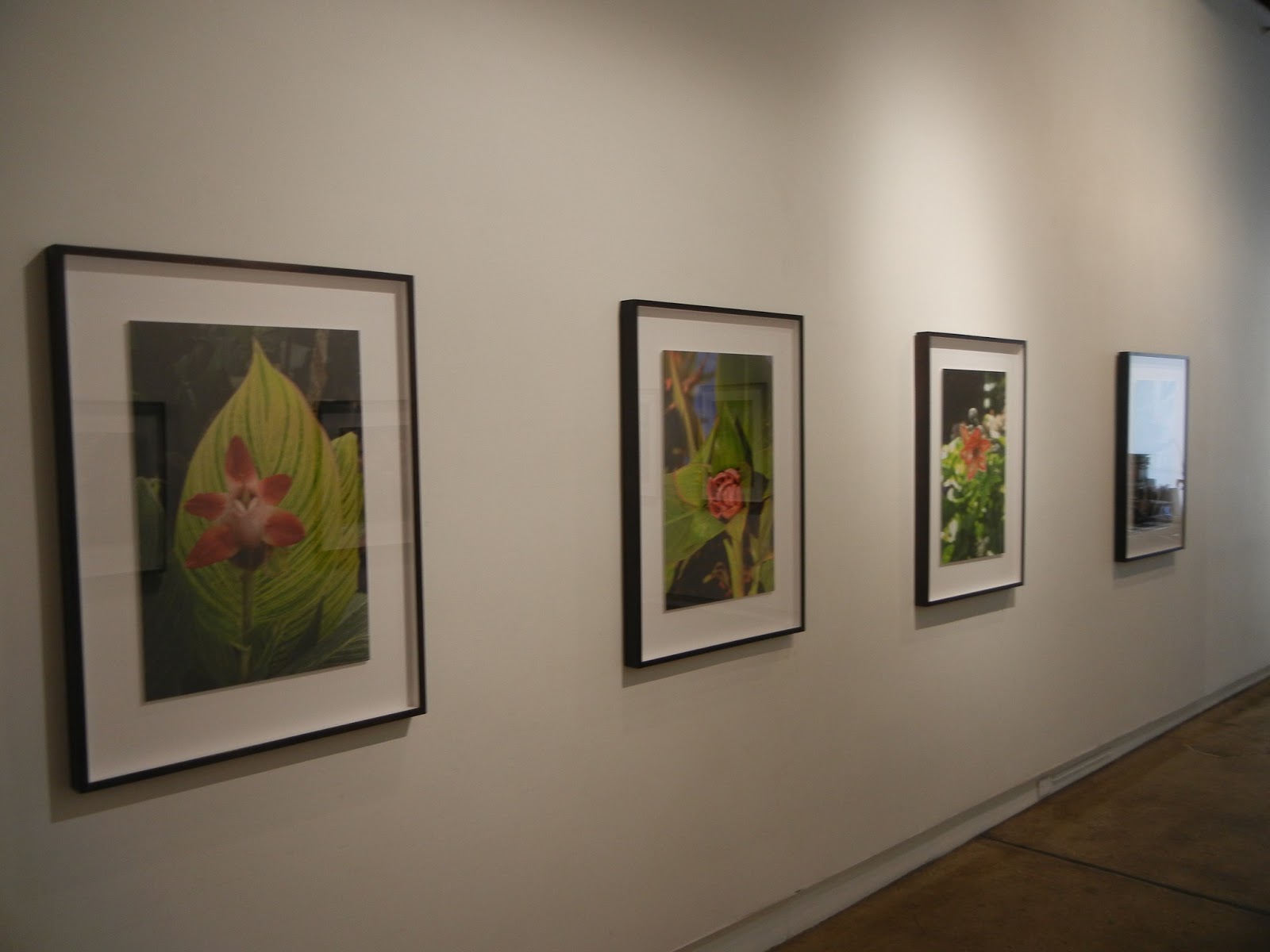 Hatry is by no means the first artist/photographer to explore the artificiality of flowers. Joan Fontcuberta has made brilliantly impossible hybrid constructions of nonexistent plants in the New Objectivity style of Karl Blossfeldt, while Vik Muniz has taken carefully posed images of hand made silk flowers. But Hatry has taken this idea of upended floral reality several steps further with these works. Her "flowers" lead off in a multitude of conceptual directions. There is the "flower as sex organ" constructed with meaty sex organs idea, where a kind of carnal eroticism is mixed with taboos and phobias about bodies. There is a more primal two sided coin of confused beauty and ugliness, where something seductive becomes something repulsive in the blink of an eye. And there is the underlying theme of exploitation of the natural world and the thorny issues of large scale production of meat and flowers for human consumption that these pictures open up.
In many ways, it's hard to imagine that flower images could be full of so much tension and contradiction. Hatry has cleverly deconstructed the genre and rebuilt it with more suggestive and sensational parts, bringing dark questions to a normally liltingly uncontroversial subject.
Part of the reason Hatry's inversion is so successful is that her constructions are so believably perfect. Her "flowers" bloom in a bold spectrum of colors, from luscious pink and red to delicate white and yellow, their petals spun into intricate geometries of patterns and folds. Some are soft and velvety, others spiky and hairy, but they all seem like something plausibly natural, designed to attract pollinators or enable reproduction through the dissemination of seeds. That she has created these fictions out of animal waste, offal, and discarded sex organs sets up her artful betrayal. The image checklist is a stomach turning list of component parts: duck tongues, fish eyes, pig ears, deer eyelids, starfish arms, chicken combs, crab claws, lobster gills, sheep intestines, bull stomach, deer esophagus, cow vagina, sheep penis, with a little coagulated blood thrown in for decoration. Reading such a catalog creates in almost instant reflex reaction of disgust, which is just exactly what she wants to have happen.Hatry is by no means the first artist/photographer to explore the artificiality of flowers. Joan Fontcuberta has made brilliantly impossible hybrid constructions of nonexistent plants in the New Objectivity style of Karl Blossfeldt, while Vik Muniz has taken carefully posed images of hand made silk flowers. But Hatry has taken this idea of upended floral reality several steps further with these works. Her "flowers" lead off in a multitude of conceptual directions. There is the "flower as sex organ" constructed with meaty sex organs idea, where a kind of carnal eroticism is mixed with taboos and phobias about bodies. There is a more primal two sided coin of confused beauty and ugliness, where something seductive becomes something repulsive in the blink of an eye. And there is the underlying theme of exploitation of the natural world and the thorny issues of large scale production of meat and flowers for human consumption that these pictures open up. In many ways, it's hard to imagine that flower images could be full of so much tension and contradiction. Hatry has cleverly deconstructed the genre and rebuilt it with more suggestive and sensational parts, bringing dark questions to a normally liltingly uncontroversial subject.
 Collector's POV: The works in this show are priced based on size, starting at $1800 and continuing up through $2000, $3500, $6000, and $8000, eventually reaching $15000 for the largest work on view. Hatry's photographs have very little secondary market history, so at this point, gallery retail remains the best/only option for those collectors interested in following up.
Rating: * (one star) GOOD (rating system described here)
Transit Hub:
Through June 22nd
530 West 25th Street
New York, NY 10001
Tuesday, June 4, 2013
Auction Results: Photography and Contemporary Art, May 24, 2013 @Lempertz
 The results from the Photography and Contemporary Art sales on May 24th at Kunsthaus Lempertz in Cologne were solidly on the mark. While the overall Buy-In rate was over 35%, there were enough positive surprises to keep the Total Sale Proceeds near the estimate target. Lempertz does not provide an estimate range in most cases, just a single estimate number, so this figure is used as the High estimate in the calculations.
The summary statistics are below (all results include the buyer’s premium):
Total Lots: 227
Pre Sale High Total Estimate: €556200
Total Lots Sold: 143
Total Lots Bought In: 84
Buy In %: 37.00%
Total Sale Proceeds: €471590
Here is the breakdown (using the Low, Mid, and High definitions from the preview post, here):
 Low Total Lots: 214
Low Sold: 136
Low Bought In: 78
Buy In %: 36.45%
Total Low Estimate: €389200
Total Low Sold: €336170
Mid Total Lots: 13
Mid Sold: 7
Mid Bought In: 6
Buy In %: 46.15%
Total Mid Estimate: €167000
Total Mid Sold: €135420
High Total Lots: 0
High Sold: NA
High Bought In: NA
Buy In %: NA
Total High Estimate: €0
Total High Sold: NA
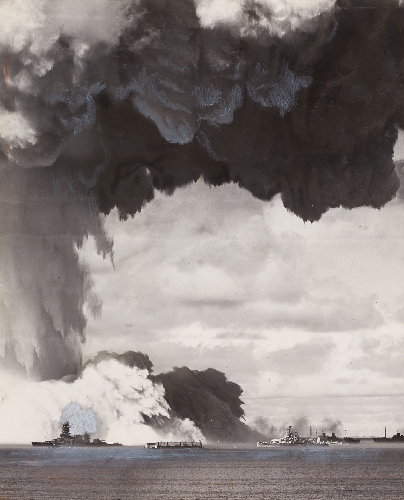
The top lot by High estimate was tied between two lots: lot 22, Laszlo Moholy-Nagy, Portrait Ellen Frank, 1929, (image at right, top, via Lempertz), and lot 560, Thomas Ruff, Ohne Titel (B. Junger), 1985, both estimated at €20000-25000; the Moholy-Nagy was the top outcome of the sale at €52460, while the Ruff did not sell.
 86.01% of the lots that sold had proceeds in or above the estimate. There were a total of 18 surprises in the sale (defined as having proceeds of at least double the high estimate):
Lot 1, Wilhelm Schneider, Spiegel und Konsole Eines Salons, 1860, estimated at €1200, sold at €5120
Lot 8, Eugene Atget, Marche au Timbres, 1898, estimated at €1800, sold at €3660
Lot 19, Josef Tokayer, Ohne Titel (Treppenhaus des Bauhausgebaudes in Dessau), 1928-1931, estimated at €1800-2000, sold at €4880
Lot 22, Laszlo Moholy-Nagy, Portrait Ellen Frank, 1929, estimated at €20000-25000, sold at €52460
Lot 25, Albert Renger-Patzsch, Ohne Titel (Maschinendetail), 1920, estimated at €1500, sold at €3660
Lot 59, Anonyme, Hochseilartisten am Heumarkt, Koln, 1946, estimated at €1200, sold at €4800
Lot 61, Edmund Kesting, Kameramann Konstantin Kesting, 1948, estimated at €1200, sold at €2440 (image at right, bottom, via Lempertz)
Lot 69, Otto Steinert, Junge Schauspielerin, 1949, estimated at €1200-1500, sold at €4640
Lot 78, Rene Burri, Rio de Janeiro, 1960/1998, estimated at €1000, sold at €2560
Lot 86, Erwin Blumenfeld, Decolete, 1952/later, estimated at €1600, sold at €3900
Lot 111, Heinz Hajek-Halke, Verbrannte Barmherzigkeit, 1969, estimated at €600, sold at €1460
Lot 120, Robert Lebeck, Joseph Beuys und familie auf der Documenta in Kassel, 1968/later, estimated at €800, sold at €3900
Lot 133, Gundula Schulze Eldowy, Tamerlan, Berlin, 1984, estimated at €1500, sold at €3170
Lot 137, Klaus Frahm, Judisches Museum, Berlin, 1998, estimated at €1000-1200, sold at €2810
Lot 168, Joint Army Task Force One Photo, The Test Baker Column, 1946, estimated at €1000, sold at €6340
Lot 169, Joint Army Task Force One Photo, Close-up View of Wall of Water after the Explosion of the Atomic Bomb, 1946, estimated at €1000, sold at €7080 (image at right, middle, via Lempertz)
Lot 175, Bernd und Hilla Becher, Anonyme Skulpturen, 1970, estimated at €1000, sold at €2810
Lot 187, Bernd und Hilla Becher, Siegener Strasse, Gosenbach, 1960, estimated at €700, sold at €1590
Complete lot by lot results can be found here (Photography) and here (Contemporary Art).
Kunsthaus Lempertz
Neumarkt 3
D-50667 Köln
Dennis Hopper: The Lost Album @Gagosian
 JTF (just the facts): A total of 445 black and white photographs, generally mounted and unframed, and hung against white walls in a large divided gallery and the adjacent entry area on the 5th floor. Aside from the 12 unique gelatin silver prints on view near the reception desk (each framed in blond wood and matted and sized 3.5x5 or reverse), the show is comprised of clusters of vintage photographs hung together in groups, mostly in mixed subject matter sets of 25, with one single subject matter set of 8 from Mexico. No detailed information on these prints was provided on the checklist, although the individual prints look to be sized roughly 5x8 (or reverse); there is some repetition of images from cluster to cluster, so the prints are likely not unique. The images were taken between 1961 and 1967. A monograph of this body of work was recently published by Prestel (here). (Installation shots at right courtesy Gagosian Gallery. Photography by Robert McKeever. Artworks © Dennis Hopper, courtesy of The Dennis Hopper Art Trust.)
Comments/Context: Back in the days before the instantly disposable digital print, people seemed to have a hard time throwing photographs away. Rather than heedlessly pitching them in the bin, we tended to squirrel them away in boxes, pushed to the backs of closets and the recesses of attics, waiting for some later generation to unearth them once again. There was something mildly heretical about trashing history, and so for the most part we didn't; it was easier to let them gather dust than make the active decision to get rid of them. As a result, the recent history of photography is full of fantastic and improbable rediscovery stories: Vivian Maier, Mike Disfarmer, Charles Jones, Robert Capa's mexican suitcase, the list goes on and on. The story of this exhibit follows this same pattern: boxes of prints tucked away after Dennis Hopper's 1970 exhibit at the Fort Worth Art Center Museum, generally thought to be forever lost, but miraculously found once again.
 If we play a word association game with the name "Dennis Hopper", most of us will blurt out actor, director, or maybe Hollywood cool guy, but few of us will start with photographer or artist. But as this time capsule of photographs clearly shows, Hopper was busy shooting pictures long before his prime years as an actor. Looking at the literally hundreds of images in this show, it's easy to see Hopper at the center of a starburst diagram, with dozens of connections splashing outward to all kinds of cultural communities. He took portraits of actors, rock stars, artists, gallery owners, politicians, Hell's Angels, and hippies. He hung out at rallies and riots, went to bullfights in Mexico, and documented the civil rights marches in Selma. He watched TV, noticed commercial signage, and thought about abstraction. In short, he had amazing access to the cultural melting pot of the 1960s and he took advantage of that position to make a wide range of pictures that reflect the conflicted spirit of that time.
 The way these photographs are installed discourages focusing in on single images; your eye darts from picture to picture in these clusters, flitting from one to another like a hummingbird looking for nectar. Jane Fonda's wedding, the Kennedy funeral on pixelated TV, Martin Luther King Jr. giving a speech, a matador flashing his cape, an abstraction of torn posters, a hippie chick, a Rauchenberg and Cunningham performance, the groups return again and again to common visual themes, like refrains and choruses of a song. By the time you reach the fifth or sixth grouping, the patterns have settled into recognizable rhythms, a little of this, a little of that, all wrapped up in one long stream of consciousness memory.
 Photographically, Hopper was a bit of shape shifter, moving from documentary seriousness to Siskind-like Abstract Expressionist studies in found line and form. His celebrity portraits are his best works, if only for their careful looseness; Hopper had an eye for in situ composition, but didn't seem to let his photography break the sense of easy casualness that pervades these pictures. He was an insider, and his subjects are comfortable and open in ways others couldn't possibly replicate. Regardless of whether it was Claes Oldenburg or Ed Kienholz, Paul Newman or Timothy Leary, Hopper caught his friends unguarded, generally opting for playful rather than posed.
 By the early 1970s, Hopper had left photography behind for other pursuits, and while he did return to making pictures at various times later in his career, none of those images really match the verve and immediacy of these 1960s works. Looking back at them as an interwoven group, they have an undeniable right place right time vitality, even if Hopper's photographic voice hadn't entirely emerged. Seen together, they are a transporting, swaggering frieze of curious, idealistic, cultural signifiers.
Collector's POV: The photographs in this show are priced as follows. The clusters of 25 prints are priced at $250000 each (prints not sold individually) and the smaller single prints near the reception desk are $15000 each. Hopper's photographs have been intermittently available in the secondary markets in recent years, with prices ranging between roughly $5000 and $48000.
Rating: * (one star) GOOD (rating system described here)
Transit Hub:
- Artist site (here)
- Features/Reviews: New York Times (here), Daily Beast (here)
- Exhibit: MOCA retrospective, 2010 (here)
Dennis Hopper: The Lost Album
Through June 22nd
Gagosian Gallery
980 Madison Avenue
New York, NY 10075
Monday, June 3, 2013
Richard Learoyd: Still/Life @McKee
 JTF (just the facts): A total of 13 large scale color images, framed in white and mounted with no mat, and hung in the entry and the main gallery space broken up by two smaller dividing walls. The works are unique Ilfochrome prints, ranging in size from 48x48 to 48x88 (or reverse). The images were taken between 2011 and 2013. A thin catalog of the show is available from the gallery. (Installation shots at right.)
Comments/Context: As the summer is now upon us, our local movie theaters are starting to fill up with usual crop of big budget blockbusters, those warm weather benchmarks of broad based American culture. If this year's calendar is any guide, it looks to be another season of massive explosions, car chases, smashes and crashes, a continuous assault on our senses with ever increasing pace and intensity. From the perspective of these offerings, it seems we all long to be 13 year old boys, caught in a video game populated by superheroes and obvious bad guys.
 With this kind of contemporary story telling as a backdrop, Richard Learoyd's camera obscura portraits feel like outright rebellion, a blatant, unrepentant reversal of priorities. They are consciously slow, our frenetic lives paused for a moment, that pause stretched and extended until our blunted awareness becomes sharp again. His portraits and still lifes are hurricanes of stillness, where the enveloping silence allows us to quiet ourselves down and really look. The pictures reveal themselves in delicate increments, where the luminosity of skin, the texture of hair, and the purity of curvature add up to personal uniqueness, and where tiny imperfections are the emblems of personality.
 In many of Learoyd's previous portraits, his subjects typically stood alone in a cone of light, posed in a kind of dead-eyed numbness, lost in a reverie of mute introspective solitude. In these most recent works, the sitters offer a little more subtle expression and a little more uneasy tension. Agnes sits draped in a luxurious dark brown fur, her tangle of hair swirled into loose elegance, her lips a hint of dark red; but her expression isn't blank like before - it mixes a hint of weary glamour with an undercurrent of hard resolve, making her all the more mysterious.
 Learoyd's nudes are more intricately posed this time as well. Vanessa hangs gracefully with one arm in the air, her right arm gently crossed over, resting near a bruise on her left leg. Tiny Phie stands in stockings, leaning against the edge of a table, her thin frame pulled tight in a slight twist, her ribs unsettlingly revealed under her skin. And Vanessa lies on the same table, covered in diaphanous black cotton and turned away, her right arm crossed back over her chest. In each case, Learoyd has gone further than simple standing bodies, giving us more to hold onto.
 While Learoyd's earlier still lifes generally left me cold, I think this newest group is much stronger. Strung up and trussed like Araki bondage nudes, his flamingos and rabbits hang with limp tragedy, the spread of a wing or the line of a drooping neck becoming a kind of lifeless dance. His severed horse's head goes further, mixing the perfection of the tight depth of field with the revulsion of the dripping blood, finding a balance that is grotesquely engaging.
 I think Learoyd has often run the very real danger of falling into the "stone faced girl looking over her shoulder" cliché which is all too prevalent in contemporary photography; some of his earlier portraits were too haltingly deadpan for me. Luckily, his technique is undeniably innovative and it has consistently produced glorious light and staggering detail. But on their own, even these aren't enough to make durable photographs. This show is evidence that his mastery of his process has begun to open up new creative avenues. An evolving sense of composition and a willingness to explore nuances of emotion and expression are both on view here, making both the nudes and the still lifes more fresh and compelling. Learoyd is continually paring the portrait form down to its essences, and when he gets it just right, his pictures suck us into their astonishing private world, focusing our easily distracted attention and centering us on the overlooked subtleties of individuals. They offer a look at unadorned quiet beauty that we have often forgotten could actually be real.
Collector's POV: The works in this show are priced between $65000 and $80000, based on size. This represents a steady step up from his last show at the gallery in the fall of 2011. Learoyd's prints have very little secondary market history at this point, so gallery retail is likely the best/only option for those collectors interested in following up.
Rating: ** (two stars) VERY GOOD (rating system described here)
Transit Hub:
- Review: New Yorker (here)
Richard Learoyd: Still/Life
Through June 21st
McKee Gallery
745 Fifth Avenue
New York, NY 10151
Friday, May 31, 2013
Auction Results: Photographs from the Teutloff Collection, May 24, 2013 @Lempertz
 The results of the recent sale of photographs from the Teutloff Collection at Kunsthaus Lempertz in Cologne were decidedly flat. The overall Buy-In rate was nearly 50% and the Total Sale Proceeds came in well below the estimate target. Lempertz does not provide an estimate range in most cases, just a single estimate number, so this figure is used as the High estimate in the calculations.
 The summary statistics are below (all results include the buyer’s premium):
Total Lots: 99
Pre Sale High Total Estimate: €436500
Total Lots Sold: 52
Total Lots Bought In: 57
Buy In %: 47.47%
Total Sale Proceeds: €297520
 Here is the breakdown (using the Low, Mid, and High definitions from the preview post, here):
Low Total Lots: 82
Low Sold: 44
Low Bought In: 38
Buy In %: 46.34%
Total Low Estimate: €232500
Total Low Sold: €178570
Mid Total Lots: 17
Mid Sold: 8
Mid Bought In: 9
Buy In %: 52.94%
Total Mid Estimate: €204000
Total Mid Sold: €118950
High Total Lots: 0
High Sold: NA
High Bought In: NA
Buy In %: NA
Total High Estimate: €0
Total High Sold: NA
The top lot by High estimate was lot 313, Hendrik Kerstens, Bag, 2007, estimated at €15000-20000; it sold for €19520. The top outcome of the sale was lot 343, Jürgen Klauke, Toter Photograph, estimated at €14000-18000, sold at €29280.
100.00% of the lots that sold had proceeds in or above the estimate. There were a total of 9 surprises in the sale (defined as having proceeds of at least double the high estimate):
 Lot 341, Dieter Appelt, Image de la Vie et de la Mort, 1979, estimated at €5000, sold at €10980 (image at right, middle, via Lempertz)
Lot 346, Stefan Moses, Jospeh Beuys, Munchen, 1968/later, estimated at €800, sold at €2070
Lot 348, Cindy Sherman, Ancestor, 1985, estimated at €1500-2000, sold at €4880
Lot 349, Joel-Peter Witkin, La Giovanissima, 2007, estimated at €2000, sold at €13420 (image at right, top, via Lempertz)
Lot 357, Mario Cravo Neto, O Deus da Cabeca, 1988, estimated at €1500, sold at €3900
Lot 358, Mario Cravo Neto, Voodoo Figure, 1988, estimate at €1500, sold at €3900
Lot 359, Adam Nadel, Ohne Titel, 2004, estimated at €2500, sold at €5120
Lot 361, Steve McCurry, India, Kerala, Hundus During Trichur Pooram, 1996, estimated at €1800, sold at €3900
Lot 392, Rudolf Schwarzkogler, Aktion mit Seinem Eigenen Korper, 1966, estimated at €6000, sold at €12200 (image at right, bottom, via Lempertz)
Complete lot by lot results can be found here.
Kunsthaus Lempertz
Neumarkt 3
D-50667 Köln
Miles Aldridge: I Only Want You to Love Me @Kasher
 JTF (just the facts): A total of 20 large scale color photographs, framed in white and unmatted, and hung against white walls in the North and South gallery spaces and the side alcove. All of the works are c-prints, made between 2005 and 2012. Print sizes range from 14x14 to 56x75 (or reverse), in editions of 6 or 10. A monograph of this body of work was recently published by Rizzoli (here) and is available from the gallery for $75. (Installation shots at right.)
Comments/Context: Miles Aldridge's complex sense for brash stylized color sets his work apart from other contemporary fashion photographers. As seen in this retrospective show of work from roughly the past decade, his precisely staged images are over-the-top exercises in color theory, where every detail and prop is carefully orchestrated for maximum intensity. When added to satirical scenes of blanked eyed women in oddly glamorized domestic situations, his distinctive eye for color makes the photographs even more dynamic and vital.
 In Aldridge's hands, female stereotypes are pushed beyond the edge of exaggeration into a surreal world of dark social commentary. A desperate red lipped homemaker stabs an imperfect birthday cake with a huge kitchen knife, a woman in plastic lingerie breaks down over a sliced half grapefruit, a deadpan woman in a tight green dress and red heels is stuffed into the under sink area normally reserved for rubber gloves and toilet cleaner, and a robotic mother in thigh high boots and a perfect black ensemble strides through a gaggle of soccer playing boys (a weird futuristic "soccer mom"). In nearly every situation, the subject has been pushed to an emotional extreme: either anesthetized like a mannequin or on the verge of losing control.
 A scene of a smashed dinner tray, an overstuffed Cadillac full of shopping bags and packing trunks, or an overdone dinner party dripping in glamorous boredom all have their own sense of cliché, but Aldridge takes them somewhere new with his use of color. In nearly every image (even the most muted ones), it's as if he has consciously taken out the color wheel to target complementary pairs. A zoned out woman dries her hair in a bathroom full of acidic greens and orange pinks: green tile, red towel, green slip, pink slip, green curtains, orange hair dryer, plastic rings in both colors - it's a symphony in hot, matchy matchy contradiction. These kinds of opposites are everywhere in this show: a bright yellow and red checkerboard floor, blue water behind an orange bikini clad woman, orange soccer uniforms against electric green turf, a dramatic red dress against a green floral carpet; they all add visual tension to the already inflated scenes.
 While at first glance it might be easy to mistake these fashion images for fun-loving visual camp, I like the way they grow darker and more depressing with more sustained looking. Everything is just so but blown to the point of parody, like scenes of zombies in overdone gilded prisons.
Collector's POV: The works in this show are priced between $5150 and $15500 (with many intermediate prices), generally based on size. Aldridge's work is not widely available in the secondary markets, although a handful of lots have come up for auction in recent years; prices for those lots ranged between roughly $6000 and $12000.
 Rating: * (one star) GOOD (rating system described here)
Transit Hub:
Miles Aldridge: I Only Want You to Love Me
Through June 8th
Steven Kasher Gallery
521 West 23rd Street
New York, NY 10011
Thursday, May 30, 2013
The Checklist: 5/30/13
Current New York Photography Shows
New reviews added this week in red.
(Rating: Artist/Title: Venue: Closing Date: link to review)
Uptown
ONE STAR: Travess Smalley: Higher Pictures: June 8: review
TWO STARS: Robert Mapplethorpe: Skarstedt: June 15: review
TWO STARS: William Eggleston: Met: July 28: review
Midtown
ONE STAR: Alma Lavenson: Gitterman: June 1: review
ONE STAR: Charles Fréger: Gallery at Hermès: June 8: review
TWO STARS: Henry Wessel: Pace/MacGill: June 15: review
THREE STARS: Bill Brandt: MoMA: August 12: review
Chelsea
ONE STAR: Hannah Starkey: Tanya Bonakdar: June 8: review
ONE STAR: Sara VanDerBeek: Metro Pictures: June 8: review
ONE STAR: Ori Gersht: CRG: June 15: review
ONE STAR: Rodney Graham: 303: June 15: review
TWO STARS: Wolfgang Tillmans: Andrea Rosen: June 22: review
SoHo/Lower East Side/Downtown
ONE STAR: Carey Denniston: KANSAS: June 22: review
Elsewhere Nearby
No reviews at this time.
Forward Auction Calendar
New auctions added this week in red.
(Sale Date: Sale Title: Auction House: link to catalog)
June 5: Photography: Galerie Bassenge (Berlin): catalog
June 14: Photographs: Van Ham (Cologne): catalog
New reviews added this week in red.
(Rating: Artist/Title: Venue: Closing Date: link to review)
Uptown
ONE STAR: Travess Smalley: Higher Pictures: June 8: review
TWO STARS: Robert Mapplethorpe: Skarstedt: June 15: review
TWO STARS: William Eggleston: Met: July 28: review
Midtown
ONE STAR: Alma Lavenson: Gitterman: June 1: review
ONE STAR: Charles Fréger: Gallery at Hermès: June 8: review
TWO STARS: Henry Wessel: Pace/MacGill: June 15: review
THREE STARS: Bill Brandt: MoMA: August 12: review
Chelsea
ONE STAR: Hannah Starkey: Tanya Bonakdar: June 8: review
ONE STAR: Sara VanDerBeek: Metro Pictures: June 8: review
ONE STAR: Ori Gersht: CRG: June 15: review
ONE STAR: Rodney Graham: 303: June 15: review
TWO STARS: Wolfgang Tillmans: Andrea Rosen: June 22: review
SoHo/Lower East Side/Downtown
ONE STAR: Carey Denniston: KANSAS: June 22: review
Elsewhere Nearby
No reviews at this time.
Forward Auction Calendar
New auctions added this week in red.
(Sale Date: Sale Title: Auction House: link to catalog)
June 5: Photography: Galerie Bassenge (Berlin): catalog
June 14: Photographs: Van Ham (Cologne): catalog
Wednesday, May 29, 2013
Robert Mapplethorpe, Self Portraits @Skarstedt
 JTF (just the facts): A total of 11 black and white photographs, framed in black and matted, and hung against grey walls in the two second floor gallery spaces. All of the works are gelatin silver prints, made between 1980 and 1988. Physical dimensions range from roughly 15x15 to 24x20 and edition sizes are either 3, 10, or 15. (Installation shots at right.)
Comments/Context: This small show of Robert Mapplethorpe's self portraits is a focused subset of the work he made in the last decade of the his life. It gathers together many of the self portraits he took in the 1980s, leaving out the early Polaroids and the bullwhip in the ass aggressively sexual pictures of the 1970s. What this edit gives up in inclusiveness and comprehensiveness, it gains in tight attention, as it allows us to see the small, evolving changes in his artistic approach, played out in a handful of important images.
 In Mapplethorpe's early 1980s self portraits, he still has his swagger on, but his eye has turned to the nuances of gender roles. He casts himself as the effortlessly cool rebel with a cigarette dangling out of his mouth, as an androgynous bare chested male in eye makeup, and as a diva in drag wrapped in a lush fur collar. The pared down classicism of his staging allows him to shift from persona or persona like a chameleon without losing a sense of control, trying on identities and challenging conventional attitudes within the confines of quiet formal elegance.
Just a year or two later finds Mapplethorpe exploring background geometries and more overt iconography. He stands in front of layered squares (the graphic design looking a bit dated now) and uses the triangulating lines of the back of his hair and the trim of his leather jacket to precisely echo a sharply angled striped backdrop. In another work, he tackles religion with a bold pentagram wall hanging, posing as an outlaw armed with a tommy gun. His self portrait with horns follows this thread, spookily lighting himself from below and casting himself as either a satyr or a devil.
 The last self portraits, made in the years before he died, find him turning inward and looking at himself with more vulnerability. His many roles collapse into a blurred, shape shifting image of his face in motion, and a portrait in a tuxedo is somehow haunting rather than debonair, the last disguise in which we might expect to find him. By 1988, he stares at the camera with unvarnished openness, his face drawn and gaunt with disease, armed with a cane topped by an ebony skull. He seems to float out of the darkness, looking death straight in the eye, confronting himself as much as the camera.
 Even in the span of the dozen pictures on view here, it is possible to see both continuity and change in Mapplethorpe's work. Even as the content of his self portraits began to evolve, his eye for classical harmony never faltered, his forms always clean and refined, regardless of his emotional intentions. There's underlying power in every one of these photographs, and together they pack a durably surprising wallop.
Collector's POV: The works in this show are for the most part on loan and therefore not for sale, although a few were apparently available at prices between $150000 and $200000. Mapplethorpe's prints are routinely available in the secondary markets, with dozens of images up for sale every year. Prices have generally ranged between a few thousand dollars for his lesser known works to more than $300000 for his most iconic images.
 Rating: ** (two stars) VERY GOOD (rating system described here)
- Mapplethorpe Foundation site (here)
Through June 15th
20 East 79th Street
New York, NY 10075
Subscribe to:
Posts (Atom)