Wednesday, February 20, 2013

New Wave Finland: Contemporary Photography from the Helsinki School @Scandinavia House

JTF (just the facts): A group show containing the work of nine artists/photographers, curated by Timothy Persons and Pari Stave. The works are displayed in a series of three connected galleries, with an entry space and an adjacent video viewing room, all located on the third floor of the building. (Installation shots at right.)

The following artists/photographers have been included in the exhibit, with image details for each in parentheses:
  • Pasi Autio (1 HD video, displayed on a small screen, 2012)
  • Joakim Eskildsen (12 pigment prints, both large and small sizes, framed in white and unmatted, 2011)
  • Tiina Itkonen (3 pigment prints, unframed, 2002-2012)
  • Hannu Karjalainen (1 HD video, displayed directly on the wall, 2009)
  • Kalle Kataila (5 large pigment prints, framed in white and unmatted, 2004-2009)
  • Anni Leppälä (10 pigment prints of various sizes, framed in white and unmatted, 2004-2012)
  • Niko Luoma (2 large c-prints, unframed, 2010)
  • Riita Päiväläinen (3 large c-prints, unframed, 2005)
  • Mikko Sinervo (1 set of 24 small c-prints and 1 large c-print, unframed, 2008-2009)

Comments/Context: While there are many universities and art schools around the world with strong programs in photography, the Helsinki School is certainly one that would be on many people's short list of the most innovative. Unfortunately for those of us in New York, we only get to see the work of the school's graduates intermittently, as most of the artists/photographers lack American gallery representation, making survey shows like this one are all the more important as they give us a quick sampler of what has been going on since we last checked in.
 
At least to my eye, this exhibit does a nice job of mixing work from familiar and unfamiliar names, juxtaposing photographs from some of the more established graduates with those of upcoming and emerging artists. In the past, two of the hallmarks of Helsinki School photography were dynamic conceptual underpinnings and an affinity for glossy, object quality presentation, and these two facets of the overall approach are still very much evident in the most recent output of its students. Mikko Sinervo probes the process of visual perception via fuzzy candy colored abstract orbs that mimic the afterimage effects of looking at light. Riita Päiväläinen places discarded clothing into natural scenes, creating ethereal installations that play with texture and motion; the patterns of black and white dresses snow get lost in the tangle of snow covered branches. And Niko Luoma's massive linear abstractions throb with electric energy.
 
Another group of artists stay one step closer to photographic tradition, keeping figures present and opting for standard white framing. Kalle Kataila's works echo 19th century Romantic paintings, with tiny lone figures perching in the foreground, looking out at the wonder of snowy waterfalls, frozen oceans, or vast green valleys. Anni Leppälä creates mysterious fairy tale narratives, where a red ribbon turns into smoke, a young girl peers behind a curtain, and two stockinged feet hang ominously from the rafters of a boat cabin. And Joakim Eskildsen stays closer to home, with quiet, intimate images of his young children wedged next to a fridge, walking down yellow leafed forest paths, and running underneath a rainbow in the greenery of an overgrown garden. Even the video work on view seems firmly rooted in photographic thinking, with Pasi Autio's treatise on walking illustrated by a single figure moving with nearly imperceptible slowness while the rest of the surrounding street scene moves at normal speed.
 
It's clear from this show that the Helsinki School is consistently churning out plenty of accomplished contemporary photographers. Smart exhibits like this one can certainly help increase their exposure in America, but I for one would like to see their collective work shown here more often, so we can consider their ideas and influence with less delay. New York gallery owners, it's time to get going and book that long overdue trip to Helsinki.
 
Collector's POV: Since this effectively a museum exhibit, there are no posted prices for the works on view. All of the artists are represented by the Gallery TAIK (here) in Finland, which is part of the Helsinki School. Niko Luoma is also represented in New York by Bryce Wolkowitz Gallery (here).
 
Rating: * (one star) GOOD (rating system described here)
 
Transit Hub:
  • Helsinki School/Gallery TAIK site (here)
  • Pasi Autio school page (here)
  • Joakim Eskildsen artist site (here)
  • Tiina Itkonen artist site (here)
  • Hannu Karjalainen artist site (here)
  • Kalle Kataila artist site (here)
  • Anni Leppälä artist site (here)
  • Niko Luoma artist site (here)
  • Riita Päiväläinen school page (here)
  • Mikko Sinervo school page (here)

Through April 6th
 
58 Park Avenue
New York, NY 10016

Tuesday, February 19, 2013

Auction Results: Post-War and Contemporary Art Evening and Day Auctions, February 13 and 14, 2013 @Christie's London

The results for the photography included in Christie's Post-War and Contemporary Art Evening and Day sales in London last week were meaningfully better than expected. With the Buy-In rate for photography under 7 percent and all five photography lots in the Evening sale finding buyers at prices above their estimates, it comes as no surprise that the Total Sale Proceeds for photography easily exceeded the high end of the range.

The summary statistics are below (all results include the buyer’s premium):

Total Lots: 43
Pre Sale Low Total Estimate: £2268500
Pre Sale High Total Estimate: £3182000
Total Lots Sold: 40
Total Lots Bought In: 3
Buy In %: 6.98%
Total Sale Proceeds: £3962071

Here is the breakdown (using the Low, Mid, and High definitions from the preview post, here):

Low Total Lots: 3
Low Sold: 3
Low Bought In: 0
Buy In %: 0.00%
Total Low Estimate: £10000
Total Low Sold: £6688

Mid Total Lots: 19
Mid Sold: 19
Mid Bought In: 0
Buy In %: 0.00%
Total Mid Estimate: £267000
Total Mid Sold: £384575

High Total Lots: 21
High Sold: 18
High Bought In: 3
Buy In %: 14.29%
Total High Estimate: £2905000
Total High Sold: £3570808

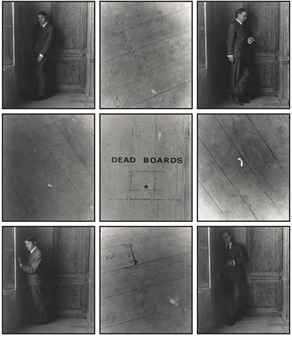
The top photography lot by High estimate was lot 11, Gilbert & George, Dead Boards No. 11, 1976, at £350000-450000; it was also the top photography outcome of the two sales, at £601250.

95.00% of the lots that sold had proceeds in or above their estimate. There was only one surprise in these sales (defined as having proceeds of at least double the high estimate):

Lot 225, Sol LeWitt, Manhattan with Roosevelt Island Removed, 1978, estimated at £5000-7000, sold at £23750 (image at right, top, via Christie's)

Complete lot by lot results can be found here (Evening) and here (Day).

Christie's
8 King Street, St. James's
London SW1Y 6QT

Michael Benson, Planetfall @Hasted Kraeutler

JTF (just the facts): A total of 18 large scale photographic works, framed in thick black wood and unmatted, and hung in the entry and the three rooms of the main gallery space. All of the works are digital chromogenic prints mounted on Dibond, made in 2012 from source material taken between 2000 and 2011. Square format dimensions range from 16x16 to 72x72, while the more panorama style works range in size from 17x51 to 50x107; some images are available in multiple sizes. The works have generally been printed in editions of 8 regardless of size, with a few exceptions in editions of 3. A monograph of this body of work was published in 2012 by Abrams Books (here) (Installation shots at right.)

Comments/Context: I have written before about the need for a more granular and comprehensive 21st century definition of "appropriation", and Michael Benson's newest show of space photography provides an opportunity to revisit these thorny questions once again. His awe inspiring images of celestial bodies knock your socks off with their grandeur, and then given their art gallery setting, they trigger a set of questions about his process and the application of his artistic intent. Is this what Saturn really "looks like"? How much did he tweak the colors or manipulate the content? Do we as an audience want him to show us the "truth" or express his personal vision? The fact is, while we can easily be impressed by the scientific facts on view, we don't really have a ready vocabulary to investigate and categorize the art side of Benson's works.

While it may not seem immediately obvious, I'd put Benson in a loosely held together "archive mining" bucket, along with growing group of artists as diverse as Zoe Crosher, Doug Rickard, Kate Steciw, and Penelope Umbrico. Starting with a body of source material (often digital, but sometimes analog like vernacular photos or postcards), they sift and sort, crop and rephotograph, edit and rework, order and reconsider, using the imagery as a jumping off point for their own artistic projects. Some stay "close" to the material, while others turn it into something nearly unrecognizable. This is a wholly different kind of appropriation than the old school Pictures Generation recontextualization we are used to; in many cases, the original context isn't hugely important to the conceptual basis of the new end result and there is often no inherent irony at work. The artists are mining archives for material they find exciting or simply useful, which can then be used to make downstream artworks. Photography purists tend to scoff at this camera-less process, pooh-poohing the effort as some kind of less than admirable short cut. I think this is a mistake; we are just seeing the birth of a new strain of photography that starts with the wealth of visual material already readily available (rather than newly clicking shutters) and we will naturally see the development of new and diverse technical approaches and measures of craftsmanship, some that will match our current definitional categories well and others that won't.

So back to Benson. His works start with raw imagery taken by NASA and European Space Agency probes and scientific missions, which he then meticulously stitches and tunes into large, vibrant art objects. Geysers on Enceladus, swirling flares on an eclipse of the Sun, flashes of comet impacts, many of his images show us something truly special or amazing, at least to the non-expert viewer. Others take the elegant rings of Saturn and turn them into abstractions of slicing cross section lines, perfect arcs, or sweeping electric blue stripes. Wavy Mars dunes in red sand turn into something akin to Edward Weston, while clouds on Earth flatten out like tabletops as they reach the upper atmosphere. In some cases, Benson is extremely crisp and literal, seemingly cleaning up a straightforward shot for better viewing/understanding; in others, his editing hand is much more visible, outer space becoming a forum for abstraction.

I think there is no denying the astonishing power of many of these images; the best have a soaring elegance and drama that most normal terrestrial subject matter will find hard to match. But until we clarify the conceptual boundaries of emerging archive mining strategies, I think we will struggle to find the right categorical place for works like Benson's. Photographic archive mining is here to stay, and we need to think carefully and rigorously about the spectrum of ways it can be successfully carried out. On the surface, Benson's approach stays very close to the science, but underneath, it isn't radically different from Internet scouring and repurposing; his chosen archive is different and certainly more specialized, but many of his foundational concerns and issues are exactly the same.

Collector's POV: The images in this show are generally priced based on size, ranging from $4200 for the smallest works to $25000 for the largest, with multiple intermediate prices in between. Benson's work has not yet become consistently available in the secondary markets, so gallery retail likely remains the best option for those collectors and space/science buffs interested in following up.

Rating: * (one star) GOOD (rating system described here)

Transit Hub:
  • Artist site (here)
  • Features/Reviews: NY Times (here), Time LightBox (here), Space.com (here), NBC Cosmic Log (here), Slate Behold (here)

Michael Benson, Planetfall
Through March 9th

Hasted Kraeutler Gallery
537 West 24th Street
New York, NY 10011

Friday, February 15, 2013

Auction Results: Contemporary Art Evening and Day Auctions, February 12 and 13, 2013 @Sotheby's London

The photography results from Sotheby's Contemporary Art auctions in London last week were generally lackluster, dragged down by a few too many passes on the higher priced photographs. With an overall Buy-In rate for photography across the two sales of nearly 30% and almost no meaningful positive surprises, the Total Sale Proceeds for photography came in under the low end of the range.

The summary statistics are below (all results include the buyer’s premium):

Total Photography Lots: 34
Pre Sale Low Total Estimate: £1293000
Pre Sale High Total Estimate: £1901000
Total Lots Sold: 24
Total Lots Bought In: 10
Buy In %: 29.41%
Total Sale Proceeds: £1224600

Here is the breakdown (using the Low, Mid, and High definitions from the preview post, here):

Low Total Lots: 0
Low Sold: NA
Low Bought In: NA
Buy In %: NA
Total Low Estimate: £0
Total Low Sold: NA

Mid Total Lots: 21
Mid Sold: 17
Mid Bought In: 4
Buy In %: 19.05%
Total Mid Estimate: £321000
Total Mid Sold: £283450

High Total Lots: 13
High Sold: 7
High Bought In: 6
Buy In %: 46.15%
Total High Estimate: £1580000
Total High Sold: £941150

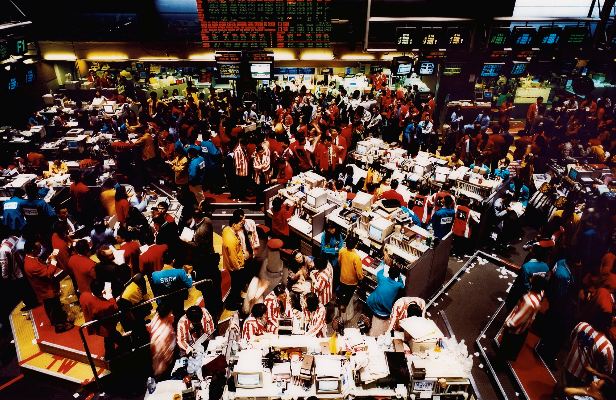
The top lot by High estimate was lot 37, Andreas Gursky, Singapore Börse, 1997, at £350000-550000; it was also the top outcome of the two sales £421250.

95.83% of the lots that sold had proceeds in or above their estimate. There was only one surprise in these sales (defined as having proceeds of at least double the high estimate), coming on one of the lowest estimated lots:

Lot 361, David LaChapelle, Andy Warhol: Last Sitting, 1986 and Jeff Koons: Sandwich, 2001, together estimated at £5000-7000, selling for £15000 (image at right, top, via Sotheby's)

Complete lot by lot results can be found here (Evening) and here (Day).

Sotheby's
34-35 New Bond Street
London W1A 2AA

David Nadel: Burns II @Wolf

JTF (just the facts): A total of 14 color photographs, framed in white and unmatted, and hung in the elongated single room gallery space. All of the works are archival pigment prints. The images come in two sizes: 16x20, in editions of 8, and 40x50, in editions of 6. (Installation shots at right.)

Comments/Context: David Nadel's second installment of wildfire charred, snow covered Montana landscapes introduces a series of small refinements to his already successful visual formula. Like the works from his previous show (in 2011), his newest images begin with arduous hikes to remote areas of unpeopled wilderness and end with miles of forested space compressed into flattened planes of nearly abstract lines. What's different this time is a subtle sense of increased sharpness, where the soft haziness of the early works has been traded in for a slightly tighter and crisper aesthetic.

Nadel's trees run the gamut from thin and spindly to dense and furry, depending on his distance from them and their natural clustering. Long views turn the trees into hairy bands and layers of medium grey that settle into the mounded hollows and angled valleys of the mountainous terrain. Closer in compositions are made of striking, all-over verticals, the trees striped into high contrast minimalist lines or feathered like bottle brushes. Against the blank whiteness of the snow, the endless repetition of the textural trees becomes meditative, the enveloping monochrome environment broken only by the isolated splashes of color of a lone, defiant regrown evergreen or the thin red stems of dormant undergrowth.

The best of Nadel's new landscapes have an almost mathematical rigor and precision, where the trees are dead-on straight and the lines run up like zips, creating a humming screen of verticals. It's these back and forth battles between organic and abstract that are fresh and exciting here, giving the works an added layer of formal interest beyond their obvious natural grandeur.

Collector's POV: The works on view are priced as follows: the 16x20 prints are $1500 each and the 40x50 prints are $4000 each, a small increase from his last show. Nadel's work has not yet entered the secondary markets, so gallery retail is likely the best/only option for those collectors interested in following up.

Rating: * (one star) GOOD (rating system described here)

Transit Hub:
  • Review: New Yorker (here)

David Nadel: Burns II
Through March 10th

Sasha Wolf Gallery
70 Orchard Street
New York, NY 10002

Thursday, February 14, 2013

The Checklist: 2/14/13

Current New York Photography Shows
New reviews added this week in red.
(Rating: Artist/Title: Venue: Closing Date: link to review)

Uptown

ONE STAR: After Photoshop: Met: May 27: review

Midtown

ONE STAR: Sissi Farassat: Edwynn Houk: February 16: review
ONE STAR: Philip Trager: NY Public Library: February 17: review
ONE STAR: Nicholas Nixon: Pace/MacGill: February 23: review
TWO STARS: The Shaping of New Visions: MoMA: April 21: review

Chelsea

ONE STAR: David Hilliard: Yancey Richardson: February 16: review
TWO STARS: Hendrik Kerstens: Danziger: February 16: review
ONE STAR: Niko Luoma: Bryce Wolkowitz: February 16: review
TWO STARS: Zwelethu Mthethwa: Jack Shainman: February 23: review
ONE STAR: Robin Rhode: Lehmann Maupin: February 23: review
TWO STARS: Andy Freeberg: Andrea Meislin: March 2: review
ONE STAR: Distance and Desire, Part II: Walther Collection: March 9: review

SoHo/Lower East Side/Downtown

ONE STAR: Chris Buck: Foley: February 24: review
ONE STAR: Owen Kydd: Nicelle Beauchene: February 24: review
ONE STAR: Max Warsh: Toomer Labzda: February 24: review

Elsewhere Nearby

No reviews at this time.

Forward Auction Calendar
New auctions added this week in red.
(Sale Date: Sale Title: Auction House: link to catalog)

February 14: Post-War and Contemporary Art (Day): Christie's (London): catalog
February 14: Contemporary Art (Evening): Phillips (London): catalog
February 15: Contemporary Art (Day): Phillips (London): catalog
February 26: Fine Photographs: Swann (New York): catalog
February 26-March 5: Andy Warhol: Christie's (Online): catalog

Wednesday, February 13, 2013

Owen Kydd, Color Shift @Beauchene

JTF (just the facts): A total of 8 video works, shown on black bordered display screens, and hung in the single room gallery space on the second floor. All of the works are perpetual loop videos made in 2012 or 2013. The screens are sized either 37x21 ("40 inch") or 21x12 ("24 inch"); 6 of the works are shown on 40 inch screens, 1 work is shown on a 24 inch screen, and there is 1 diptych (a single image spread across two screens) on two 40 inch screens. The videos range in duration from 3 to 5 minutes, and are available in editions of 3+2AP. This is Kydd's first solo show in New York. (Installation shots at right.)

Comments/Context: The boundary lines between photography and video used to be so simple - photography was used for still images and video was used for motion and elapsed time, and the cross pollination of the two disciplines led to photographs that were "cinematic" in the way they were framed or in the way their narratives were staged. But now that every camera on the market includes the ability to easily shoot high resolution video, it isn't surprising that many photographers are more liberally stepping into the world of video to expand their artistic options, and that a new generation of artists is growing up unconcerned with the old definitional bright lines.

Owen Kydd's videos inhabit this semantic netherworld, falling somewhere between extended "durational" photographs and still videos. His works begin with a fixed, static camera angle, and are followed by subtle, almost imperceptible changes that come with the passing of a few minutes. A bright retail display of striped wall board and empty shelving seems perfectly frozen until the paper bell twists, the blue plastic shivers, and the tiny string wiggles in the invisible breeze. His works demand sustained, attentive observation, or the subtleties of a flicker of light across a mylar balloon or the shifting grip of woman clutching a phone will be missed entirely. The overall effect is a heightened sense of awareness of the image at hand, and an intense visual scouring of each work, in search of slow, minute changes.

While most of the videos stay fixed on one scene, one of the works cycles through a handful of separate moments, where quiet nighttime storefronts and interiors are punctuated by glances of reflected light that pass over their surfaces; the fleeting swooshes across a chartreuse green corner are like a muted ghost of a dance. The whipsaw folding and unfolding of a black trash bag is more obvious in its study of motion, with a slight echo of the plastic bag trapped in a sidewalk cyclone from American Beauty. And a planter of fake flowers points to a more complex extension of Kydd's craft, adding a perspective altering doubled effect to his arsenal, jarring the pavement into jutting abstract layers while the leaves sway in the wind.

What I find most intriguing about these works is their investigation of how motion can be included in photography, and not just in the sense of blurs and other effects used to imply motion, but in real movement over time. Kydd's works retain the strict conceptual formality of frozen photographic moment, but simultaneously open up doors to something more fluid. While Fiona Tan and Gillian Wearing have experimented with video portraiture that feels aware of its relationship to photography, Kydd's images seem to emerge from a different starting point, beginning with more rigid theories of photography which are then expanded and reconsidered in the context of unlimited time and movement. For me, his works are a kind of signpost, signaling that one strand of digital age photography is rapidly evolving away from the single, canonical decisive moment we have long taken as given.

Collector's POV: The works in this show are priced as follows. The single screen works are $8500 each and the two screen diptych is $15000. Kydd's work has not yet reached the secondary markets, so gallery retail is likely the best/only option for those collectors interested in following up.

Rating: * (one star) GOOD (rating system described here)

Transit Hub:
  • Artist site (here
  • Interview: Lay Flat (here

Owen Kydd, Color Shift
Through February 24th

Nicelle Beauchene Gallery
327 Broome Street (upstairs)
New York, NY 10002

Tuesday, February 12, 2013

Nicholas Nixon: Here and Now @Pace/MacGill

JTF (just the facts): A total of 25 black and white photographs, framed in black and matted, and hung against blue and almond colored walls in the entry and two main gallery rooms. All of the works are gelatin silver prints, made from negatives taken in 2011 and 2012. The prints are sized either 11x14 (contact prints) or 16x20 (enlargements) and are available in editions of 10. (No photography is allowed in the galleries, so the installation shots at right are via the Pace/MacGill website.)

Comments/Context: Nicholas Nixon's newest photographs are measured and deliberate, slowed down to the point where attentiveness can overcome everyday distraction. They express interest in the cycle of life, from babies to centenarians, and consider the wearying effects of aging with warmth, curiosity, and affection. They are evidence of a photographer confident in his craft and unhesitant to contemplate the changing stages of his life.

In his previous show, Nixon had already begun to turn the camera on himself, making fragmented self-portraits of his rugged, bearded face. New images take that idea one step further, bringing his wife Bebe into the frame. Up-close pairs of eyes and mouths, the photographer's bristly whiskers pushing against her skin, his face buried in her long hair, the pictures revel in personal detail. More importantly, they deftly capture a sense of shared intimacy, of genuine caring and closeness built over a lifetime. They function equally well as masterful exercises in photographic texture and as love letters.

Nixon's images of mothers and their babies, flanked by centenarians and their loved ones (wives, husbands, sons, and daughters), center on the contrast of young and old, the opposite ends of the human spectrum. These photographs are all about embrace, about touching, holding, hugging, and supporting with the kind of fondness and emotion that is impossible to fake. In a certain way, both sets of images feel a little like commissioned portraits, but they are executed with such grace and good will that is hard not to admire them. The other images in the show capture humble nature scenes from Massachusetts and France, snowscapes and apple trees, meadows of long grasses and hollyhocks in bloom. They are quietly observant, catching and capturing the often overlooked details of changing seasons.
 
As he ages, Nixon's work is moving farther and farther away from the conceptual fastidiousness and the art school irony that is now so prevalent in contemporary photography. It's as if that stuff couldn't matter less when compared to the nuanced questions of life, of the passing of time and the maturing of love. His pictures are nurturing, and thoughtful, and subdued in a way that is entirely out of step with the whims of fashion. Their gentle authenticity is refreshing and encouraging, like one of the reassuring caresses shared by his subjects.
 
Collector's POV: The prints in this show are priced based on size and on the place in the edition, with the 11x14 images starting at $4500 (one was already at $6000) and the 16x20 images starting at $6500. Nixon's work is intermittently available in the secondary markets, with prices generally ranging from $1000 to $7000, with the top prices reserved for his images from The Brown Sisters series. Nixon is also represented by Fraenkel Gallery in San Francisco (here).

Rating: * (one star) GOOD (rating system described here)

Transit Hub:
  • Review: New Yorker (here)

Nicholas Nixon: Here and Now
Through February 23rd

Pace/MacGill Gallery
32 East 57th Street
New York, NY 10022

Monday, February 11, 2013

Auctions: Contemporary Art Evening and Day Sales, February 14 and 15, 2013 @Phillips London

Phillips finishes up the Spring Contemporary Art season in London later this week with a generally uneventful gathering of photography. The top lots include works by Kruger, Sherman, Kelley, Rondinone, and Demand. Overall, there are a total of 29 lots of photography available across the two sales, with a Total High Estimate for photography of £1305000.

Here's the statistical breakdown:

Total Low Lots (high estimate up to and including £5000): 0
Total Low Estimate (sum of high estimates of Low lots): NA

Total Mid Lots (high estimate between £5000 and £25000): 12
Total Mid Estimate: £190000

Total High Lots (high estimate above £25000): 17
Total High Estimate: £1115000

The top lot by High estimate is lot 8, Barbara Kruger, Untitled (Look and listen), 1996, at £200000-300000. (Image at right, top, via Phillips.)

Here is the short list of the photographers who are represented by more than one lot in the two sales (with the number of lots in parentheses):

Richard Prince (3)
John Baldessari (2)
Mike Kelley (2)
David LaChapelle (2)
Vik Muniz (2)
Robin Rhode (2)
Cindy Sherman (2)

Other lots of interest include lot 27, Cindy Sherman, Untitled #469, 2008, at £180000-220000 (image at right, middle), and lot 131, Christopher Wool, Incident on 9th Street, 1997, at £30000-40000 (image at right, bottom, both via Phillips).

The complete lot by lot catalogs can be found here (Evening) and here (Day).

Contemporary Art Evening Sale
February 14th

Contemporary Art Day Sale
February 15th

Phillips
Howick Place
London SW1P 1BB

Book: Sam Falls, Problems with Decomposition

JTF (just the facts): Published in 2012 by Mörel Books (here). Paperback, 60 pages, with 31 color images. There are no essays or texts. (Spread shots below.)

Comments/Context: Sam Falls is one of a new crop of contemporary artists who has his roots in the soil of photography but is otherwise seemingly unconstrained by the traditional boundaries of medium or genre. The works in this thin volume traverse the borderlands between photography and painting, creating multi-layered hybrid images that investigate the less-than-obvious essence of still life objects and probe the conceptual connection between a photographic image of something and its physical imprint. He is clearly experimenting with the definitions of representation, pushing us to consider what information each artistic method is best at conveying.

The underlying premise of this series of works is elegantly simple and concise. Falls starts with studio set-ups of piles of tires and groups of fruits and vegetables, set against a rainbow of bright colored backgrounds. Photographs of these still lifes are then used as the foundation for painted overlayers, which are made block print style by covering the objects in question (or sliced halves of those items) with colored paint and laying down impressions right on top. Tires become interlocked circles like Olympic rings, blueberries become small dots, halved peppers become lumpy heart-shaped outlines, and bunches of bananas become radial arrays of stubby fingers, all executed in color-coordinated harmony. Together, the works show us both a crisp two dimensional image and a messy, tactile manifestation of the subject, mixed and interleaved in one combined portrait. The effect is playful and exuberant, while still retaining a brainy edge, and the smart wordplay between "composition" and "decomposition", between indestructible rubber and quickly rotting fruit, adds another flash of subtle cleverness. Overpainting photographs could easily come off as crafty or contrived, but Falls' works avoid this preciousness, adding a layer of relevant gestural movement to the static documentation provided by the underlying photograph.

This small book is neatly self-contained, offering a single body of work in enough depth to see the variations and permutations taken to their logical limits and sequenced with care to accent the natural rhythms of the changing subject matter and color palette. It's meaningful proof that a photobook need not be a door stop, and that an intimate, unadorned paperback presentation can be just the right formula for works that already have plenty of visual pop.

Collector’s POV: Sam Falls is represented by American Contemporary in New York (here) and by M+B Gallery in Los Angeles (here). He also had a solo show in New York at Higher Pictures in 2011 (here).

Transit Hub:
  • Features/Reviews: NY Times T magazine (here), Art in America (here), Les Rencontres d'Arles (here)


Friday, February 8, 2013

Auctions: Post-War and Contemporary Art Evening and Day Auctions, February 13 and 14, 2013 @Christie's London

An early black and white Gilbert & George leads the photography offerings in Christie's Post-War and Contemporary Art Evening and Day auctions in London next week. Other top lots include works by Wall, Gursky, and Sherman. Overall, there are 43 photography lots available across the two sales, with a Total High Estimate for photography of £3182000.

Here's the statistical breakdown:

Total Low Lots (high estimate up to and including £5000): 3
Total Low Estimate (sum of high estimates of Low lots): £10000

Total Mid Lots (high estimate between £5000 and £25000): 19
Total Mid Estimate: £267000

Total High Lots (high estimate above £25000): 21
Total High Estimate: £2905000

The top lot by High estimate is lot 11, Gilbert & George, Dead Boards No. 11, 1976, at £350000-450000. (Image at right, top, via Christie's.)

Here is the list of photographers who are represented by two or more lots in the two sales (with the number of lots in parentheses):

Andreas Gursky (4)
Cindy Sherman (4)
Gilbert & George (3)
Hiroshi Sugimoto (3)
Diane Arbus (2)
Gabriel Orozco (2)
Gerhard Richter (2)

Other lots of interest include lot 69, Jeff Wall, The Arrest, 1989, at £250000-350000 (image at right, middle) and lot 240, Rodney Graham, Oak, Kaggevinne, 1989, at £60000-80000 (image at right, bottom, both via Christie's.)

The complete lot by lot catalogs can be found here (Evening) and here (Day).

Post-War and Contemporary Art Evening Auction
February 13th

Post-War and Contemporary Art Day Auction
February 14th

Christie's
8 King Street, St. James's
London SW1Y 6QT

Max Warsh: BILDER @Toomer Labzda

JTF (just the facts): A total of 5 photographic collages, framed in walnut and unmatted, and hung in the small single room gallery space. All of the works are combinations of color photographs and acrylic on wood panel, made in 2012. 4 of the collages are made of a single panel and sized 25x21; the other work consists of four panels and is sized 49x41 overall; all of the works are unique. The show also includes 2 polypropylene conveyor belts, hung floor to ceiling in strips. This is Warsh's first solo show in New York. (Installation shots at right.)

Comments/Context: Max Warsh's photographic collages break down images of architectural ornamentation into studies of flat, all-over pattern, transforming them into jagged shards of geometric wallpaper that are fit together with interlocking precision. Combined with painted areas of more organic empty space, the works use contrasts of implied texture and scale to create abstract compositions full of swirling, shifting movement. They're fresh and energetic, with repeated visual motifs chasing themselves across the picture plane.

Warsh's photographic raw material is the stuff of building decoration: stucco walls, painted breeze blocks, arcs of terracotta tiles, billows of carved vegetation, and squares and triangles of concrete piled into perforated barriers and patterned fences. His pictures bring out the inherent order and repetition of such structures, and when scissored together, they become swatches of fabric in stark white or pastel salmon pink, mixed and layered into busy combinations. In between areas of black, brown or grey negative space give the eye a break from the frenetic geometries, slowing the jittering down to a more manageable pace and making the contrasts less intense. The result is a set of systematic abstractions that are well balanced, that draw the eye around the compositions following the transitions in texture.

These works feel like the beginning point for a line of artistic thinking that will inevitably get more complex and sculptural; as the panels multiply, the works will likely move from closed and intimate to more open ended and iterative, allowing the patterns more freedom to roam. Warsh's vertical zip conveyor belt readymades imply further extensions of texture and materials, broadening the scope far beyond the normal boundaries of simple photographic collage.

Collector's POV: The works in this show are priced as follows. The smaller 25x21 collages are $2400 each, while the larger 49x41 collage is $8800. Warsh's work has not yet reached the secondary markets, so gallery retail is likely the best/only option for those collectors interested in following up.

Rating: * (one star) GOOD (rating system described here)

Transit Hub:
  • Artist site (here)
  • Feature: ArtFCity (here)

Through February 24th

Toomer Labzda
100A Forsyth Street
New York, NY 10002

Thursday, February 7, 2013

The Checklist: 2/7/13

Current New York Photography Shows
New reviews added this week in red.
(Rating: Artist/Title: Venue: Closing Date: link to review)

Uptown

ONE STAR: After Photoshop: Met: May 27: review

Midtown

ONE STAR: Sissi Farassat: Edwynn Houk: February 16: review
ONE STAR: Philip Trager: NY Public Library: February 17: review
TWO STARS: The Shaping of New Visions: MoMA: April 21: review

Chelsea

ONE STAR: Thomas Barrow: Derek Eller: February 9: review
ONE STAR: Diana Cooper: Postmasters: February 9: review
ONE STAR: David Hilliard: Yancey Richardson: February 16: review
TWO STARS: Hendrik Kerstens: Danziger: February 16: review
ONE STAR: Niko Luoma: Bryce Wolkowitz: February 16: review
TWO STARS: Zwelethu Mthethwa: Jack Shainman: February 23: review
ONE STAR: Robin Rhode: Lehmann Maupin: February 23: review
TWO STARS: Andy Freeberg: Andrea Meislin: March 2: review
ONE STAR: Distance and Desire, Part II: Walther Collection: March 9: review

SoHo/Lower East Side/Downtown

ONE STAR: Jaimie Warren: The Hole: February 9: review
ONE STAR: Narcissister: Envoy Enterprises: February 10: review
ONE STAR: Chris Buck: Foley: February 24: review

Elsewhere Nearby

No reviews at this time.

Forward Auction Calendar
New auctions added this week in red.
(Sale Date: Sale Title: Auction House: link to catalog)

February 12: Contemporary Art (Evening): Sotheby's (London): catalog
February 13: Contemporary Art (Day): Sotheby's (London): catalog
February 13: Post-War and Contemporary Art (Evening): Christie's (London): catalog
February 14: Post-War and Contemporary Art (Day): Christie's (London): catalog
February 14: Contemporary Art (Evening): Phillips (London): catalog
February 15: Contemporary Art (Day): Phillips (London): catalog
February 26: Fine Photographs: Swann (New York): catalog
February 26-March 5: Andy Warhol: Christie's (Online): catalog

Wednesday, February 6, 2013

Auctions: Contemporary Art Evening and Day Auctions, February 12 and 13, 2013 @Sotheby's London

Sotheby's kicks off the 2013 Spring Contemporary Art season with Evening and Day sales next week in London. The top photography lots include works by Gursky, Prince, and Gilbert & George. Overall, there are a total of 34 photography lots available across the two sales, with a Total High Estimate of £1901000.

Here's the statistical breakdown:

Total Low Lots (high estimate up to and including £5000): 0
Total Low Estimate (sum of high estimates of Low lots): NA

Total Mid Lots (high estimate between £5000 and £25000): 21
Total Mid Estimate: £321000

Total High Lots (high estimate above £25000): 13
Total High Estimate: £1580000

The top lot by High estimate is lot 37, Andreas Gursky, Singapore Börse, 1997, at £350000-550000. (Image at right, top, via Sotheby's.)

Here is a list of the photographers who are represented by more than one lot in the two sales (with the number of lots in parentheses):

Candida Höfer (3)
Thomas Ruff (3)
Gilbert & George (2)
Andreas Gursky (2)
David LaChapelle (2)
Cindy Sherman (2)

Other lots of interest include lot 294, Richard Prince, Untitled (Pens), 1979, at £120000-180000 (at right, middle) and lot 228, Olafur Eliasson, 360° Crystal Palace, 2007, at £60000-80000 (at right, bottom, both images via Sotheby's).

The complete lot by lot catalogs can be found here (Evening) and here (Day).

Contemporary Art Evening
February 12th

Contemporary Art Day
February 13th

Sotheby's
34-35 New Bond Street
London W1A 2AA

Chris Buck, Presence @Foley

JTF (just the facts): A total of 13 large scale color photographs, framed in white and unmatted, and hung in the single room gallery space in the back. All of the works are chromogenic prints, made in 2011. The prints come in two sizes: 20x24 (in editions of 10) and 42x50 (in editions of 1, accompanied by an original signed witness testimony). There are 12 images in the small size and 1 image in the large size on display. A monograph of this body of work has recently been published by Kehrer Verlag (here). (Installation shots at right.)

Comments/Context: In our celebrity crazed culture, we have been trained to wait obsessively for images of our favorite bold faced stars and froth at the mouth with frenzy over outrageous pictures of the famous and important. As a result, a veritable army of talented and creative celebrity photographers has sprung up, continually pushing the edge of the visual envelope in the name of ever increasing publicity and promotion. This is what makes Chris Buck's Presence project so unexpected. The big name celebrities are here all right, but they're hiding from view, leaving us with empty rooms and vacant spaces, a sly conceptual middle finger raised to the audience.

My first, and admittedly infantile reaction to these pictures was to try to break the code, to locate the place where in the bathroom where Robert de Niro was concealed or to figure out how Jay Leno hid behind his car in the parking lot, my brain still wired to maniacally search for the star, to hit the button for the endorphin reward. As I circled the gallery and frustration gave way to failure, I began to see the real power of the images. We subconsciously attribute value to places graced by the presence of celebrities, going all the way back to the George Washington slept here phenomenon. Somehow David Lynch's back yard, John Hamm's cinder block parking space, or David Byrne's office (complete with a flat packed Big Suit) seems full of some kind of special essence; we care more about a hotel foyer because Russell Brand is hiding there or are suddenly more interested in a striped shower curtain because Weird Al Yankovic is standing behind it. This is, of course, completely crazy, and yet, the weird aura effect remains - we absolutely see these places differently. The photographs are therefore both of the celebrities and not, simultaneously pictures of their obvious absence and their lingering influence.

I think Buck's inversions are clever and will likely be durably insightful; I can certainly imagine a big museum exhibit of celebrity portraiture ending with one of Buck's images, deftly pulling the rug out from under the previously contented viewers. It's a great example of photographing the unphotographable, exposing the quirky passions and fixations that lurk in our minds.
 
Collector's POV: The prints in the show are priced based on size. The 20x24 prints are $2500 each and the 42x50 prints are $5000 each. Buck's work has little secondary mark history, so gallery retail remains the best/only option for those collectors interested in following up.
 
Rating: * (one star) GOOD (rating system described here)
 
Transit Hub:
  • Artist site (here)
  • Book site (here)
  • Features/Reviews: A Photo Editor (here), Telegraph (here), Cool Hunting (here), ArtINFO (here), Huffington Post (here)

Chris Buck, Presence
Through February 24th
 
97 Allen Street
New York, NY 10002

Tuesday, February 5, 2013

Andy Freeberg, Guardians @Meislin

JTF (just the facts): A total of 15 large scale color photographs, framed in white and unmatted, and hung against white walls in the divided gallery space. All of the works are archival pigment prints, made in 2008 and 2009. The prints are available in two sizes: 30x45 or reverse (in editions of 6) and 40x60 or reverse (in editions of 3). A monograph of this body of work was published in 2008 by Photolucida (here). (Installation shots at right.)

Comments/Context: In recent years, the trend toward academic art making might easily have led us to conclude that increasing conceptual complexity was a requirement for some measure of artistic success. And yet, this backdrop of pervasive, brainy seriousness makes the elegant simplicity of Andy Freeberg's Guardians project all the more remarkable. At first glance, a series of photographs of museum guards and the artwork they protect seems a unlikely winner. We can quickly imagine the probable look alikes, the tedious boredom, and the quirky juxtapositions, and the premise itself seems like the kind of one-liner heavy thing someone else has already done.

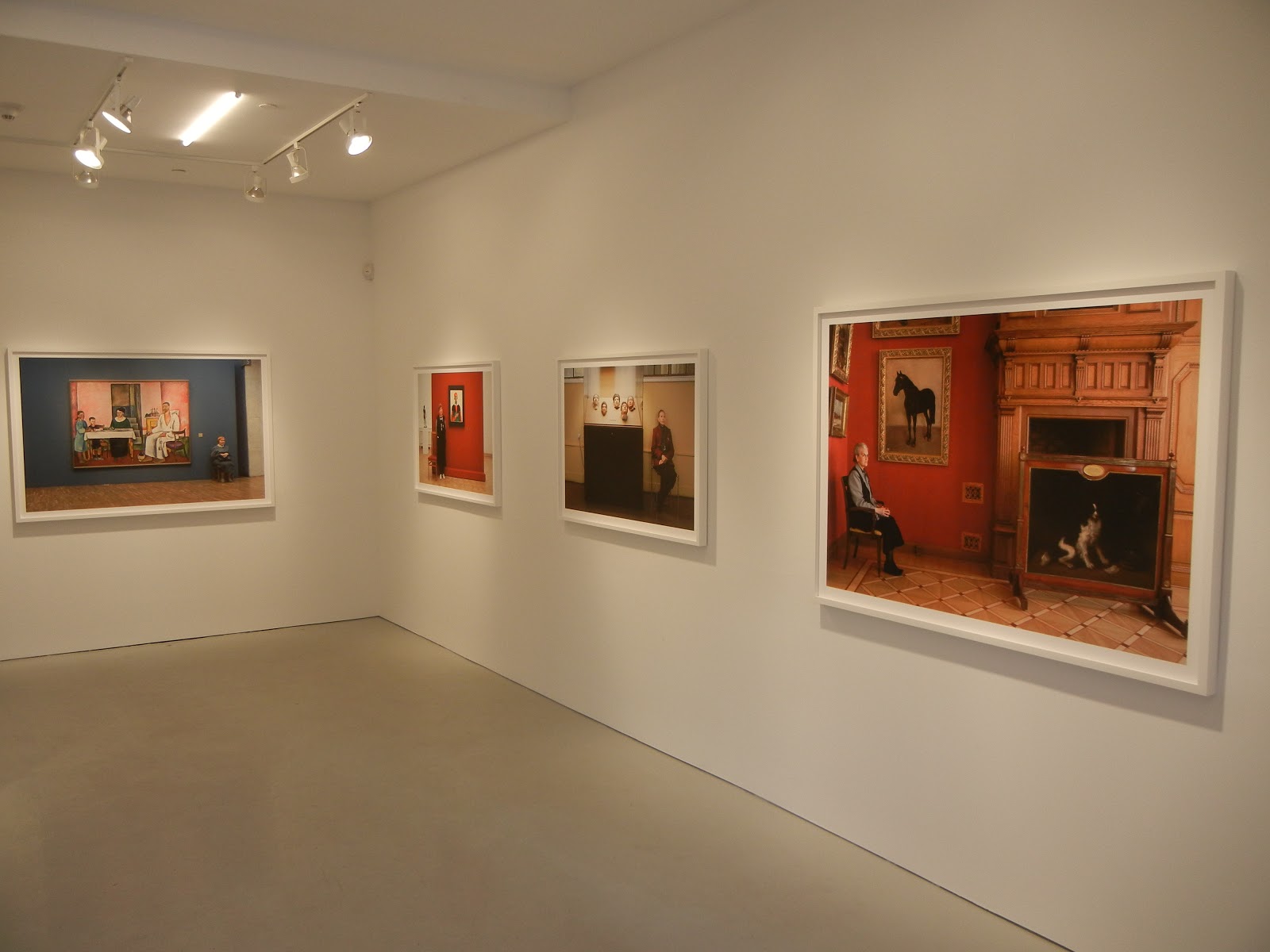
But the images in Freeberg's series go far beyond this obviousness. They ask us to step back and consider art in context, to see the treasures of Russia's finest museums not just as items to be checked off after consulting the wall label, but as objects that stand in relation to everything around them: the wall colors, the light, the moldings, the frames, the position and gestures of the guards, and the people themselves. The art he sees is in the entire environmental experience, the back and forth dialogue between the "center" and the overlooked surroundings. There is a conceptual kinship with the work of Louise Lawler here, but with a softer, more human touch.

Freeberg's visual echoes between the retired Russian women and the nearby artworks cover a wide swath of ground, from hair styles and facial features to poses and clothing color. A glass case of wide eyed mummy masks is flanked by an equally alert guard, while the jowled cheeks of a Malevich self-portrait are surprisingly similar to those of his protector. The patterned shawl of a guard sits underneath an equally swirling blue Matisse tablecloth, just as a striped shirt recalls the sculpted sideways drapery of a nearby ancient statue. And a modest, hands-clasped guard is a doppelganger for the nervous young girls before a country dance in a painting by Kugach, almost as though she was an extension of the painted scene herself. In every case, the pairings are done with an eye for detail and a respect for the dignity of the guards; they never degrade into overly clever jokes made at the expense of the sitters. In unexpected ways, the presence of the guards enhances the overall of seeing the art, highlighting aspects of the work we might have missed.

What's exciting about these pictures is that they use photography to force a recalibration of seeing. They are less about the amazing paintings and sculptures on display and more about the space around them, and the shifting relationships between people and the installations of art. They are a "hiding in plain sight" revelation, innocuously simple but consistently rich and thought provoking.

Collector's POV: The works in this show are priced based on size. The 30x45 prints are $6000 each and the 40x60 prints are $7500 each. Freeberg's work has not yet reached the secondary markets, so gallery retail remains the best/only option for those collectors interested in following up.

Rating: ** (two stars) VERY GOOD (rating system described here)

Transit Hub:
  • Artist site (here)
  • Features/Reviews: Slate Behold (here), American Photo (here), SF Gate (here)

Andy Freeberg, Guardians
Through March 2nd

Andrea Meislin Gallery
534 West 24th Street
New York, NY 10011

Monday, February 4, 2013

Robin Rhode: Take Your Mind Off the Street and Paries Pictus @Lehmann Maupin

JTF (just the facts): A total of 9 multi-panel works and 1 single image photograph, framed in white and unmatted, and hung against white walls in the two separate gallery venues. Each of the multi-panel works is made up of a series of 16x24 c-prints, gathered into sets of 8, 9, 12, 15, or 16 prints. All of the works were made in 2012-2013 and are available in editions of 5+2AP. The round single image photograph is sized 73x73. The show also includes 2 metal sculptures suspended from the ceiling in the 26th Street location and a series of crayon-colored wall decals in the Chrystie Street location. All of the photographs are on view at the 26th Street location, except for 1 set of 8 prints (switchblade) shown on the second floor balcony at Chrystie Street. (Installation shots at right.)

Comments/Context: Robin Rhode's photographic works distill an unlikely mash-up of artistic styles and genres into cleverly simple visual vignettes. Mixing equal parts hip-hop street art and active performance with a photographic approach that reaches back to Marey and Muybridge, his mini-stories play out with flip book style lightness and ease. Told against the backdrop of anonymous walls and using himself as a kind of subtly comic straight man, his works play with camera-viewed flatness and perspective, using iterative stop motion steps to create a linear progression of time and narrative.

Most of Rhode's series are step-by-step charcoal drawings (black on white or white on black) that find the artist interacting with the evolving hand-drawn scene behind him. Huge feathers fan out in an arc, a car spanner spirals overhead, and a massive comb makes crossed striations on the wall. Unexpected scale and optical trickery often play a part: an oversized afro pick pumps up a tangled ball into a big circle, birds fly over a barbed wire fence, and ships multiply across a wavy sea tracked by sight lines drawn straight from Rhode's eyes. Motion is indicated by cartoon swooshes, giving the bounce of a basketball, the curved climb of a bicycle, and the speed of a car the appearance of movement. Rhode's works give the one-liner of street art more degrees of freedom, allowing basic visuals to morph and change.

These recent works feel slightly less subversive and reactionary than previous works I have seen by Rhode; they have less political edge and more carefree wit. I think this softens their impact, tipping the balance away from social critique and toward nimble ingenuity. This doesn't diminish their imagination or originality, but it reduces their perceived weight. These works ask less of us, and as a result, feel more like exercises in whimsy.

Collector's POV: The photographic works in these shows range in price from 50000€ to 75000€ based on size/number of panels. Rhode's work has not been consistently available in worldwide photography auctions; when it has shown up, it has generally been placed in the Contemporary Art sales. Recent prices have ranged between $30000 and $35000, but these numbers should be taken with a degree of caution as my data from these sales is less comprehensive.

Rating: * (one star) GOOD (rating system described here)

Transit Hub:
  • Features/Reviews: TimeOut New York (here), ArtFCity (here), ArtINFO (here), GalleristNY (here)

Robin Rhode: Take Your Mind Off the Street and Paries Pictus
Through February 23rd and March 16th

Lehmann Maupin
540 West 26th Street
New York, NY 10001

Lehmann Maupin
201 Chrystie Street
New York, NY 10002

Friday, February 1, 2013

Zwelethu Mthethwa, New Works @Shainman

JTF (just the facts): A total of 18 large scale color photographs, framed in white and unmatted, and hung against white walls in the entry, the divided main gallery space, and the two smaller side rooms. All of the works are digital c-prints, made in 2010 or 2012. There are three projects represented in the show: The Brave Ones, Hope Chest, and The End of An Era, and each of the images in each series comes in a large and small size, as follows - The Brave Ones (54x72 in an edition of 1+1AP and 27x36 in an edition of 3+1AP), Hope Chest (60x80 in an edition of 1+1AP and 24x33 in an edition of 3+1AP) and The End of an Era (49x67 in an edition of 1+1AP and 24x33 in an edition of 3+1AP). (Installation shots at right.)

Comments/Context: Zwelethu Mthethwa's newest show of portraits certainly ranks among the best work he has produced in his already successful career. In three separate projects, the South African photographer probes the subtleties and depths of personal identity, via the unlikely costumes of members of the Nazareth Baptist Church, the battered hope chests of elderly women, and the hostel room furnishings of anonymous migrant workers. The pictures tell rich stories of the past, the present, and an aspirational future, consistently bursting with thick, astonishing color.

Making the choice to reject your traditional Zulu heritage and join an insurgent Christian church is likely a hard one for any young man. But to do so and then proudly wear the hybrid British/Scottish garb of kilts and bow ties, knee socks and puffy yarn head pieces is enough to test anyone's resolve, especially in a culture with such strong definitions of masculinity. No wonder Mthethwa called these sitters The Brave Ones. Posing in the verdant green of the bush under solitary shade trees, young men stand with languorous defiance, in pith helmets and green ribbons or sporting red checked skirts and starched white shirts. It's a smart inversion of the stereotypical tribal pose, capturing an unexpected willingness (or need) to break from the crowd.

Mthethwa's portraits of women with their hope chests are even more confident and powerful. Weathered women who have seen it all pose with their chests, often resting on them or guarding them with reverent attention. The wooden boxes are heavy and solid, filled with treasures and possessions reaching back to the hopeful time before the woman was married. Many miles have clearly passed since then for all of the subjects, but even though times have changed, the chests have lost none of their traditional importance. One woman in a shiny orange and black dress sits atop her chest flanked by her matching tractor, while another wearing a bright red hat with silver rivets waits primly alongside hers under a blue umbrella. The dusty red earth tries to swallow up one woman's padlocked chest, and a jumbled pile of luggage and blankets threatens that of another. Interior wall colors throb with bold intensity, the sparse painted rooms often organized with the chests as their centerpiece furnishing. The simple image of a woman in a pink headscarf sitting in a green plastic chair before her chest, drenched in a flood of peach light, is at once penetratingly poignant and quietly breathtaking.

Mthethwa's third project, The End of an Era, reprises his earlier images of empty interiors, allowing the details of a tidy room to tell its inhabitant's story. Here one room is covered edge to edge in World Cup team shots and soccer cutouts from newspapers, while another is a study in the contrasting patterns of a blanket, a wooden divider, and a painted wall. Others focus down on specific objects: the orderliness of a set of combs and toiletries (the soap delicately paced and a shard of mirror carefully centered on the table) or the solitary candle on a makeshift bedside table. The pictures are clear evidence that even in the humblest of conditions, people find ways to make a place personal, leaving behind traces of themselves.

More generally, I think this show cements Mthethwa's position as one of the important innovators in contemporary photographic portraiture. He has a brilliant sense for how clothing, objects and environments are representative of a sitter's most strongly held beliefs, and how the subtle interaction between them can reveal something that would otherwise be hidden.

Collector's POV: The works in this show are priced based on size and series. Prints from The Brave Ones are either $26000 or $18000, those from Hope Chest are either $28000 or $18000, and the ones from The End of an Era are either $26000 or $18000. Mthethwa's work has become more available in the secondary markets in recent years, with prices ranging from roughly $5000 to $28000.
 
Rating: ** (two stars) VERY GOOD (rating system described here)

Transit Hub:
  • Artist Facebook page (here)
  • Features/Reviews: NY Times T magazine blog (here), Cool Hunting (here)

Zwelethu Mthethwa, New Works
Through February 23rd

Jack Shainman Gallery
513 West 20th Street
New York, NY 10011