Showing posts with label Alex Prager. Show all posts

Tuesday, April 9, 2013

Auction Results: Important Photographs from the Collection of Dr. Anthony Terrana, April 2 and 3, 2013 @Phillips New York

Phillips can certainly be pleased with the outcome of the Anthony Terrana single owner photographs sale. Interest was strong across all three price levels, the overall Buy-In rate hovered near 15%, and the Total Sale Proceeds nearly reached the High estimate, powered by a solid number of positive surprises.

The summary statistics are below (all results include the buyer’s premium):

Total Lots: 165
Pre Sale Low Total Estimate: $3718500
Pre Sale High Total Estimate: $5400000
Total Lots Sold: 140
Total Lots Bought In: 25
Buy In %: 15.15%
Total Sale Proceeds: $5053750

Here is the breakdown (using the Low, Mid, and High definitions from the preview post, here):

Low Total Lots: 78
Low Sold: 72
Low Bought In: 6
Buy In %: 7.69%
Total Low Estimate: $533000
Total Low Sold: $677625

Mid Total Lots: 64
Mid Sold: 50
Mid Bought In: 14
Buy In %: 21.88%
Total Mid Estimate: $1452000
Total Mid Sold: $1348125

High Total Lots: 23
High Sold: 18
High Bought In: 5
Buy In %: 21.74%
Total High Estimate: $3415000
Total High Sold: $3028000

The top lot by High estimate was tied between lot 12, Alfred Stieglitz, Georgia O'Keeffe, 1919 (image at right, top, via Phillips), and lot 19, Irving Penn, Harlequin Dress (Lisa Fonssagrives-Penn), 1950, both estimated at $300000-500000. The Stieglitz sold for $302500 and the Penn sold for $290500. The top outcome of the sale was lot 28, Diane Arbus, Identical Twins Cathleen and Colleen, Roselle, NJ, 1967, estimated at $180000-220000, sold at $602500 (image at right, top, via Phillips).

92.14% of the lots that sold had proceeds in or above the estimate range. There were a total of 18 surprises in the sale (defined as having proceeds of at least double the high estimate):

Lot 3, Francesca Woodman, Untitled, Providence, Rhode Island, 1975-1978, estimated at $25000-35000, sold at $86500
Lot 7, Laszlo Moholy-Nagy, Lyon Stadium, 1929. estimated at $90000-120000, sold at $278500
Lot 18, Herb Ritts, Versace Dress, Back View, El Mirage, 1990, estimated at $20000-30000, sold at $68500
Lot 20, Robert Polidori, Galerie Basse, Chateau de Versailles, 1985, estimated at $18000-22000, sold at $45000
Lot 28, Diane Arbus, Identical Twins Cathleen and Colleen, Roselle, NJ, 1967, estimated at $180000-220000, sold at $602500
Lot 29, Angela Strassheim, Untitled (Father & Son), 2004, estimated at $10000-15000, sold at $35000
Lot 137, Pieter Hugo, Abdullahi Mohammed with Mainsara, Ogere-Remo, Nigeria, from Gadawan Kura, The Hyena Men II, 2007, estimated at $10000-15000, sold at $40000
Lot 41, Martine Franck, Children's Library Built by the Atelier Montrouge, Clamart, France, 1965/later, estimated at $2000-3000, sold at $6875
Lot 45, Lewis Hine, Tenement Product, Chicago, 1907/1920s, estimated at $6000-8000, sold at $52500 (image at right, middle, via Phillips)
Lot 67, Edward Steichen, The Flatiron Evening, 1905, estimated at $5000-7000, sold at $23750
Lot 98, Masao Yamamoto, Selected images from A Box of Ku and Nakazora, 1990-2002, estimated at $6000-8000, sold at $18750
Lot 101, Lynn Davis, Red Pyramid, Dashur, Cairo, Egypt, 1997, estimated at $7000-9000, sold at $20000
Lot 108, Nobuyoshi Araki, Untitled, 1990-2000, estimated at $3000-4000, sold at $11250
Lot 114, Sally Mann, Untitled from Deep South, 1998, estimated at $7000-9000, sold at $26250
Lot 130, Ryan McGinley, Whirlwind, 2003, estimated at $5000-7000, sold at $15000
Lot 140, Mickalene Thomas, Afro Goddess Lover's Friend, 2006, estimated at $8000-10000, sold at $23750
Lot 158, Alex Prager, Annie, 2007, estimated at $5000-7000, sold at $30000 (image at right, bottom, via Phillips)
Lot 159, Alex Prager, Wendy from Week-End, 2009, estimated at $7000-9000, sold at $21875

Complete lot by lot results can be found here.

Phillips
450 Park Avenue
New York, NY 10022

Friday, April 5, 2013

Every Booth at the 2013 AIPAD Photography Show, Part 2 of 6

Start here for Part 1 of this series. It provides some background and explanation for what's going on in these lists.

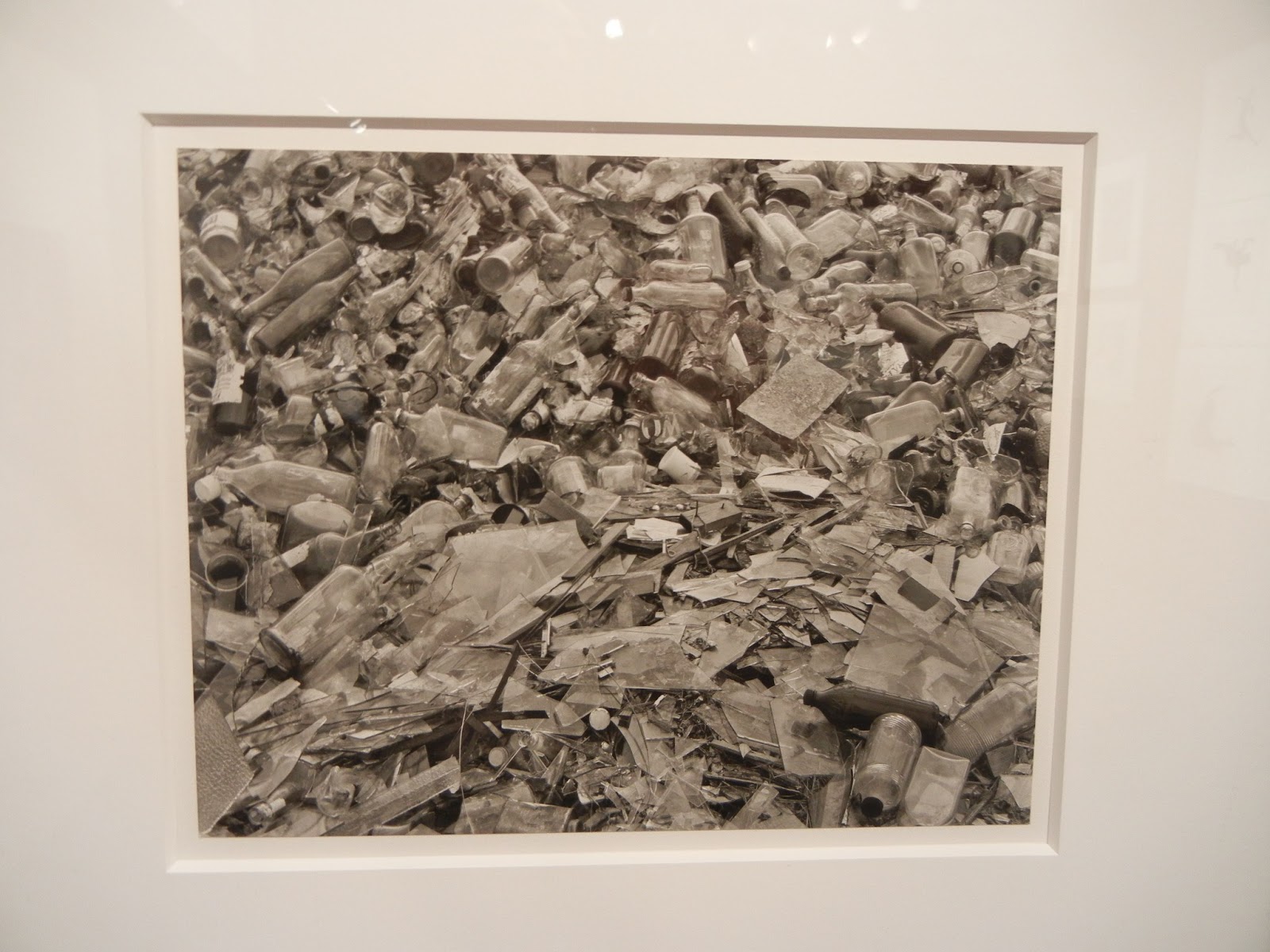
Etherton Gallery (here): Frederick Sommer, $35000. It's a glass pile, but it's also an exercise in texture, all-over abstraction, flattened space, and generally blowing your mind.


Galeria Vasari (here): Anatole Saderman, $10000. I've only ever seen a few of these Saderman florals, so it was great to see an entire wall of them in one place.


Yancey Richardson Gallery (here): Alex Prager, $6000. Don't miss the falling body in the bottom of the frame.


Joseph Bellows Gallery (here): John Schott, $8000. One of the lesser known New Topographics photographers, Schott deserves a closer look. I like the collapsed layers of space in this image, as well as the up and down movement of the hose.


Jackson Fine Art (here): Jody Fausett, $5500. The surreal, saturated color matching of cats and sofa upholstery.


Galerie Johannes Faber (here): Bernd and Hilla Becher, $9600. We've all seen countless Becher winding towers, but I haven't seen many vintage prints in intimate sizes like this one. It couldn't have been larger than 10x8, but it was still powerful.


Monroe Gallery of Photography (here): Nina Berman, $5500. It's a fracking picture first and foremost, but the soft enveloping glow from the gas flare is what makes it durably memorable.


M+B (here): Jessica Eaton, $5000. If I was an abstract photography collector, I'd be all over Jessica Eaton's work. Every time I see something new from her, it's fresh, exciting, and increasingly complex.


Yossi Milo Gallery (here): Alison Rossiter, $6500 each. I know, I know, I highlighted a similar bunch of works by Rossiter in my Armory review. But they're just so smart that I can't help myself. They're small and hardedged from afar, curled and handmade up close.


Paul Cava Fine Art Photographs (here): Emmet Gowin, $7500. I don't remember ever seeing this double exposure Gowin before, mixing vegetal forms and a nude of Edith.


Winter Works on Paper (here): Charles Jones, $8500. Jones' sublime fruits and vegetables should be in every chef's kitchen. Their lush tonalities remind us of how a still life can be magical.


M97 Gallery Shanghai (here): Jiang Zhi, $4500. We're flower collectors, so we like to think we've seen it all when it comes to floral photography. And yet, here's something new - flowers on fire. This small flaming orchid print came from a portfolio; the price above represents what a larger stand alone print would cost.


PDNB Gallery (here): William Eggleston, $40000. Great sunlight, great color. Enough said.


Charles Schwartz Ltd. (here): Samuel Gottscho, $8000. A tactile print of dark, smoky, Modernist docks.

Continue to Part 3 here.

Friday, March 15, 2013

Auction Results: Contemporary Art, March 7, 2013 @Sotheby's New York

The photographic material in Sotheby's recent Armory week Contemporary Art sale clearly didn't attract much attention. The results of the sale were pretty dismal, with a Buy-In rate for photography over 50% and Total Sale Proceeds for photography coming in way under the low estimate.

The summary statistics are below (all results include the buyer’s premium):

Total Lots: 32
Pre Sale Low Total Estimate: $499000
Pre Sale High Total Estimate: $704000
Total Lots Sold: 15
Total Lots Bought In: 17
Buy In %: 53.13%
Total Sale Proceeds: $271625

Here is the breakdown (using the Low, Mid, and High definitions from the preview post, here):

Low Total Lots: 8
Low Sold: 4
Low Bought In: 4
Buy In %: 50.00%
Total Low Estimate: $59000
Total Low Sold: $26500

Mid Total Lots: 22
Mid Sold: 11
Mid Bought In: 11
Buy In %: 50.00%
Total Mid Estimate: $50500
Total Mid Sold: $245125

High Total Lots: 2
High Sold: 0
High Bought In: 2
Buy In %: 100.00%
Total High Estimate: $140000
Total High Sold: $0

The top photography lot by High estimate was lot 137, Mike Kelley and Bob Flanagan, More Love Than Can Ever Be Repaid, 1990, estimated at $60000-80000; it did not sell. The top outcome of the sale was lot 207, Pieter Hugo, Jatto with Mainasara, Ogere-Remo, Nigeria, 2007, estimated at $25000-35000; it sold for $43750.

80.00% of the lots that sold had proceeds in or above the estimate range and there were no surprises in the sale (defined as having proceeds of at least double the high estimate).

(Lot 203, Alex Prager, Cindy (from the Big Valley series), 2008, estimated at $5000-7000, sold for $10000. Image via Sotheby's.)

Complete lot by lot results can be found here.

Sotheby's
1334 York Avenue
New York, NY 10021

Tuesday, April 17, 2012

Alex Prager, Compulsion @Richardson

JTF (just the facts): A total of 25 color photographs, framed in white with no mat, and hung in the main gallery space, the project room, and throughout the office area. A short film, La Petite Mort, is being screened in a small side room. The chromogenic prints from Compulsion come in 9 paired diptychs (in editions of 6) consisting of one large image and one smaller image of an eye. The large images range in size from 48x20 to 59x72; the eyes are each 20x23. There is also one grid of six eyes which is 43x72 (in an edition of 3). The 6 film stills from La Petite Mort in the project room are each 13x25, in editions of 6. A signed catalog of the exhibit is available from the gallery for $35. Companion exhibits of the same body of work are also on view at M+B in Los Angeles (here) and Michael Hoppen in London (here). (Installation shots at right.)

Comments/Context: As Alex Prager's star rises in the world of contemporary photography, I'll admit to being a bit of a reluctant but emerging convert. It's undeniable that the hype around her work has reached a fever pitch. And when I asked for the show checklist, I got a reply I haven't heard in years: the show is basically sold out. What? I said. I visited the show after it had been open for roughly a week. Everything already gone, except for a few stragglers in the back room? That's certainly evidence of strong interest in her work. Good for her.

But so what's going on here? When I first wrote about Prager's work two years ago, I felt a very distinct Cindy Sherman echo. Nearly all of those images were portraits, many quite close up, and her retro styling and melodramatic scene setting felt like the Untitled Film Stills, with a more hysterical LA noir vibe. Cinematic references to Alfred Hitchcock and David Lynch were thrown around like candy. That show was followed up by Prager's inclusion in MoMA's New Photography show in 2010 where she showed a mix of older work and her newest short film; this gave her an institutional stamp of approval and kicked off a few high profile commissions.

Fast forward a couple of years and Prager is back with a new body of work and another short film. At this point, the look and feel of her work has become a signature style. From saturated colors and women in trouble, to throwback dresses and big wigs, a Prager photograph is now easily identified from across a room. Her recent images step back quite a bit from the earlier intimate portraits and settle on wider scenes and atmospheric situations. Each narrative turns on a disaster: a house fire, a flood, a roadside accident (with a scary looking coyote), a sinkhole in the middle of 110, a capsized ferry with floundering passengers. Paired with each dreamlike setup is a single large eye, often doused with mascara (reminiscent of one-eyed Bill Brandts from decades earlier, but more dramatic). We're overly eager spectators at these tragedies, and being sternly watched at the same time. While the visual device is a bit heavy handed, it reinforces the feeling of Weegee-esque back-and-forth voyeurism.

The Sherman connection now seems overly simplistic. Prager has evolved her art toward the Vancouver crowd (Wall, Douglas, Graham) and their unique brand of staged reality. But she has done so on her own terms, with a distinct styling and bright Southern California light that is wholly her own. I struggle a bit with her craftsmanship, in that many of the images seem distractingly blurred or over enlarged, while others don't hide the crisp PhotoShop manipulations with enough deftness. But then again, maybe the kind of perfection I am expecting isn't necessary here. Perhaps that subtle roughness and obviousness is part of the loose allure of her brand of story telling.

All that said, many of the scenes on view here are striking and memorable. A woman hangs like a rag doll from the span of an electric tower, another is blown through the air (losing her purse in the process), a third is dangling from the bumper of a car, while a fourth is ensnared in a tangle of telephone wires. This is well constructed, puzzling tragedy, and the images have the feel of watching from an assembled crowd of gawkers. She's successfully built the suspense and drawn me in. The short film, La Petite Mort, running in the viewing room, expands this narrative form, as a woman is blown off a set of train tracks and into a nearby pond, only to emerge dry into the critical eyes of a group of bystanders, where she proceeds to faint/die. The dissonant dramatic music makes the whole thing seem simultaneously overdone and perfect tuned. It's a period piece, with a new layer of in-on-the-joke conceptual rework.

So is Prager's work a guilty pleasure or is it smartly mining visual/cultural stereotypes to create new kinds of contemporary story telling? I suppose it's both at some level, but I think she deserves credit for defining her own playing field and then consistently continuing to expand it. My conclusion is that it's overly easy to linger in the retro fabulousness of her world, and thereby overlook the fact that Prager's work is getting better and more complex with each successive project.
.
Collector's POV: The prints in this show are priced as follows. The Compulsion diptychs are $18000 (as a pair). Smaller individual images of the large scenes and of the eyes from Compulsion are available for $8000 and $6000 respectively (in editions of 9). The La Petite Mort prints are $6500 each. As I mentioned above, these prices are perhaps theoretical at this point if the show is well sold, so check with the gallery directly about what is still available. Prager's work has also started to show up the secondary markets in the past few years, with prices ranging from roughly $3000 to $17000.
.
Rating: ** (two stars) VERY GOOD (rating system described here)
.
Transit Hub:
  • Artist site (here)
  • Reviews/Features: New York (here), Vogue (here)
Alex Prager, Compulsion
Through May 12th

Yancey Richardson Gallery
535 West 22nd Street
New York, NY 10011

Tuesday, October 26, 2010

New Photography 2010 @MoMA

JTF (just the facts): A group show of the work of four contemporary photographers, variously framed, and hung in a two room divided gallery on the 3rd floor. The exhibit was curated by Roxana Marcoci. (Installation shots at right.)

The following photographers have been included in the show, with the number of works on view in parentheses:
  • Roe Ethridge (8 chromogenic prints, framed in white, from 2008-2010)
  • Elad Lassry (15 chromogenic prints in matched color frames from 2008-2010, 1 16mm video from 2009)
  • Alex Prager (6 chromogenic prints, framed in white, from 2007-2010, 1 HD video from 2010)
  • Amanda Ross-Ho (2 chromogenic prints from 2010, 1 inkjet print on canvas (unframed and pinned to wall) from 2010, 1 chromogenic print on wood shelf from 2007, 1 sheet rock wall with holes, photographs and other objects from 2010)
Comments/Context: This year's New Photography exhibit at the MoMA might better be called "Offspring of the Pictures Generation". The show gathers together the work of four contemporary photographers who have continued down the path of image appropriation and recontextualization, evolving their aesthetic approaches in the crucible of the recent explosion of media. They borrow from movies, magazines, fashion, and commercial/stock photography with equal ease, often infusing the seemingly random with unexpected significance.

So how have these descendants changed the culture of appropriation, 25 years later? To my eye, they have stripped away the biting humor that made the images from the Pictures Generation so striking; gone is the subtle wry wit with an undercurrent of emotional outrage that lurked beneath those compositions. These new works seem more neutered, much cooler and more distant, rich in intellectualism and conceptual theory, but generally lacking in the spark that grabs and holds a viewer's attention. For Roe Ethridge, only the lusciously furry bowl of rotten fruit provides much of a jolt. His blurry pixelated plate on top of a crisp black and white scarf seems a bit forced and self-conscious. For Amanda Ross-Ho, appropriation and process have been mixed together, documenting a calculated inner landscape of studio remnants and familial connections. Her sculptural installations clearly have layers of conceptual significance, and yet they left me cold.

Elad Lassry's matchy-matchy isolated magazine images against paired colored backgrounds/frames at least have a bit of playfulness to them. I particularly liked the wild pink hat (owned by collector Peter Brant); the red nailpolish on green pedestals and the Herend monkeys against green were also vibrant and memorable. Lassry smartly breaks up the monotony of the commercial photography feel by adding in a blur or multiple exposure here and there, so the walls don't feel like an endless parade of candy colored stock images. Alex Prager is in many ways an outlier in this show, since her large scale photographs aren't direct appropriations or theoretical exercises, but glossy stylistic echoes of cinematic glamour. That said, they are by far the most approachable works in the exhibit, evidenced by the continued clustering of the crowd in her corner of the gallery. Her retro world is invitingly dramatic and visually stunning, and quite a bit less overtly intellectual.

In the end, while I like the thematic construct of this show (and I think it is altogether worthwhile to explore how appropriation is being updated by contemporary artists), the payoff isn't particularly stunning or sensational. I wonder if simple image reuse has now become so commonplace that it wholly fails to surprise us, unless some additional element of originality or shock (visual or intellectual) is introduced. Is this photographic genre slowly being anesthetized by overuse? Most would say no (it's only the beginning), but perhaps it is time to re-evaluate this approach once again, and look for a crackling disruptive jump to someplace entirely new.

Collector's POV: The photographers in the show are represented by the following galleries:
  • Roe Ethridge: Andrew Kreps Gallery (here), Gagosian Gallery (here)
  • Elad Lassry: Luhring Augustine (here), David Kordansky Gallery (here)
  • Alex Prager: Yancey Richardson Gallery (here), Michael Hoppen Gallery (here), M+B (here)
  • Amanda Ross-Ho: Mitchell-Innes & Nash (here), Cherry and Martin (here)

None of these artists has any significant secondary market track record, so gallery retail will likely be the only option for acquiring their work in the short term.

Rating: * (one star) GOOD (rating system described here).

Transit Hub:
  • Exhibition site (here)
  • Reviews: NY Times (here), Huffington Post (here)
  • Amanda Ross-Ho interviewed by Elad Lassry, BOMB (here)

New Photography 2010
Through January 10th

Museum of Modern Art
11 West 53rd Street
New York, NY 10019

Friday, February 5, 2010

Garry Winogrand, Women Are Beautiful @Richardson

JTF (just the facts): A total of 13 black and white images, framed in black and matted, and hung in the small project room space near the back of the gallery. The black bordered gelatin silver prints are 11x14 or reverse, and were printed in 1981, in editions of 80. (Installation shots at right.)

Comments/Context: One of the things I admire most about the Yancey Richardson Gallery is that the exhibition program consistently pairs vintage and contemporary works (using the main and project spaces) in smart ways; it is one of the few galleries in New York that effectively uses vintage work to provide a deeper and more rounded context for its primary contemporary offerings.
.
This small show of a selection of Garry Winogrand's images from Women Are Beautiful is a terrific example of a clever pairing. Most collectors will be extremely familiar with this body of Winogrand's work, but the pictures take on a markedly different feel when juxtaposed with Alex Prager's staged portraits (review here). Winogrand's casual images of attractive 1970s women on street corners, at parties, at the beach or in the park were heavily criticized when they were first published; many found them too voyeuristic or exploitative, the "male gaze" gone overboard. When placed next to Prager's new works, two surprisingly divergent views of women emerge: Prager's retro world feels hemmed in, the women trapped and closed off, left listless and bored by their roles; Winogrand's women have a lively sense of confident freedom, open and loose, unperturbed by the man with the camera.
.
Overall, when hung in contrast, the Winogrand images do an excellent job of highlighting the crux of Prager's work; the overtly staged "women as actresses" concept is strongly enhanced by a look to these well known pictures from the past. While this show doesn't merit a detour on its own, it certainly creates a thoughful dialogue with the works in the adjacent gallery.

Collector's POV: The prints in this small show are priced at $3600 each, including the frame. Prints from this series are routinely available in the secondary markets, ranging in price from $1000 to $6000. The entire portfolio includes 85 prints.

Rating: * (one star) GOOD (rating system described here)

Transit Hub:
  • Current Exhibition: Tampa Museum of Art, 2010 (here)
  • Feature: American Suburb X (here)
Garry Winogrand, Women Are Beautiful
Through February 20th
535 West 22nd Street
New York, NY 10011

Thursday, February 4, 2010

Alex Prager, Week-End @Richardson

JTF (just the facts): A total of 8 color images, framed in white with no mat, and hung in the main gallery space. The chromogenic prints range in size from 36x47 to 48x62, and are all made in editions of 5. The works are all titled using the names of women, and were all made in 2009. (Installation shots at right.) A companion exhibit of the same body of work is also on view at M+B Gallery in Los Angeles (here).

Comments/Context: As we are photography collectors, we are constantly trying to put contemporary work in some kind of historical context, looking for connections to figures and influences from the past that will inform our understanding of what we're seeing now. As a result, I found it nearly impossible to see Alex Prager's new body of work without being immediately drawn back to Cindy Sherman's untitled film stills from the late 1970s; the similarities and echoes are pretty striking.

Prager's staged portraits of California women are full of saturated colors and an exaggerated retro melodrama. Her models have been styled with dated wigs, bright red lipstick, and obvious fake eyelashes, covered in thick make-up and dressed in vintage polyester. They stare vacantly beyond the picture plane, resigned to the film noir tragedy that is about to occur, or tightly wound but trying to stay calm, struggling to protect their vulnerabilities; the cinematic role playing runs the gamut from coolly passive to wearyingly indifferent.
.
Hypothetically placed side by side with Sherman's work, Prager's images have a more amplified and ambiguous tension. Sherman's stills were more conceptual and consciously neutral, with more distinct settings and narrative environments; in Prager's world, the staging is more spare and the situations are more intensely unclear - often all we're given is a head against a monochrome sky. While both bodies of work address the roles of women, the construction of personal identities, and even the creation of the idealized woman by the media, Sherman's fictions seem altogether more plausibly real, while Prager's have been extravagantly inflated to the point where nuances of gesture and facial expression are the only hooks we have to the unknown and mysterious story.
.
While scholars might argue whether Prager's work is overtly derivative, the reality is that Sherman's film stills are generally beloved and admired, and Prager's pictures tap into many of the same themes, issues and emotions, but in a colorful, contemporary manner; it is no wonder there is a noticeable buzz in the air.
.
Collector's POV: The prints in this show are priced between $3900 and $13700, with a variety of intermediate levels along the way ($4900, $5900, $7300, and $9500). Prager's work entered the secondary markets for the first time in 2009, but there were so few lots on offer/sold that it is hard to draw much of a pricing pattern. While large color portraits don't fit into our collecting genres, my favorite image in this show was Eva, who stands with her face raised up but her eyes closed, set against a backdrop of dark blinds.

Rating: * (one star) GOOD (rating system described here)

Transit Hub:

  • Artist site (here)
  • Reviews: The Daily Beast (here), Wallpaper (here)
  • Interview: Art in America (here)
Alex Prager, Week-End
Through February 20th

Yancey Richardson Gallery
535 West 22nd Street
New York, NY 10011