Showing posts with label Frederick Sommer. Show all posts

Friday, April 5, 2013

Every Booth at the 2013 AIPAD Photography Show, Part 2 of 6

Start here for Part 1 of this series. It provides some background and explanation for what's going on in these lists.

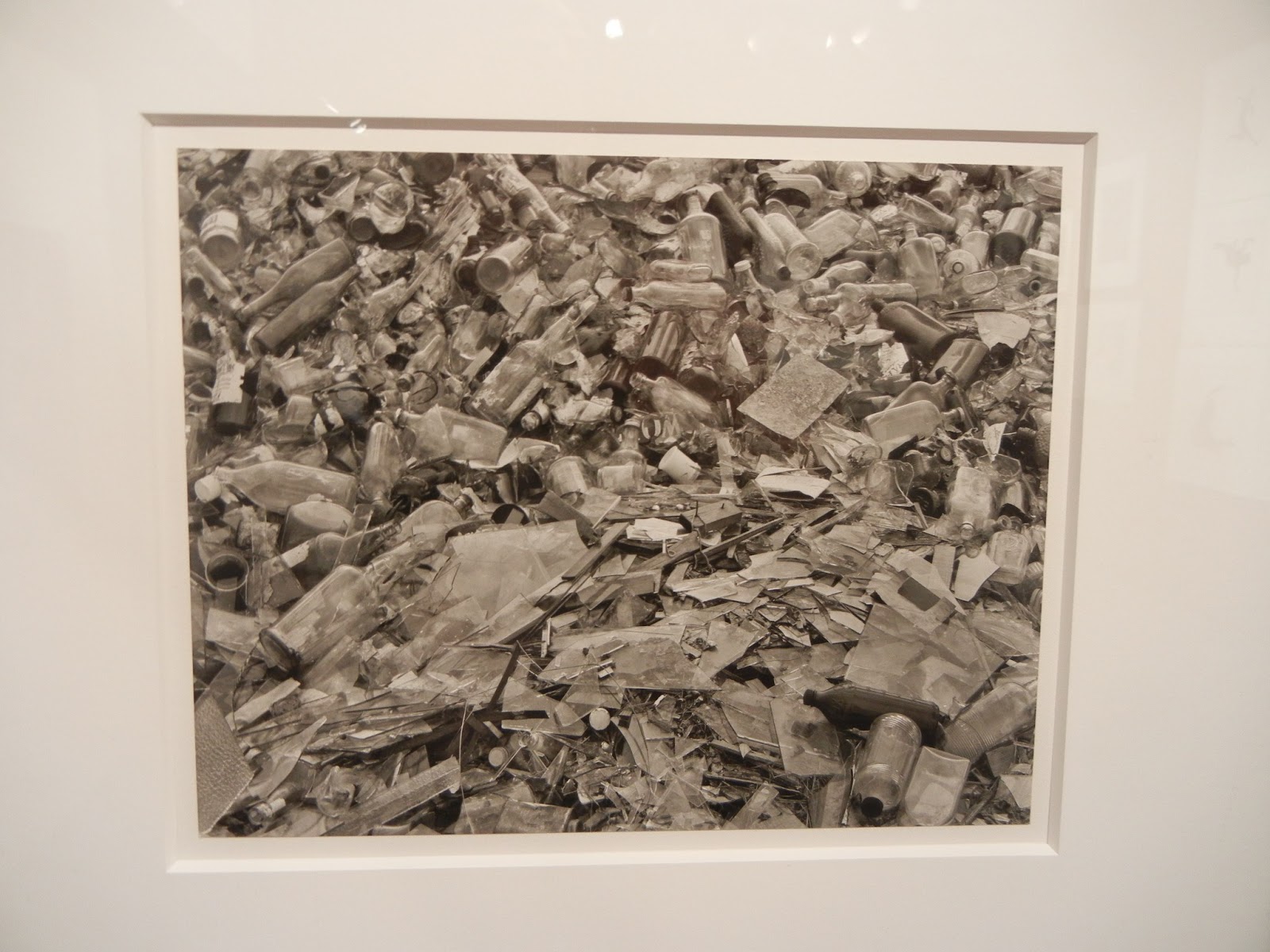
Etherton Gallery (here): Frederick Sommer, $35000. It's a glass pile, but it's also an exercise in texture, all-over abstraction, flattened space, and generally blowing your mind.


Galeria Vasari (here): Anatole Saderman, $10000. I've only ever seen a few of these Saderman florals, so it was great to see an entire wall of them in one place.


Yancey Richardson Gallery (here): Alex Prager, $6000. Don't miss the falling body in the bottom of the frame.


Joseph Bellows Gallery (here): John Schott, $8000. One of the lesser known New Topographics photographers, Schott deserves a closer look. I like the collapsed layers of space in this image, as well as the up and down movement of the hose.


Jackson Fine Art (here): Jody Fausett, $5500. The surreal, saturated color matching of cats and sofa upholstery.


Galerie Johannes Faber (here): Bernd and Hilla Becher, $9600. We've all seen countless Becher winding towers, but I haven't seen many vintage prints in intimate sizes like this one. It couldn't have been larger than 10x8, but it was still powerful.


Monroe Gallery of Photography (here): Nina Berman, $5500. It's a fracking picture first and foremost, but the soft enveloping glow from the gas flare is what makes it durably memorable.


M+B (here): Jessica Eaton, $5000. If I was an abstract photography collector, I'd be all over Jessica Eaton's work. Every time I see something new from her, it's fresh, exciting, and increasingly complex.


Yossi Milo Gallery (here): Alison Rossiter, $6500 each. I know, I know, I highlighted a similar bunch of works by Rossiter in my Armory review. But they're just so smart that I can't help myself. They're small and hardedged from afar, curled and handmade up close.


Paul Cava Fine Art Photographs (here): Emmet Gowin, $7500. I don't remember ever seeing this double exposure Gowin before, mixing vegetal forms and a nude of Edith.


Winter Works on Paper (here): Charles Jones, $8500. Jones' sublime fruits and vegetables should be in every chef's kitchen. Their lush tonalities remind us of how a still life can be magical.


M97 Gallery Shanghai (here): Jiang Zhi, $4500. We're flower collectors, so we like to think we've seen it all when it comes to floral photography. And yet, here's something new - flowers on fire. This small flaming orchid print came from a portfolio; the price above represents what a larger stand alone print would cost.


PDNB Gallery (here): William Eggleston, $40000. Great sunlight, great color. Enough said.


Charles Schwartz Ltd. (here): Samuel Gottscho, $8000. A tactile print of dark, smoky, Modernist docks.

Continue to Part 3 here.

Thursday, March 31, 2011

Frederick Sommer: Choice and chance, structure art and nature @Silverstein 20

JTF (just the facts): A total of 11 black and white photographs, framed in silver and matted, and hung in a small single room gallery space just off the reception area (the main body of the exhibit includes a large number of Sommer's collages, as well as few sculptures, and continues into the adjacent gallery space of Ricco Maresca Gallery (here)). All of the photographic works are gelatin silver prints, made between 1939 and 1951 (the single nude is an outlier and was made in 1963). The prints are a mix of vintage and later prints, with physical dimensions ranging between 9x8 and 11x7 or reverse, with most 10x8. (Installation shots at right.)
.
Comments/Context: Following up on the success of the excellent Circumnavigation show last year (here), Bruce Silverstein has come back with a deep dive exhibit focused mostly on Sommer's output of collages. What I liked best about last year's show was that it put Sommer's photography in the context of his other artistic endeavors, mixing photographs with drawings, musical scores, collages, and paintings, using both chronology and commonality of form to make exciting connections. This show goes back to the old formula of separating the different media, sequestering the photographs into a single small room, primarily as background material. This mutes the interplay of the pieces and makes it harder to follow the intellectual and visual threads. But no matter, the photographs are outstanding, as always.
.
Nearly all of the photographs on display are assemblages of found objects, layered groups of textural items that have been carefully combined into compositions that border on the surreal. Chicken beaks and gizzards, a bloody amputated foot with exposed tendons, melted rock formations, cut paper illustrations, random doll parts, and swirling wood panels come together in unexpected, often indecipherable installations. Sommer's meticulous control of the juxtaposition of forms and textures generates sublime pairings of tactile surfaces and crisp detail, and his masterful control over the gelatin silver printing process heightens the contrasts between the adjacent materials.
.
I continue to find Sommer's photographic assemblages astounding, even after seeing many over the years; the quality of the craftsmanship is so shockingly high that there is always something new to discover. This exhibit is really about Sommer's cut paper collages, but don't fail to swing into the side room and fall under the spell of these few splendid photographs.

Collector's POV: The photographs in this show are generally priced between $40000 and $50000, with one image at $90000; the nude is $28000. Sommer's photographs are intermittently available in the secondary markets, with prices ranging between $5000 and $85000 in recent years.

My favorite image in the show was Flower & Frog, 1947-48; it's second from the right in the top installation shot. It's a classic Sommer arrangement of seemingly unrelated textural items: a frog, a dress cutout, a small origami flower (is that what it is?), and some other unidentifiable objects, all set against a grainy, cracked wood background.

Rating: * (one star) GOOD (rating system described here)

Transit Hub:

  • Foundation site (here)
Frederick Sommer: Choice and chance, structure art and nature
Through April 9th

Bruce Silverstein/20
529 West 20th Street
New York, NY 10011

Thursday, February 25, 2010

Frederick Sommer, Circumnavigation @Silverstein

JTF (just the facts): A total of 69 works, variously framed and matted, and hung throughout the entire gallery, including the entry, front room, main space, and back room. The exhibition includes 21 black and white photographs (a mix of vintage and later gelatin silver prints), 32 drawings/prints/musical scores, 11 collages, and 5 paintings. The works span more than sixty years, from 1932 to 1998, and have been provided by the Frederick & Frances Sommer Foundation. An exhibition catalogue has been produced by the gallery and is available for $50. (Installation shots at right.)
.
Comments/Context: If we look at a spectrum of artists who employ a camera for image making, at one end we might place those who are single-minded in their use of photography, and at the other, those who use a variety of mediums for their artistic expression, with photography as just one of many ways to make a picture. For those at the multivalent end of the continuum, depending on which of their chosen mediums becomes most recognized or "successful", these artists often get categorized as single medium artists, even though they continue to use multiple methods tailored to specific circumstances or aesthetic goals.
.
Frederick Sommer is one of those multi-talented artists who got branded a "photographer" from an early point in his career, thereby marginalizing, at least from the point of the world at large, the rest of his artistic endeavors. This museum quality retrospective exhibit makes a substantial effort to rebalance the Sommer narrative, to highlight the strengths of the photography, but in the context of Sommer's equally innovative drawing, printmaking, collage, and painting. The picture that emerges is less of Sommer as the master photographer, but more of Sommer as a gifted artist who was exploring a variety of cutting edge, interconnected themes and ideas, probing the edges of the various available mediums to try and match his visual problems with the method that would most effectively be used to solve them.
.
A tantalizing example of the linkages between Sommer's use of different mediums comes in the pairing of a painting and photograph, both from the mid 1940s. In the photograph, Sommer, documents the withered, bleached carcasses of dead coyotes in the desert, the bones and sinews left to erode in the parched landscape. While the subject matter is challenging, the print is precise and rigorous, Sommer's meticulous attention to detail coming through in a print of exceptional quality. The painting that hangs next to it mimics the tonalities, but heightens the contrast to dark black and pure white. More importantly, the specific details of the coyotes have now been abstracted into swirling, jagged outlines, a clear parallel to the beginnings of Abstract Expressionism. The pairing shows Sommer starting with a single subject (or set of ideas) and ending up with two wholly different artworks with surprisingly similar underlying compositions.

Connections like these are all over this exhibit. One wall connects a painting with a pair of glue drawings, only to have these ideas reappear further along the wall in photographs of smoke on glass and cut paper made decades later. Another wall contains a series of Sommer's abstracted musical scores, where the score itself is transformed from specific notation into an open ended expression of layers, lines, and curves; hung amidst these scores is a 1950s photograph of architectural arches, echoing the multiple voices and harmonies of the fictitious music. In the front room, early 1940s photographs of groups of puzzling found objects are juxtaposed with 1990s cut paper collages (mostly made from 19th century hand drawn anatomical diagrams), both exhibiting a staggering density of layered ideas, as well as painstaking attention to detail. The back room takes these ideas further, bringing together Surrealist skipreading (embodied in text heavy graphic prints), skeletons, and complete abstractions of the Arizona landscape - all looking for new ways to find meaning in easily recognized materials.
.
The reason this show is important is that it broadens the story of Sommer's art beyond his cult follwing by a devoted minority and his veneration as one of the greatest photographic printers of all time. While this part of the story is still altogether true (take a close look at the prints for a breathtaking display of virtuosity), I came away with a much deeper understanding of all that Sommer was trying to accomplish during his long career. My conclusion is that Sommer was even more radical and talented than I had imagined; the back story makes the photographs stronger and gives them a more complete foundation. This is the first can't miss show of 2010, as it takes what we know about one of the masters of the medium and explodes it outward, encompassing a much more complicated and interrelated view of how the visual ideas he was exploring eventually resulted in his many original and iconic photographs.
.
Collector's POV: The works in this exhibition are priced as follows:
  • Drawings/prints/musical scores: $4500 to $20000
  • Photographs: $10000 to $90000, with two NFS
  • Collages: $12000 to $30000
  • Paintings: $60000 to $70000
Sommer's photographs are often available in the secondary markets at this point, with prices ranging between $5000 and $85000 in recent years; his well known portrait of Livia (the girl with the mesmerizing stare) is the single image that drives the top end of the market.
.
For our particular collection, while we admire much of Sommer's work, we continue to look for just the right photographs to fit into our specific subject matter genres. Unfortunately, the exquisitely detailed still life combinations, collages and abstractions don't really match any of our categories. The horizon-less all-over image of a heap of broken glass and bottles (Glass, 1943) is perhaps the single best fit for our city/industrial genre from Sommer's series of abstract Arizona landscapes. We have also spent some time looking for just the right example from his series of blurry nudes; there is a solid one on view here (Lee Nevin, 1965).
.
Rating: *** (three stars) EXCELLENT (rating system described here)

Transit Hub:
  • Artist/estate site (here)
  • Philadelphia MoA, 2009 (here)
  • Getty, 2005 (here)
  • Book: The Art of Frederick Sommer (here)
Through March 20th

535 West 24th Street
New York, NY 10011