Showing posts with label Robert Adams. Show all posts

Wednesday, March 6, 2013

Photography in the 2013 ADAA Art Show

This year's ADAA Art Show wandered the stylistic line that it always does: somewhere between classy and snoozy. Only 12 booths out of a possible 72 had any photography in them, so photo collectors and enthusiasts can expect to travel along decent stretches of real estate without anything to tempt you. That said, each photography find is worthy of a closer look, so treat the whole thing like a treasure hunt and you won't be disappointed.

My notes from the fair are below, organized alphabetically by gallery name. For each booth, a list of photographers has been provided, along with the number of works on display, a highlight image or two, and the prices where appropriate.

Brooke Alexander, Inc. (here): John Baldessari (1 photogravure, $8500)
 
 
Alexander and Bonin (here); This entire booth was devoted to the work of Mona Hatoum, with a mix of photographs and sculptural objects. After expressing my interest in the flattened perspective severed fish head image ($6000), I was given a peek at the lovely cheese grater photograph tucked away in the very tiny closet ($12000).


Fraenkel Gallery (here): This booth was a solo showing of Robert Adams images from The New West. A total of 27 prints are on display.
 
 
Marian Goodman Gallery (here): This booth was filled with works by Tacita Dean (15 works, plus 1 glass box of overpainted postcards and 1 set of 3 sculptures). Most were gouaches over various 19th century photographic landscapes, where slivers of paint added a tree, a glacier, or a man perched on a rock outcropping. The work below is a Carleton Watkins Grizzly Giant image overpainted in misty white ($35000).
 
 
Sean Kelly Gallery (here): This booth contained a fine selection of Robbert Mapplethorpe's portraits of artists (20 in all). I enjoyed his image of De Kooning best, which of course was NFS (as was the portrait of Louise Bourgeois).
 
 
Barbara Krakow Gallery (here): This single work by Liliana Porter was the only photographic work in this booth ($10000). Notice the clever conceptual line that extends from the finger, travels across the photograph, jumps up on the mat, and eventually continues along the wall.
 
 
McKee Gallery (here): Two new Richard Learoyd prints were featured in this booth, one a portrait and the other this sculptural, fishing-lined pink flamingo ($65000). A show of Learoyd's new work is scheduled for this coming May.
 
 
Metro Pictures (here): This triptych of Louise Lawler images of a Degas sculpture was the focal point of this booth (there was one smaller Lawler on the outside wall, but that's all that was on display). The three versions have been alternately tinted in RGB (each $150000) and were surprisingly elegant close up. There were also 4 smaller Cindy Shermans hiding in the storage closet.
 
 
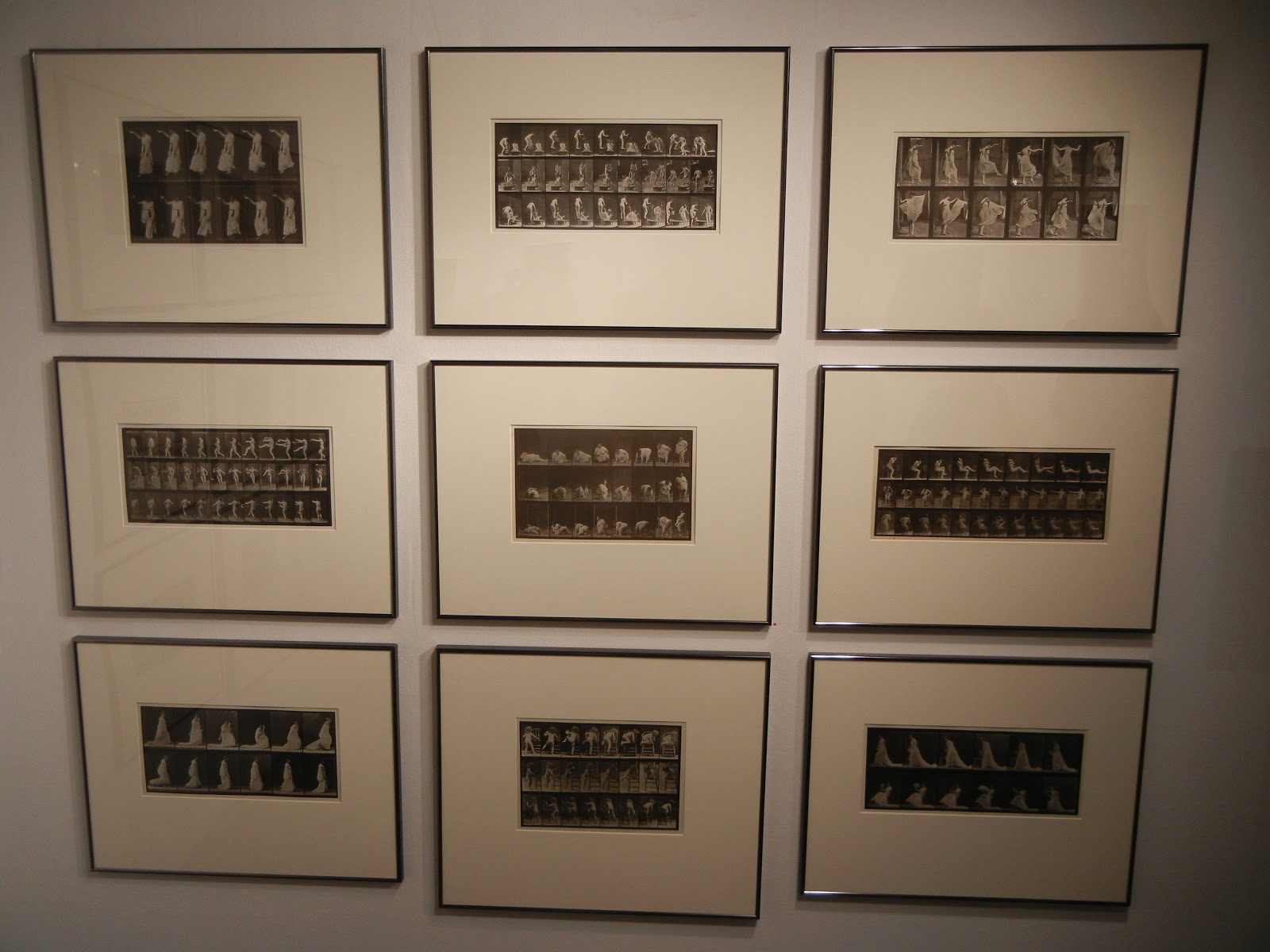
Laurence Miller Gallery (here): This booth was filled with Eadweard Muybridge collotypes from Animal Locomotion (a total of 33, individually priced between $3000 and $10000, plus 1 video, the leather case, cover plate, and supporting letter). I have to say that these seemed like an odd choice for this fair; perfectly fine to be sure, but I wonder whether a more contemporary choice might have been more powerful. There was also 1 Ray Metzker composite tucked away on a side wall.
 
 
Yossi Milo Gallery (here):  This booth contained a mix of gallery artists: Matthew Brandt (1), Chris McCaw (5), Sze Tsung Leong (5), and Alison Rossiter (12). These more angular Rossiters were fabulous and likely my favorites in the fair ($6500 each, these four all already sold!).
 
 
Pace/MacGill Gallery (here): This booth was smart mix of large and small prints: Paul Graham (1), William Eggleston (1 of the recent big prints), Richard Misrach (1), Vito Acconci (2 tiny prints), Irving Penn (1 small portrait), Hai Bo (2 huge full length portraits, apparently of his uncle), Andreas Gursky (1), Robert Rauschenberg (1), Harry Callahan (2 small light drawings). The image below is an up-close detail of the tiny colored spots in the Graham work from his Films series ($30000).
 
 
Skarstedt Gallery (here): Fitting that this summary should end with a blockbuster Cindy Sherman centerfold ($1300000), as what is an art fair without a bunch of Cindy Shermans? The booth also contained a Richard Prince cowboy and a large Cindy Sherman film still.


Friday, October 26, 2012

Robert Adams, On Any Given Day in Spring and Light Balances @Marks

JTF (just the facts): A total of 75 black and white photographs, framed in white and matted, and hung against white walls in the main gallery space and a smaller second room in the back. All of the works are made up of gelatin silver prints, made between 2002 and 2012. There are single images, diptychs, triptychs, and groups of 4 prints. There are a total of 19 works (made up of 50 individual prints) in the main room from the series Light Balances, and a total of 13 works (made up of 25 individual prints) in the back room from the series On Any Given Day in Spring. Individual prints range in size from roughly 5x8 to 8x12 (or reverse). All of the works are unique. (Installation shots at right.)
 
Comments/Context: Robert Adams' newest photographs are works of slow motion patience. Drained of the simmering frustration that inhabits much of his earlier work, these recent pictures are among his most meditative and subdued. They settle in for a long attentive look, letting the distractions of the day melt away and a heightened sense of respectful engagement with nature come forward.
 
Adams wanders through the Oregon forest in the images from Light Balances. Grouped into small bunches, they have the pace and rhythm of an ambling hike, with new views of the woods around each turn of the trail. The dense leaves and evergreens provide a backdrop for a study in the endless variation of sunlight and shadow. Adams peers through the canopy at silhouettes, examines the mottled surface of the forest floor, follows dark pinpricks of light through the undergrowth, and watches as the light turns trunks into imposing vertical forms. The pictures move in and out, catching a burst of light in an otherwise shaded glen, or waiting in the cool cover while the sun illuminates a nearby grove. The photographs play with collapsed distance and layered, overlapping branching, often looking gently up into a mixture of dappled, crisscrossing blackness.
 
The On Any Given Day in Spring series finds Adams on the Washington coast, watching the shorebirds peck at the sand as the waves move in and out. Between the sea, the sky, and the ever changing clusters of birds, these pictures are full of cycles and repetitions, following the peaceful cadences of nature. The flocks fly through the air in dark masses, wheel and spread, and settle into black bands on the beach. They gather in clusters, thin into dots, and soar into slashes against the muted grey of the seashore, leaving tiny footprints and tracks in the sand.
 
While I can certainly appreciate the richness and craftsmanship of these photographs, I think their hushed deliberateness makes them somewhat forgettable as individual artworks. Together, they are extremely successful at setting a mood and conveying a reflective mindset, but that intense absorption led me to daydreaming rather than specific engagement. In the end, in my mind, they all washed together into a wistful memory. Perhaps the answer is that these photographs will function better in book form, where their intimacy and delicacy can be savored more introspectively.
 
Collector's POV: The works in this show are priced as follows. The single image works range from $14000 to $17500, the diptychs from $25000 to $35000, the triptychs from $35000 to $40000, and the groups of 4 prints are $50000 each. Adams' photographs have become increasingly available in the secondary markets in the past decade, with prices ranging between $5000 and $87000.
 
Rating: * (one star) GOOD (rating system described here)
 
Transit Hub:
  • Features/Reviews: NY Times (here), New Yorker (here), ARTINFO (here)
  • Exhibit: The Place We Live, Yale University Art Gallery, 2012 (DLK COLLECTION review here)
Through November 3rd
 
523 West 24th Street
New York, NY 10011

Tuesday, August 14, 2012

Robert Adams, The Place We Live @Yale

JTF (just the facts): A total of 256 black and white photographs, framed in white and matted, and hung against grey (light, medium, and dark) and green walls in a series of interconnected spaces on the first and fourth floors of the museum (a handful of works are also on view in the lobby). All of the works are gelatin silver prints made between 1965 and 2009. No dimension or edition information was available on the wall labels. Glass cases in the various exhibit rooms contain a total of 67 photobooks, and a small number of sculptures and other ephemera are also distributed throughout the show. A catalog of the the exhibition, entitled The Place We Live, A Retrospective Selection of Photographs, 1964-2009 was recently published Yale University Press (here). The exhibit was curated by Joshua Chuang and Jock Reynolds. The exhibition has already made stops in Vancouver, Denver, and Los Angeles, and has four more European venues scheduled through the summer of 2014. (Installation shots at right.)

The show is divided into titled sections, each accompanied by wall text drawn from one of the artist's books. For each section or case, I have detailed the number of prints/books on view and their dates:

Lobby gallery
  • 6 gelatin silver prints, 1999
First Floor galleries
  • The Plains: 8 gelatin silver prints, 1965-1973
  • Eden: 8 gelatin silver prints, 1968
  • The New West: 22 gelatin silver prints, 1968-1971
  • Case: White Churches of the Plains (1), The Architecture and Art of Early Hispanic Colorado (1), Prairie (2), 2 gelatin silver prints, 1968, 1974
  • Summer Nights: 13 gelatin silver prints, 1976-1982
  • Ludlow: 5 gelatin silver prints, 1978
  • Case: Eden (2), The New West (3), Commercial Residential (2), Summer Nights (2), Summer Nights: Walking (2)
  • Book display: 3 volumes, The Place We Live, 1 gelatin silver print, 1978
  • What We Bought: 31 gelatin silver prints, 1973-1974
  • Cottonwoods: 11 gelatin silver prints, 1973-1995, 1 cottonwood bark fragment, 1982
  • The Pawnee National Grassland: 6 gelatin silver prints, 1984
  • The Missouri West: 10 gelatin silver prints: 1975-1983
  • Our Parents, Our Children: 15 gelatin silver prints, 1981
  • Case: Our Lives and Our Children (1), No Small Journeys (2), From The Missouri West (2), Beauty In Photography (3)
  • Screenprint: Beautiful Small Town Names
Fourth Floor galleries
  • Los Angeles Spring: 21 gelatin silver prints, 1978-1983
  • Case: Los Angeles Spring (2), Listening To The River (2), California (2), Gone? (2), Notes From Friends (1), Why People Photograph (1)
  • Along Some Rivers: 28 gelatin silver prints, 1984-1987
  • The Pacific: 17 gelatin silver prints, 1991, 2003, 1 wooden sculpture
  • Turning Back: 22 gelatin silver prints, 1976, 1999, 2003
  • Case: To Make It Home (1), West From The Columbia (2), Time Passes (1), Turning Back (2), Tree Line (2)
  • Small reading room: 4 prints paired with poems by A.R. Aamons, Emily Dickinson, William Blake, and Zbigniew Herbert
  • Case: Pine Valley (2), A Portrait In Landscapes (2), Still Lies The Manzanita (2), I Hear The Leaves And Love The Light (2), Along Some Rivers (2), 2 eroded rocks
  • Pine Valley: 6 gelatin silver prints, 2001-2003
  • Bodhisattva: 5 gelatin silver prints, 1999
  • Alder Leaves: 5 gelatin silver prints, 2004
  • The War In Iraq: 6 gelatin silver prints: 2004-2007
  • Sea Stories, This Day: 8 gelatin silver prints, 1999-2009, 1 carved sculpture, 2001, 1 notebook
  • Case: Alders (2), Questions For An Overcast Day (2), Bodhisattva (2), Sea Stories (1), This Day (2), Close At Hand (2), Skogen (2), What Can We Believe (1), 1 wood sculpture
Comments/Context: A year or two ago, I wrote a review of a Paul Graham show where I argued that Graham was an insider's photographer, an artist who was well known and highly esteemed inside the photographic community but largely unknown outside it. I was immediately shouted down by the masses of the converted, who were all too happy to point out my daft ignorance. Today, I am going to make a similar assertion about Robert Adams, and I assume that my inbox will fill once again with a flood of vehement protestations.

On one hand, I think a very compelling case can be made that Adams is a truly radical innovator who has fundamentally and permanently redefined the nature (no pun intended) of American landscape photography. Adams' long term influence is undeniable: I have met plenty of photographers who count him as one of their photographic heroes, and his books, writings, and teachings continue to have countless ardent, cult-like followers. On the other hand, I think there is a largely silent body of viewers who react to Adams' work with much less enthusiasm, finding it often ugly, underwhelming, and a bit boring. Its dissimilarity to what they have come to expect from the landscape genre (the dramatic grandeur of Ansel Adams) makes some of the work very hard to connect to; it doesn't reveal itself so quickly or boldly. In our first years of collecting, I will admit to having been in this second camp; I found his images to be like parsnips or kale - things I was supposed to like, that were obviously good for me, but which in all honesty, I found somewhat less than entirely tasty. Over the years, and with a growing shelf full of Adams' eloquent books in our library, I have gradually moved closer to the supporters point of view, slowly being won over by the consistent craftsmanship, elegance, thoughtfulness, and quiet beauty in even the most distressing and damaged of his photographs. So it was with some excitement that I traveled to Yale to see this grand, traveling retrospective, in the hopes of clarifying and deepening my understanding of his work once and for all. I'm afraid my findings are likely to offend both sides, as ample evidence of both the truly great and the truly forgettable is on view.

Covering roughly 45 years of time, the exhibition is gathered into thematic groups (both large and small), roughly mirroring bodies of work as they were originally presented in book form. In many ways, this helps to recreate some of the intimate sequencing and storytelling that is the hallmark of Adams' books, but strictly speaking, this retrospective is not rigidly chronological, as some subjects span decades and others overlap or jump around in time. To help clarify the overall "which came first" ordering (at least in my own mind), I have taken the dates of the images on view (by grouping) and laid them out on the timeline below:

Adams' early square format pictures from the late 1960s feel rooted in vernacular American modernism and a reverence for traditional American landscape photography. They echo the spare purity of a Paul Strand or a Walker Evans: an angular white church, the towering form of white grain elevator, broad grassland views with massive 19th century clouds. But his Eden pictures which follow signal the beginning of a new approach: this Eden isn't the leafy garden of snakes and apple trees we all know, it's a dusty flat expanse of interstate highway and dry desert, decorated with truck stops and gas stations. Seeing these pictures is like watching a light go on - it suddenly becomes obvious that there is another way to see the geography of the land, that the word landscape can be applied not only to classically beautiful mountains and rivers, but to the evidence of the human relationship to the natural world. There is a sense of discovery here, a philosophical opening of a door.

In the first half of the 1970s, Adams took these initial insights and expanded them, making some of the most unflinchingly critical photographs that had ever been made of the American West. With a deep respect for the unspoiled land and a frustrated eye for the environmental destruction puzzlingly taking place out in the open, Adams documented the boom town expansion of various Colorado towns (particularly Denver and its suburbs) and watched with ironic candor as whole cities were raised out of the water-less dust. His now-iconic book The New West chronicled the inhumanity of these newly built environments: subdivisons were laid out, messy construction ensued, and the result was an endless sea of flat one story houses, clustered trailers and arrow straight roads. Adams' pictures are an inversion - they're not a rah-rah celebration of our ingenuity, our hard work or our can-do spirit; instead, they show us our own self-inflicted, unvarnished stupidity and our stunning disrespect for the grandeur of the land and sky.

What I find fascinating about these pictures is that they were actually surprisingly well aligned with earlier American landscape photographs that openly celebrated the majesty of the land. But instead of searching out the most beautiful vistas to make his point (like his predecessors), Adams made his argument for the critical importance of the land by capturing our destruction of it. In New Topographics-speak, we were now in the realm of the "man-altered" landscape, and Adams' view of these modifications was alternately acerbic, distrustful, grief stricken, and downright angry. Other pictures from this same time (the What We Bought series) dive deeper into the grim lives of the inhabitants and their drab offices, liquor stores, fast food joints, and dreary strip mall convenience stores. There is a sense of being both offended and deeply saddened by the tradeoffs we have made in our development of the West, a pervasive pessimism to be found in the imperfections of these communities. These pictures present a depressing reality, but I think Adams' lasting contribution to photography is to be found in these early 1970s images and their precise examination of our separation from and disregard for the bounty of nature.

The second half of the decade found Adams channeling these core conceptual ideas in several different but adjacent directions. He followed the Missouri River out to the western edge of the nation, taking long elevated views of tire tracked prairies, rocky mesas near nuclear weapons test grounds, and smoggy mountains. He walked the lyrical nighttime streets of suburban neighborhoods, finding both shadowy menace and silent warm nostalgia: weedy sidewalks, bright carnival rides, empty chairs sitting under a porch light. And he explored the scrublands of sprawling Los Angeles, with its aging eucalyptus windbreaks, its dry washes filled with garbage, its defoliated development roads, and its ever encroaching highways. Environmental damage (and the related emotional distress) was never far from view, but hope began to creep in now and again as a balance against the constant urgent critique.

His projects in the early 1980s continued this pattern of gradual softening, as if Adams himself was becoming worn down and was in need of a few moments of optimism. Against the backdrop of soul draining suburban parking lots, he found multi-generational caring as expressed in embraces, carried babies, and hand held children. In the Pawnee National Grassland, he enjoyed huge, tumbling skies, vast open grass, and unspoiled sunflowers against a barbed wire fence. And along unnamed rivers, he exchanged an airplane for a hawk, reveled in the whiteness of fresh snow cover, and examined the delicate textures of dirt roads. Adams seemed to be saying that there was indeed beauty to be found in these landscapes if we were patient enough to look for it.
.
Given the timeline above and the span of photographic projects that Adams has generated since 1985, I think it is fair to say that his work has slipped a bit in recent years. The one exception to this is the sheer horror of the clearcut hillsides of Turning Back. The delimbing machines, the enduring stumps, the violence and devastation of the whole process, the photographs have all the fury and tragedy of Adams' earlier work. His question (found on a wall text and in the book) about who brings a child to see the wastelands of these close cropped hills is particularly poignant and troubling I think, and the sense of futility and failure in the pictures is heavy. And while I have a soft spot for the sublime cracked silhouettes of the alder leaves, I can't really hold these up as new or groundbreaking; they're just quietly meditative and beautiful. Beyond these two projects, very little will be durable I fear. Nearly all of Adams' images of the sea lack the emotional punch of his landscapes, even when they incorporate piles of flotsam and dirty sand. And his still lifes and Iraq war boots miss the mark entirely in my view. Perhaps there is some inverse relationship between the power of his images and the power of his words, as his recent books have been full of engaging, eloquent, and memorable ideas.

Retrospectives are designed to help us trace connection points and the evolution of artistic ideas, and I think this exhibition is highly successful in showing the gestation of Adams' original conceptual view point, its development and expansion over time, and its ultimate waning and subtle transformation. I think it cements Adams' rightful place in the pantheon of American landscape photographers, and highlights his consistently genuine and thoughtful concern for the way we have treated the land. That his flashes of brilliance have become less frequent since the 1970s hardly matters; his imprint on our ability to see the impact of our environmental choices is permanent. If there is one recurring visual motif in Adams' work, it is the open empty dirt road, cutting across the vastness of the landscape, vanishing into the horizon; there are likely a dozen of these pictures scattered throughout the show. At first, the road is discouraging in its slash across the unspoiled natural world. Later, it is perhaps assimilated and accommodated, shaded by an overhanging cottonwood tree, becoming part of the landscape itself, telling us something of our history. And going forward, it points the way to the future. What Robert Adams brought to landscape photography was an alternately caustic and graceful eye for these changes, an ability to show us what we didn't want to acknowledge or had somehow overlooked, with the hope that it would knock some sense into us, so that our journey down that long road would be smarter and more aware.

Collector's POV: This is a museum show, so there are of course no posted prices. Adams' photographs have become increasingly available in the secondary markets in the past decade, with prices ranging between $5000 and $87000. Adams is represented in New York by Matthew Marks Gallery (here) and in San Francisco by Fraenkel Gallery (here).

Rating: *** (three stars) EXCELLENT (rating system described here)

Transit Hub:
  • Review: Hartford Courant (here)
Robert Adams, The Place We Live
Through October 28th

Yale University Art Gallery
1111 Chapel Street
New Haven, CT 06510

Monday, April 11, 2011

Auction Results: Photographs, April 9, 2011 @Phillips

There must have been something in the air at the various owner Photographs sale at Phillips last week, as plenty of later prints jumped to astonishingly frothy prices. On the heels of successful sales at Sotheby's and Christie's, if you were looking for further evidence of growing momentum in the market, just look carefully at the list of surprises below and keep an eye out for the large edition greatest hits. Overall, the sale performed well by virtually every measure: a low Buy-In rate (under 10%, which is all the more impressive in a large, mixed owner sale), strength across all price points and genres, tons of positive surprises, and Total Sale Proceeds that far exceeded the estimate range.
.
The summary statistics are below (all results include the buyer’s premium):

Total Lots: 261
Pre Sale Low Total Estimate: $3420600
Pre Sale High Total Estimate: $4913400
Total Lots Sold: 235
Total Lots Bought In: 26
Buy In %: 9.96%
Total Sale Proceeds: $5802250
.
Here is the breakdown (using the Low, Mid, and High definitions from the preview post, here):

Low Total Lots: 138
Low Sold: 125
Low Bought In: 13
Buy In %: 9.42%
Total Low Estimate: $931400
Total Low Sold: $1157875
.
Mid Total Lots: 102
Mid Sold: 92
Mid Bought In: 10
Buy In %: 9.80%
Total Mid Estimate: $2217000
Total Mid Sold: $2707775
.
High Total Lots: 21
High Sold: 18
High Bought In: 3
Buy In %: 14.29%
Total High Estimate: $1765000
Total High Sold: $1936600

The top lot by High estimate was lot 171, Cindy Sherman, Untitled #278, 1993, at $200000-300000; it was also the top outcome of the sale at $242500.

95.74% of the lots that sold had proceeds in or above the estimate range. There were a total of 32 surprises in this sale (defined as having proceeds of at least double the high estimate):

Lot 2, Richard Avedon, Homage to Munkacsi, 1957/1978, at $37500
Lot 12, Helmut Newton, Karl Lagerfeld, Paris, 1973/1983, at $18750
Lot 20, Henri Cartier-Bresson, Rue Mouffetard, 1954/Later, at $57500
Lot 32, Andre Kertesz, Melancholic Tulip, 1939/Later, $18750
Lot 34, Mario Giacomelli, Untitled, 1958/Later, at $21250
Lot 36, Alfred Eisenstaedt, Lesson at La Scala's Ballet School, Milan, Italy, 1934/1995, at $10000
Lot 38, Henri Cartier-Bresson, Alberto Giacometti, 1961/Later, at $74500
Lot 51, Peter Beard, Hunting Cheetahs on the Taru Desert, June, 1980/Later, at $74500
Lot 52, Peter Beard, Tsavo Natl. Park, 1970s/Later, at $43750
Lot 53, Peter Beard, Elephant Reaching for the Last Branch on a Tree, Kenya, 1960/Later, at $40000
Lot 54, Irving Penn, Gorilla (Male), 1986, at $30000
Lot 91, Robert Mapplethorpe, Flowers in a Vase, 1985/1988, at $100900
Lot 94, Irving Penn, Miles Davis hand and trumpet, New York, July 1, 1986/1998, at $122500
Lot 95, Annie Leibovitz, The Rolling Stones, New York, 1985, at $12500
Lot 103, Ruth Bernhard, Draped Torso, 1962/Later, at $27500
Lot 113, Alex Guofeng Cao, Jackie vs. JFK II, 2010, at $15000
Lot 120, Ray Metzker, Kayak, Frankfurt, 1961/1995, at $6250
Lot 127, Robert Adams, Denver, Colorado, 1973/1977, at 21250
Lot 129, Robert Adams, Colorado Springs, Colorado, 1968, at $18750
Lot 131, Robert Adams, Tree, Colorado Prarie, 1984/1985, at $15000 (image at right, middle, via Phillips)
Lot 134, Berenice Abbott, New York at Night, 1932/1980s, at $32500
Lot 145, Robert Frank, Cafe-Beaufort, South Carolina, 1955/1960s, at $182500 (image at right, top, via Phillips)
Lot 158, Sally Mann, Untitled from Virginia, 1996, at $20625
Lot 166, Robert Mapplethorpe, Lisa Lyon, 1982, at $17500
Lot 179, Sebastiao Salgado, Churchgate Station, Bombay, India, 1995/Later, at $11250
Lot 191, Steve McCurry, Afghan Girl, Pakistan, 1985/2006, at $60000
Lot 211, Desiree Dolron, Xteriors VI, 2003, at $194500
Lot 251, Martin Parr, Common Sense (woman's hand with cigarette), 1997-98, at $11875
Lot 253, Vee Speers, Untitled #16 from The Birthday Party, 2008, at $20000 (image at right, bottom, via Phillips)
Lot 255, David Levinthal, Untitled/Untitled from Barbie Millicent Roberts: An Original, 1998, at $15000
Lot 260, Sandy Skoglund, Revenge of the Goldfish, 1980, at $47500
Lot 261, Sandy Skoglund, The Green House, 1990, at $30000
.
Complete lot by lot results can be found here.
.
Phillips De Pury & Company
450 Park Avenue
New York, NY 10022

Wednesday, March 9, 2011

Photography at the 2011 ADAA Art Show

As always, this year's ADAA Art Show was characterized by its consistent quality from booth to booth and its extraordinarily high production values. Even though there is a wide spread of work on display in this show, the ratio of wheat to chaff is generally much higher than the other fairs. Once again, many of the exhibitors opted for solo shows or tightly edited groups of work, meticulously hung against colored walls or linen wallpaper. It's a thoroughly sophisticated approach to an art fair; the challenge is that without a few jolts of roughness or energy, this hushed environment can lull you to sleep.

This post is organized by my path through the fair, starting to the left from the entrance, and winding back and forth before returning to the front to exit. Like our Armory posts, for each booth, a list of photographers has been provided, with the number of works on display in parentheses. Additional commentary, prices, and pictures of the installation are also included where specific images stood out.

Marian Goodman Gallery (here): Gabriel Orozco (2)

McKee Gallery (here): Richard Learoyd (1). Learoyd's portraits are growing on me as I see them more. This one was priced at $35000.


Robert Miller Gallery (here): Diane Arbus (11)

Jill Newhouse (here): Anonymous (13). This booth was filled with Rodin sculptures and drawings, as well as quite a few photographs of his sculptures. It wasn't clear who the photographer of record was for these images, as many were signed by Rodin himself. I particularly liked this set of three variant images. In general, the prints were reasonably priced, between $800 and $4500 each.


Zabriskie Gallery (here): Paul Strand (16). This booth was devoted to Strand, and aside from one industrial image and one Taos church, all of the works were from his garden in Orgeval, France. I very much enjoyed these two florals (look for the bees in the second one), both of which were priced at $24000.


Cheim & Read (here): Diane Arbus (1), William Eggleston (2), Walker Evans (1). The contrasts in this Evans were spectacular; however, it wasn't for sale.


CRG Gallery (here): Lyle Ashton Harris (1), Joel-Peter Witkin (1)

Hans P. Kraus Jr. Fine Photographs (here): Bisson Freres (1), Jean Laurent (2), Felix Teynard (1), Auguste Salzmann (1), Louis-Remy Robert (2), Louis-Emile Durandelle (2), William Henry Fox Talbot (7), James Nasmyth (2), Anna Atkins (2), Louis Pierre Rousseau (1), Dr. Alfred Donne (1), Unknown (2), Edward Steichen (1), JB Greene (2), Andre Adolphe Eugene Disderi (2), James Ross and John Thomson (1), Nevil Story-Maskelyne (1), Duchenne de Boulogne and Adrien Tournachon (1), Circle of Charles Simart (1), Julia Margaret Cameron (1), Charles Marville (2). As usual, Kraus' booth was a smorgasbord of 19th century photographic treasures. I had seen the two Atkins cyanotypes previously, so I was more intrigued by the Robert negative image, with its intersecting lines made by the cart and tools. It was priced at $60000.


Skarstedt Gallery (here): Cindy Sherman (2), Richard Prince (group of 4)

Fraenkel Gallery (here): Carleton Watkins (7), Robert Adams (10). This booth featured a smart pairing of Watkins and Adams, where echoes of land forms (rivers, masses of boulders, horizon lines, etc.) were matched together. I liked the Adams on the top left below, with its jagged shadow contrast and the hidden train track running below. The Adams images were priced between $12000 and $18000; the Watkins images were between $45000 and $190000.


Donald Young Gallery (here): Jeanne Dunning (2), James Welling (5), Rodney Graham (1 + 1 diptych), Mark Wallinger (stills on video screen)

Howard Greenberg Gallery (here): William Klein (20 + 1 video + 4 books). A brash booth full of Klein photographs was a bit of a surprise from Greenberg, which has often opted for a selection of iconic highlights in this kind of fair setting. I thought it was fresh and fantastic.


James Cohan Gallery (here): Katie Patterson (4)

Leslie Tonkonow Artworks + Projects (here): Laurel Nakadate (12)

Pace/MacGill Gallery (here): Irving Penn (20). This booth contained a selection of Penn's innovative corner portraits, where his famous subjects have been pushed into a narrow confining space. I enjoyed the two portraits of Georgia O'Keeffe on the inside wall of the booth, but perhaps my favorite was the Truman Capote on the front wall; I liked the way the space is taken up by the chair and Capote's large coat, and I think the introduction of the vertical line of the wall opens up the strict formula of the composition. The Capote portrait was priced at $95000.


Nicole Klagsbrun Gallery (here): Mika Rottenberg (2), Barney Kulok (1). I liked the jumble of spaces and volumes in this large Kulok image; it was priced at $6000.


Regen Projects (here): Catherine Opie (3). There is certainly an echo of Hiroshi Sugimoto or Renate Aller in these Opie seascapes and sunsets, but there's no denying the serene lushness of the pure blue images. These were priced at $30000 each.

Monday, October 11, 2010

Auction Results: Photographs, October 6, 2010 @Sotheby's

Sotheby's began the main event Fall Photography auctions last week with a generally solid outing. The results were right within expectations, with an overall Buy-In rate just over 25% (a little higher than normal) and Total Sale Proceeds that fell at the lower end of the estimate range. The outcome was roughly equivalent to that of Sotheby's various owner offering last April.

The summary statistics are below (all results include the buyer’s premium):

Total Lots: 265
Pre Sale Low Total Estimate: $4364500
Pre Sale High Total Estimate: $6512500
Total Lots Sold: 198
Total Lots Bought In: 67
Buy In %: 25.28%
Total Sale Proceeds: $4970754

Here is the breakdown (using the Low, Mid, and High definitions from the preview post, here):

Low Total Lots: 113
Low Sold: 86
Low Bought In: 27
Buy In %: 23.89%
Total Low Estimate: $911500
Total Low Sold: $636191

Mid Total Lots: 128
Mid Sold: 92
Mid Bought In: 36
Buy In %: 28.13%
Total Mid Estimate: $3066000
Total Mid Sold: $2194063

High Total Lots: 23
High Sold: 19
High Bought In: 4
Buy In %: 17.39%
Total High Estimate: $2535000
Total High Sold: $2140500
.
The top photography lot by High estimate was lot 29, Rufus Anson, Two Actors from the melodrama 'Robert Macaire', 1850s, at $250000-350000; it did not sell. The top outcome of the sale was lot 182, Robert Frank, US90, En Route to Del Rio, Texas, 1955/c1970, at $266500, against an estimate of $80000-120000. (Image at right, top, via Sotheby's.)

78.28% of the lots that sold had proceeds in or above the estimate range. There were a total of nine surprises in this sale (defined as having proceeds of at least double the high estimate):
.
Lot 95, Dorothea Lange, Drought Refugee from Polk Missouri, Awaiting the Opening of Orange Picking Season at Porterville, California, 1936, at $104500 (image at right, middle, via Sotheby's)
Lot 110, Ruth Orkin, American Girl in Italy, 1951/1985, at $53125
Lot 140, Man Ray, Still Life Composition With Chess Set, Plaster Casts, and 'A L'Heure De L'Observatoire - Les Amoureaux', 1935-36, at $170500
Lot 156, Jaromir Funke, Composition, c1925, at $74500
Lot 161, Andre Kertesz, Andre Kertesz portfolio, 1925-39/1981, at $116500
Lot 182, Robert Frank, US90, En Route to Del Rio, Texas, 1955/c1970, at $266500
Lot 187, Irving Penn, Chimney Sweep (B), London, 1976, at $68500
Lot 218, Helmut Newton, Vivian F. Hotel Volney (American Vogue) New York, 1972, at $16250
Lot 261, Robert Adams, Colorado Springs, 1969, at $86500 (image at right, bottom, via Sotheby's)

Complete lot by lot results can be found here.
1334 York Avenue
New York, NY 10021

Monday, March 15, 2010

Robert Adams, Summer Nights, Walking @Marks

JTF (just the facts): A total of 45 black and white photographs, framed in white and matted, and hung in the large second floor gallery space, separated by a dividing wall. Nearly all of the prints are vintage gelatin silver prints, sized between 5x5 and 15x15. No edition information was available. The images were taken primarily in the suburbs of Denver and Boulder (Colorado) in the period between 1976 and 1983. A monograph of this body of work was originally published by Aperture in 1985 and entitled Summer Nights; this exhibition has been organized to coincide with the rerelease of the book, in an expanded and resequenced edition entitled Summer Nights, Walking (here). (Installation shots at right.)

Comments/Context: We've had a copy of Summer Nights in our photobook library since the very beginning of our lives as photography collectors; it sits among a shelf full of Adams' books and essays, likely wedged in somewhere near The New West and Denver. In the past, I thought of the Summer Nights work as a direct extension of Adams' daytime images of environmental mismanagement and the encroachment of poorly planned suburban development. Without really looking (or with a preconceived conclusion in mind), I assumed the harshness of his tract houses, construction sites, and scrub lands would be applied with the same unflinching commentary to his nighttime scenes. As a result, I only saw what I thought I was supposed to see: the ugliness of the wincing glare of the street lights, the sidewalks bordered by unruly weeds, the empty parking lots, and the depressing ranch houses engulfed in shadows.

It is with a great deal of surprise that I must now admit that I had it all wrong. In visiting this fine exhibit, my overwhelming reaction to seeing the pictures in person was how gentle they consistently are. While Adams' compositions are not beautiful in any traditional sense, I found plenty of moments of grace, especially in the way that leaves and wildflowers catch the light or the way silhouettes are framed against the moonlit sky. The dramatic shadows that leak across the sidewalk or cover the sides of houses and garages with dappled patterns are no longer particularly ominous or hostile; I saw them more as moments of goose bump inducing shivers, even though the warmth of the night air surrounds you.
.
What I thought of most in seeing these works is that Adams has captured the American suburban equivalent of the Italian passegiata. What is perhaps sad is that this nighttime walk in an America boom town is such a lonely and desolate one: there are no people on the streets to stop and greet, no places to go to relax and leisurely enjoy the warm night air - we've built a world designed around car transportation, so walking in these places has become a kind of oddity. And yet Adams has found plenty of subtle joys in these solitary neighborhood walks: the playful lights of a carnival ride, the texture of a tree trunk, the reflections of windows or puddles, the pinpricks of lights in the distance, or an expanse of pavement against an enveloping blackness.
.
As I looked more closely, I started to notice just how masterful Adams' use of the available light really is: moonlight and ambient light from the surrounding city is mixed with up-close glare of the streetlights to create depth and distance without resorting to night photography cliches; the range of tonalities is both quietly meditative and breathtakingly exquisite. These pictures are soft and still, and some effort is required to unlock their pleasures; a quick gallery fly by certainly will result in a wash of small, unmemorable dark pictures, while a deeper exploration will uncover a body of work that is remarkably varied and consistently well crafted.
.
I don't want to give the impression that Adams' commitment to the issues/problems of land use and suburban development isn't to be found in these pictures; it's certainly there if you want to go looking for it. But the revelation for me in this exhibit was that those complex issues could recede into the background a bit (the volume could be turned down), and that an unexpected loveliness and simplicity could be found underneath. There is a nostalgic warmth in his style here that is an excellent reminder that there is much more tender nuance to the art of Robert Adams than the New Topographics categorization might lead us to believe.
.
Collector's POV: The prints in this show are priced between $8500 and $38000. Adams' work has become increasingly available in the secondary markets in the past decade, with prices creeping upward over time, typically ranging between $5000 and $50000.
.
Rating: *** (three stars) EXCELLENT (rating system described here)

Transit Hub:
  • Reviews: New Yorker (here), John Haber (here), New York Photo Review (here)
Through April 17th
523 West 24th Street
New York, NY 10011

Wednesday, May 6, 2009

Book: Robert Adams, Questions for an Overcast Day

JTF (just the facts): Published in 2007 by Matthew Marks Gallery and Fraenkel Gallery. Approximately 10x8 in size, with 74 pages, including 33 black and white images. A thin title strip is held around the book by a transparent sticker. (Cover shot at right.)

Comments/Context: One of the things I admire most about the art of Robert Adams is that he has in his years as a photographer found a way to simultaneously pursue both challenging bodies of work that ask us hard questions about how we are interacting with the natural world around us, as well as smaller, more intimate projects that come at some of these same questions, but from a simpler, more lyrical and less overtly polemical bent. While The New West, Summer Nights and Los Angeles Spring all might be more well known, many of my favorite books by Adams are smaller volumes (some of them essays) that weren't necessarily designed with large audiences in mind, but seem to have sprung from a genuine desire to dig deeper into the subtle relationships between photography, humans and nature.

This small book is a series of pictures Adams took of the leaves of alder trees on the Oregon coast, some from far off, others from up close. These particular leaves are often broken and torn, with holes and cracks, and Adams uses the bright background light filtering through these openings as a contrast with the dark black of the leaves. One might wonder how can Adams make pictures of tree leaves that are somehow new and different, rather than simply well crafted images derivative of others we have seen before. And yet, this is exactly what he has accomplished, especially via the sequencing of the images in book form, allowing for a gradual closing in from multiple branches to a single leaf, creating a multi-image portrait of the essence of these trees.

The only text in the book is the following set of questions, found near the end:

What would account for the condition of the leaves - drought, insects, rocky ground, disease, herbicide, wind?

Are the leaves beautiful?

Is there something wry in the hieroglyphics? And something humorous about a person taking photographs, the camera hand-held, between gusts of wind?

These questions seem perfectly attuned to the emotional quality of these images: serene and calm, simple and authentic, curious and open minded. This is the kind of book that you can pull down from the shelf from time to time, flip through, and find some balance.

Collector's POV: Robert Adams is represented by Matthew Marks Gallery in New York (here) and Fraenkel Gallery in San Francisco (here). Prints by Adams have become increasingly popular in recent years, and his images are now generally available at auction, ranging in price between $5000 and $50000 in the past few years. For our particular collection, Adams continues to be on our wish list; we are still looking for just the right Adams image for the city/industrial group. This excellent book reminded me that we should also consider Adams for our floral/plant genre, as the leaf silhouettes here would mix nicely with other botanicals we already own.

Transit Hub:
  • 2009 Hasselblad Award winner (here)
  • Art:21 biography (here)
  • Landscapes of Harmony and Dissonance, Getty Museum, 2006 (here)
  • Turning Back, SFMOMA, 2006 (here)