Showing posts with label Robert Mapplethorpe. Show all posts

Wednesday, July 31, 2013

Legacy: Photographs from the Emily Fisher Landau Collection @Aldrich

JTF (just the facts): A total of 23 black and white and color photographs, variously framed and matted, and hung against white walls in a series of three connected rooms on the second floor of the museum. All of the works come from the collection of Emily Fisher Landau, and were made between 1980 and 2004. The exhibit also includes a camera obscura room. A catalog of the collection was published by Yale University Press in 2011 (here). There is no photography allowed in the galleries, so the installation shots at right are courtesy of the museum's Flickr page.

The following artists/photographers have been included in the exhibit, with the number of works and print details as background:
  • Richard Artschwager: 1 sculpture/photographs mounted on wood, 2002
  • Matthew Barney: 1 chromogenic print in self-lubricating frame, 2002
  • Keith Cottingham: 1 digital chromogenic print, 2004
  • Lynn Davis: 1 gold-toned gelatin silver print, 2000/2002
  • Philip-Lorca diCorcia: 1 chromogenic print mounted on Plexiglas, 2000
  • John Dugdale: 1 hand-coated cyanotype, 1994
  • Nan Goldin: 1 silver dye bleach print, 1994
  • Rodney Graham: 1 chromogenic print, 1990
  • Robert Longo: 1 silver dye bleach print, 1980/1998
  • Vera Lutter: 1 gelatin silver print, 1996
  • Robert Mapplethorpe: 1 gelatin silver print, 1988
  • Abelardo Morell: 1 gelatin silver print, 2003
  • Shirin Neshat: 3 silver dye bleach prints, 2002
  • Victoria Sambunaris: 1 chromogenic print mounted on aluminum, 2002
  • Lorna Simpson: 2 gelatin silver prints in framed with plaque, 1991
  • Kiki Smith, 4 chromogenic prints, 2000-2001
  • Hiroshi Sugimoto: 1 gelatin silver print, 1994

Comments/Context: Back in 2010, long-time trustee Emily Fisher Landau made a major donation of 367 artworks to the Whitney Museum. Selections from that massive gift have toured around to many smaller museums in the United States in the past few years, and this particular show pulls out a very small subset, focusing on some of the photography to be found in the collection. If this group of works can be taken as any guide, Fisher Landau's approach to contemporary photography has been to employ the "solid example from key figures" method, gathering an impressive list of important names and singular works. While the show is loosely organized into rooms of images with people, those without, and a handful of works related to the camera obscura room that has been installed as part of the exhibit, in essence, it's really more of a parade of exemplary photographs from the 1990s and early 2000s.
 
If a collection is built without a rigid thematic or conceptual structure/system to connect the various artworks together (as most collections are), the only way to look at it critically is to ask, for each individual artist selection, "did the collector pick a superlative example of the artist's work"? In general, I think there are some terrific choices on view here, many which would be considered among the best work done by that artist. There as an enormous, wall dominating, upside down tree by Rodney Graham, smartly flanked by a large Vera Lutter of the Fulton ferry landing with the Twin Towers in the distance. Other standout choices include the late Mapplethorpe self portrait (with skull head cane), the Sugimoto wax museum royal family, the Longo jerking suited man from Men in the Cities, and the Morell camera obscura image taken in the Whitney itself.
 
There are also a few less obvious selections which point to some inspired risk taking. Nan Goldin's swarm of cherry blossoms in Tokyo isn't exactly representative of her work, but is still quietly enchanting. Matthew Barney's array of Chryslers from the Cremaster series lacks the bold originality of many of the scenes from that project, but is nonetheless subtly surreal. And Richard Artschwager's child in a high chair sculpture wouldn't necessarily be considered photography, except that its blocky form is constructed by straight on photographs from every angle, creating a smart multi-perspective portrait.
 
So while it's hard to draw a line that connects all of the works on view here into a coherent whole, this small show certainly delivers a respectable mix of recent photography. I'm sure the larger Fisher Landau collection did plenty of welcome hole filling in the Whitney's permanent collection (in photography and other mediums), and with the new building opening soon, I'm hoping we'll slowly get a chance to see even more of its photographic treasures.
 
Collector's POV: Since this is a museum show, there are, of course, no posted prices, and given the wide diversity of works on view, we will forego the usual discussion of secondary markets and price histories.
 
Rating: * (one star) GOOD (rating system described here)
 
Transit Hub:
  • Fisher Landau Center for Art site (here)
  • Feature: New York Times, 2010 (here)
Through September 2nd
 
258 Main Street
Ridgefield, CT 06877

Wednesday, May 29, 2013

Robert Mapplethorpe, Self Portraits @Skarstedt

JTF (just the facts): A total of 11 black and white photographs, framed in black and matted, and hung against grey walls in the two second floor gallery spaces. All of the works are gelatin silver prints, made between 1980 and 1988. Physical dimensions range from roughly 15x15 to 24x20 and edition sizes are either 3, 10, or 15. (Installation shots at right.)

Comments/Context: This small show of Robert Mapplethorpe's self portraits is a focused subset of the work he made in the last decade of the his life. It gathers together many of the self portraits he took in the 1980s, leaving out the early Polaroids and the bullwhip in the ass aggressively sexual pictures of the 1970s. What this edit gives up in inclusiveness and comprehensiveness, it gains in tight attention, as it allows us to see the small, evolving changes in his artistic approach, played out in a handful of important images.

In Mapplethorpe's early 1980s self portraits, he still has his swagger on, but his eye has turned to the nuances of gender roles. He casts himself as the effortlessly cool rebel with a cigarette dangling out of his mouth, as an androgynous bare chested male in eye makeup, and as a diva in drag wrapped in a lush fur collar. The pared down classicism of his staging allows him to shift from persona or persona like a chameleon without losing a sense of control, trying on identities and challenging conventional attitudes within the confines of quiet formal elegance.

Just a year or two later finds Mapplethorpe exploring background geometries and more overt iconography. He stands in front of layered squares (the graphic design looking a bit dated now) and uses the triangulating lines of the back of his hair and the trim of his leather jacket to precisely echo a sharply angled striped backdrop. In another work, he tackles religion with a bold pentagram wall hanging, posing as an outlaw armed with a tommy gun. His self portrait with horns follows this thread, spookily lighting himself from below and casting himself as either a satyr or a devil.

The last self portraits, made in the years before he died, find him turning inward and looking at himself with more vulnerability. His many roles collapse into a blurred, shape shifting image of his face in motion, and a portrait in a tuxedo is somehow haunting rather than debonair, the last disguise in which we might expect to find him. By 1988, he stares at the camera with unvarnished openness, his face drawn and gaunt with disease, armed with a cane topped by an ebony skull. He seems to float out of the darkness, looking death straight in the eye, confronting himself as much as the camera.

Even in the span of the dozen pictures on view here, it is possible to see both continuity and change in Mapplethorpe's work. Even as the content of his self portraits began to evolve, his eye for classical harmony never faltered, his forms always clean and refined, regardless of his emotional intentions. There's underlying power in every one of these photographs, and together they pack a durably surprising wallop.

Collector's POV: The works in this show are for the most part on loan and therefore not for sale, although a few were apparently available at prices between $150000 and $200000. Mapplethorpe's prints are routinely available in the secondary markets, with dozens of images up for sale every year. Prices have generally ranged between a few thousand dollars for his lesser known works to more than $300000 for his most iconic images.
 
Rating: ** (two stars) VERY GOOD (rating system described here)
 
Transit Hub:
  • Mapplethorpe Foundation site (here)
 
Through June 15th
 
20 East 79th Street
New York, NY 10075

Monday, March 25, 2013

Auction Results: Photographs, March 23, 2013 @Heritage Beverly Hills

The results of the various owner Photographs sale at Heritage last week were generally weak. While the overall Buy-In rate was under 20%, 57% of the lots that sold found buyers at prices below the low estimate, likely the result of both lesser known material and a thin bidding base. With that as a backdrop, it shouldn't be a surprise that the Total Sale Proceeds fell under the range.

The summary statistics are below (all results include the buyer’s premium):

Total Lots: 121
Pre Sale Low Total Estimate: $497300
Pre Sale High Total Estimate: $777500
Total Lots Sold: 100
Total Lots Bought In: 21
Buy In %: 17.36%
Total Sale Proceeds: $375457

Here is the breakdown (using the Low, Mid, and High definitions from the preview post, here):

Low Total Lots: 106
Low Sold: 89
Low Bought In: 17
Buy In %: 16.04%
Total Low Estimate: $394500
Total Low Sold: $218894

Mid Total Lots: 14
Mid Sold: 11
Mid Bought In: 3
Buy In %: 21.43%
Total Mid Estimate: $303000
Total Mid Sold: $156563

High Total Lots: 1
High Sold: 0
High Bought In: 1
Buy In %: 100.00%
Total High Estimate: $80000
Total High Sold: $0

The top lot by High estimate is lot 74032, Irving Penn, Picasso, Cannes, 1957/before 1965, estimated at $60000-80000; it did not sell. The top photography outcome of the sale was lot 74084, Ansel Adams, Portfolio V, 1936-1960/1979, estimated at $30000-50000, sold at $43750.

Only 43.00% of the lots that sold had proceeds in or above the estimate range. There were a total of three surprises in the sale (defined as having proceeds of at least double the high estimate):

Lot 74103, Cindy Sherman, Untitled (Lucille Ball), 1975/2001, estimated at $4000-6000, sold at $23750 (image at right, top, via Heritage)
Lot 74111, Robert Mapplethorpe, Lady, Lisa Lyon, 1982, estimated at $600-800, sold at $1625 (image at right, bottom, via Heritage)
Lot 74115, Steven Meisel, Madonna Hitching, 1992/later, estimated at $3000-5000, sold at $10625 (image at right, middle, via Heritage)

Complete lot by lot results can be found here.

Heritage Auctions
9478 W. Olympic Boulevard
Beverly Hills, CA 90212

Wednesday, March 6, 2013

Photography in the 2013 ADAA Art Show

This year's ADAA Art Show wandered the stylistic line that it always does: somewhere between classy and snoozy. Only 12 booths out of a possible 72 had any photography in them, so photo collectors and enthusiasts can expect to travel along decent stretches of real estate without anything to tempt you. That said, each photography find is worthy of a closer look, so treat the whole thing like a treasure hunt and you won't be disappointed.

My notes from the fair are below, organized alphabetically by gallery name. For each booth, a list of photographers has been provided, along with the number of works on display, a highlight image or two, and the prices where appropriate.

Brooke Alexander, Inc. (here): John Baldessari (1 photogravure, $8500)
 
 
Alexander and Bonin (here); This entire booth was devoted to the work of Mona Hatoum, with a mix of photographs and sculptural objects. After expressing my interest in the flattened perspective severed fish head image ($6000), I was given a peek at the lovely cheese grater photograph tucked away in the very tiny closet ($12000).


Fraenkel Gallery (here): This booth was a solo showing of Robert Adams images from The New West. A total of 27 prints are on display.
 
 
Marian Goodman Gallery (here): This booth was filled with works by Tacita Dean (15 works, plus 1 glass box of overpainted postcards and 1 set of 3 sculptures). Most were gouaches over various 19th century photographic landscapes, where slivers of paint added a tree, a glacier, or a man perched on a rock outcropping. The work below is a Carleton Watkins Grizzly Giant image overpainted in misty white ($35000).
 
 
Sean Kelly Gallery (here): This booth contained a fine selection of Robbert Mapplethorpe's portraits of artists (20 in all). I enjoyed his image of De Kooning best, which of course was NFS (as was the portrait of Louise Bourgeois).
 
 
Barbara Krakow Gallery (here): This single work by Liliana Porter was the only photographic work in this booth ($10000). Notice the clever conceptual line that extends from the finger, travels across the photograph, jumps up on the mat, and eventually continues along the wall.
 
 
McKee Gallery (here): Two new Richard Learoyd prints were featured in this booth, one a portrait and the other this sculptural, fishing-lined pink flamingo ($65000). A show of Learoyd's new work is scheduled for this coming May.
 
 
Metro Pictures (here): This triptych of Louise Lawler images of a Degas sculpture was the focal point of this booth (there was one smaller Lawler on the outside wall, but that's all that was on display). The three versions have been alternately tinted in RGB (each $150000) and were surprisingly elegant close up. There were also 4 smaller Cindy Shermans hiding in the storage closet.
 
 
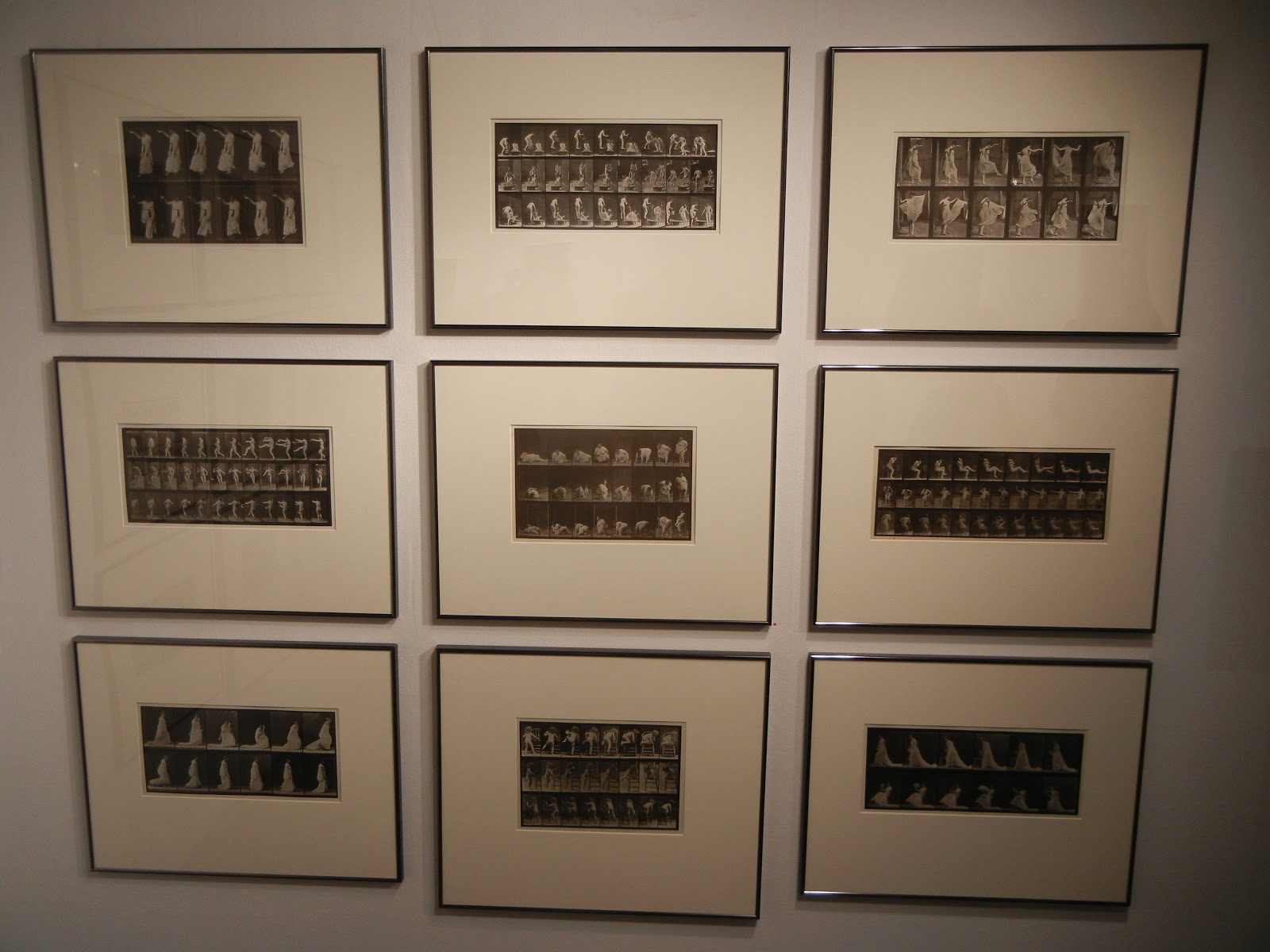
Laurence Miller Gallery (here): This booth was filled with Eadweard Muybridge collotypes from Animal Locomotion (a total of 33, individually priced between $3000 and $10000, plus 1 video, the leather case, cover plate, and supporting letter). I have to say that these seemed like an odd choice for this fair; perfectly fine to be sure, but I wonder whether a more contemporary choice might have been more powerful. There was also 1 Ray Metzker composite tucked away on a side wall.
 
 
Yossi Milo Gallery (here):  This booth contained a mix of gallery artists: Matthew Brandt (1), Chris McCaw (5), Sze Tsung Leong (5), and Alison Rossiter (12). These more angular Rossiters were fabulous and likely my favorites in the fair ($6500 each, these four all already sold!).
 
 
Pace/MacGill Gallery (here): This booth was smart mix of large and small prints: Paul Graham (1), William Eggleston (1 of the recent big prints), Richard Misrach (1), Vito Acconci (2 tiny prints), Irving Penn (1 small portrait), Hai Bo (2 huge full length portraits, apparently of his uncle), Andreas Gursky (1), Robert Rauschenberg (1), Harry Callahan (2 small light drawings). The image below is an up-close detail of the tiny colored spots in the Graham work from his Films series ($30000).
 
 
Skarstedt Gallery (here): Fitting that this summary should end with a blockbuster Cindy Sherman centerfold ($1300000), as what is an art fair without a bunch of Cindy Shermans? The booth also contained a Richard Prince cowboy and a large Cindy Sherman film still.


Monday, May 7, 2012

Photography at the 2012 Frieze New York Art Fair, Part 3 of 3

This is Part 3 of my review of the photography at the 2012 Frieze New York Art Fair. Part 1 can be found here, along with some background information on the fair and an explanation of the format I'm using for the the booth by booth details. Part 2 can be found here.


Purple Section

Nicole Klagsbrun Gallery (here): Barney Kulok (1)

Kaufmann Repetto (here): Shannon Ebner (1). Another entry in the "built to be photographed" category; this large graphic symbol in cinder blocks by Ebner was priced at $12000.


Rampa (here): Huseyin Bahri Alptekin (3)

Galerie Eva Presenhuber (here): Steven Shearer (3), Amy Granat (1). These floral photograms by Granat are reminiscent of similar images made by Kunie Sugiura, although these have been cropped, reoriented, and transformed into a repetitive, high contrast grid. The work was priced at $20000.


Regina Gallery (here): Nikolay Bakharev (5). I've seen a few of these engaging 1970s beach portraits from Bakharev of late, and they're starting to grow on me. They were priced at $3000 each.


Maureen Paley (here): James Welling (2), Wolfgang Tillmans (2), David Salle (1), Gillian Wearing (1). If there was any one photographer whose work was ubiquitous at this fair, it was Wolfgang Tillmans. This was the best image of his that I saw (due to the complex use of color), a new one priced at $57000 and already sold.


Stuart Shave/Modern Art (here): Linder (10)

Galerie Perrotin (here): Sophie Calle (4 diptychs)

Galleria Continua (here): Mona Hatoum (1 Polaroid triptych). A simple idea, well executed - deadpan portraits with hair exploded by static electricity. This unique set of three prints by Hatoum was priced at $30000.


Frith Street Gallery (here): John Riddy (1), Tacita Dean (1 set of 14). Extra large versions of these Dean film strip works were recently on view at the Tate Modern. The set of 14 prints (offset not photographic) was priced at £45500.


Sikkema Jenkins & Co. (here): Vik Muniz (1). Washington Crossing the Delaware in Muniz' most recent style, a dense collage of magazine scrap imagery. Priced at $45000, and not surprisingly, already sold.


Galerie Bucholz (here): Wolfgang Tillmans (2), Sam Lewitt (1 set of 10). I liked Lewitt's layered NY Times transparencies, algorithmically reconstructed and subtracted to zero. Priced at $18000.


Kukje Gallery (here): Candida Hofer (1), Jenny Holzer (1)

Alison Jacques Gallery (here): Robert Mapplethorpe (3). I had never seen these particular Mapplethorpe florals before. The single blossoms are bathed in ghostly, almost garish, colored light. Priced at $35000.


Sprüth Magers (here): Andreas Gursky (1), Astrid Klein (4 collages), Thomas Demand (1), John Baldessari (1), Cindy Sherman (1). The reason I included this $285000 Baldessari image in this review has nothing to do with the pig, or the hands, or the composition really. What is impossible to see in this installation shot is that the work had surprising depth; the different colored portions are built up in inch thick layers. Yet another example of reimagining photography with sculptural qualities.


Pink Section

Wallspace (here): Daniel Gordon (1), Shannon Ebner (1), John Divola (1). Textures and patterns abound in this new work from Gordon, playing with idea of the sculptural bust, priced at $5800.


Galerie Neu (here): Bernadette Corporation (3), Tom Burr (1)

Galeria Fortes Vilaça (here): Jac Leirner (1)

Victoria Miro (here): Alex Hartley (1), William Eggleston (1), Isaac Julien (1 diptych)

303 Gallery (here): Hans-Peter Feldman (4), Collier Schorr (1), Stephen Shore (1 set of 8). This is an early conceptual series by Shore from the late 1960s (recently reprinted), where he stands and rotates in a circle, the desert background changing in each shot. Probably been done before and since, but still effective. Priced at $25000 for the set.


White Cube (here): Jeff Wall (1), Gilbert & George (1 set of 9)

Galerie Martin Janda (here): Roman Signer (1 set of 5, 1)

Tuesday, May 31, 2011

Robert Mapplethorpe, 50 Americans @Kelly

JTF (just the facts): A total of 51 black and white and color photographs, variously framed and matted, and hung against red striped walls in the main gallery space, two smaller side rooms, and the hallway that connects them. Each photograph is labeled with information on the person who chose the image (name, state, profession, age, race), along with quotes about why the image was chosen, what it meant to him/her, and opinions about Mapplethorpe and his work. There are 46 gelatin silver prints and 5 dye transfer prints in the exhibit. Dates range from 1976 to 1989, with a few posthumous prints mixed in. Edition sizes start at 4+1 and continue up to 15+3, with several intermediate sizes. Physical dimensions range between 10x10 and 23x19, most in square format. (Installation shots at right.)

Comments/Context: This exhibit is like a simple but well designed science experiment, testing the powers and limits of "crowdsourcing". The story begins with 50 people, one individual from each of the 50 states, a broadly diverse sample based on age, gender, race, occupation, and lifestyle. This group was then exposed to a 2000 image online archive of the work of Robert Mapplethorpe and asked to choose one single picture each that was found to be of interest. These 50 pictures have then been displayed in no particular order as one gallery show, along with the comments and opinions of the participants on wall labels. As a construct, it seems like the kind of intellectually interesting idea that might produce something surprising or unexpected.

What actually emerges from this process is something quite a bit less novel. The kind of imagery that apparently resonates with "everyday Americans" is a watered down, more conservative Mapplethorpe: obvious flowers, Lisa Lyons nudes, children, classical body forms, and celebrity portraits. This show contains almost nothing controversial or provocative, by any broad definition; the elegance and precision of Mapplethorpe's art is what has risen to the surface, as embodied in generally safe subject matter.

While there are plenty of thoughtful comments, reactions and opinions expressed by the team of selectors (including by those who had never heard of Mapplethorpe before), I don't think professional curators have much to fear from this kind of democratization. An entirely random selection of 50 works from the archive would have produced an almost equally effective show; the only difference here is that the "explicitness" meter has been quietly but consciously turned down by the participants. As such, even though the photography on view is as exquisite as ever, this show isn't really about Mapplethorpe or even his legacy. It's more an investigation of the respectful mainstreaming and popularization of art, of how we choose to see what we want to see, somewhat regardless of the originality or intent of the artistic voice. For me, the exhibit was a strong reminder of why we need smart curators who challenge and jolt us, who take chances, make connections and explain backstories. Left to our own devices, we'll still enjoy the pretty pictures and happily pick our favorites, but we'll likely miss (or ignore) an entire layer of potential understanding (sometimes uncomfortable) that might have made us actually stop and think more deeply.
.
Collector's POV: The works in this show are priced between $8500 and $105000, with the majority under $30000; a few images are marked "price upon request" or "not for sale". Mapplethorpe's prints are ubiquitous in the secondary markets, with dozens of images coming up for sale in any given year. Prices range from a few thousand dollars for obscure images to well into six figures for his most iconic and well recognized works.

Rating: * (one star) GOOD (rating system described here)
.
Transit Hub:
  • Foundation site (here)
  • Reviews: New Yorker (here), John Haber (here)
Robert Mapplethorpe, 50 Americans
Through June 18th
.
Sean Kelly Gallery
528 West 29th Street
New York, NY 10001

Monday, April 11, 2011

Auction Results: Photographs, April 8, 2011 @Christie's

Christie's finished up its successful run of photography sales last week with its various owner auction, which like its two predecessors, also found its way to besting the pre-sale estimate range. Across a much bigger sale, the overall Buy-In rate was still under 20%, there were a number of positive surprises, and the Total Sale Proceeds covered the High estimate by more than $300K.

The summary statistics are below (all results include the buyer’s premium):

Total Lots: 211
Pre Sale Low Total Estimate: $3403000
Pre Sale High Total Estimate: $5046000
Total Lots Sold: 170
Total Lots Bought In: 41
Buy In %: 19.43%
Total Sale Proceeds: $5367500

Here is the breakdown (using the Low, Mid, and High definitions from the preview post, here):

Low Total Lots: 93
Low Sold: 71
Low Bought In: 22
Buy In %: 23.66%
Total Low Estimate: $570000
Total Low Sold: $533500

Mid Total Lots: 101
Mid Sold: 83
Mid Bought In: 18
Buy In %: 17.82%
Total Mid Estimate: $2346000
Total Mid Sold: $2266250

High Total Lots: 17
High Sold: 16
High Bought In: 1
Buy In %: 5.88%
Total High Estimate: $2130000
Total High Sold: $2567750

The top lot by High estimate was lot 561, Irving Penn, Cuzco Children, 1948/1977, at $250000-350000; it did not sell. The top outcome of the sale was lot 504, Richard Avedon, Marilyn Monroe, New York City, May 6, 1957, 1980, at $482500.

94.12% of the lots that sold had proceeds in or above the estimate range, and there were a total of 20 surprises in this sale (defined as having proceeds of at least double the high estimate):

Lot 410, Robert Mapplethorpe, Orchid, 1982, at $27500
Lot 412, Robert Mapplethorpe, Flower arrangement, 1988, at $32500
Lot 413, Robert Mapplethorpe, Tulip, 1984, at $40000 (image at right, top, via Christie's)
Lot 415, Robert Mapplethorpe, Orchid, 1985, at $35000
Lot 484, Etienne-Jules Marey, Chronophotographie du salt en longeur, 1882-83, at $43750
Lot 488, Sergei Alekseevich Luchishkin, Project for a Spatial Construct, 1922-23, at $25000
Lot 489, Unknown Photographer, Princess Alexandra, 1920, at $4000
Lot 490, Guillaume Duchenne De Boulogne, Studies from Photographies Pathologiques, 1865, at $4000
Lot 511, Andre Kertesz, A Hungarian Memory, 1980, at $25000
Lot 536, Bruce Weber, John Sauerland, Olympic Swimmer, Hall of Fame Pool, Summer, 1983, at $13750
Lot 539, Bruce Weber, Boys from Red Cloud, Nebraska, 198, at $8125
Lot 546, Bruce Weber, Kenny, Honolulu, 1982, at $6000
Lot 550, Bruce Weber, George, Upper Saranac Lake, Summer, 1983, at $7500
Lot 553, Bruce Weber, Butterfly Beach Parking Lot, Santa Barbara, 1982, at $16250 (image at right, bottom, via Christie's)
Lot 554, Peter Beard, Last Word from Paradise, Loliondo, from The End of the Game, ?/Later, at $80500
Lot 562, Erwin Olaf, Grief, Troy, 2007, at $14375
Lot 573, Irving Penn, Bee on Lips, New York, September 22, 1995/1999, at $182500
Lot 578, Irving Penn, After Dinner Games, New York, 1947/1985, at $158500
Lot 593, Eugene Atget, La Villette, rue Asselin, 1921, at $242500 (image at right, middle, via Christie's)
Lot 594, Herb Ritts, Fred, Body Shop, Los Angeles, Summer 1984, at $18750

Complete lot by lot results can be found here.

20 Rockefeller Plaza
New York, NY 10020

Wednesday, January 5, 2011

Book: Patti Smith, Just Kids

JTF (just the facts): Published in 2010 by HarperCollins/Ecco (here). 308 pages, with 37 black and white photographs, 4 reproductions of drawings, and 2 reproductions of poems. (Cover shot at right, via Amazon.)
.
Comments/Context: Patti Smith's much acclaimed memoir came wrapped in tissue paper on Christmas morning, and I finished it several days before we rang in the New Year - I just couldn't put it down. While it's easy to pile on the praise after a book has been so universally celebrated, this story is really something special, much more than just the shared tale of two famous artists.

Patti Smith's story of her life with Robert Mapplethorpe is perhaps the best description of the elusive process of creating a life in art that I have ever encountered. It is told with a quiet, matter-of-fact romanticism, her words restrained and tender, tinged with innocence and a surprising lack of bravado. It is a narrative full of difficult times, unglamorous poverty, and optimistic serendipity, their lives rooted in an understated and serious mutual commitment to relentlessly trying, to figuring it out along the way and to never giving up.

Given Mapplethorpe's later career in photography, it is fascinating to see him struggling with beads and jewelry, making altarpieces out of found objects and collaged images from skin magazines, and generally looking for his artistic voice while hustling to make ends meet. Smith similarly wanders from drawing to poetry, working at bookstores to pay the bills, finally finding rock music as her outlet. They build a solid support structure out of their evolving personal relationship, and find a sense of community in the eccentric bohemian tenants of the Chelsea Hotel. Their dedication to each other and to their art is honest and unwavering.

While there are plenty of quirky anecdotes and star sightings to spice up the 1970s New York story line, I think it is Smith's pared down, purity of prose that makes this book so memorable. It dives into truth and genuine emotion with youthful sensitivity, finding goodness and selflessness in a gawky, gritty world. Her view of Mapplethorpe is affectionate and devoted, even when the situation gets complicated. In the end, they both find their own successful paths forward, but the artistic road to getting there is anything but direct or easy for either of them.

My favorite part of the book is Smith's memory of Mapplethorpe singling out a specific image and saying "That's the one with the magic." It's a tiny moment, but for me, it gets to the essence of what art is all about: the search for a view of the world where the mundane is transformed into the magnetic, where an unknown original voice shows us something we haven't seen anywhere before. So whatever you do, don't miss the chance to live vicariously through these two as they struggle to find themselves; it's a subtly spellbinding story of making a life in art.

Transit Hub:

  • 2010 National Book Award Winner, Nonfiction (here)
  • Reviews: NY Times (here), Washington Post (here), Village Voice (here), Guardian (here)

Friday, June 18, 2010

Auction Results: Signature Fine Art Photography, June 9, 2010 @Heritage

Thanks to the Robert Mapplethorpe Calla Lily at right, the overall results of the recent Heritage various owner photographs sale in Dallas came out much better than they otherwise might have. Heritage continues to suffer from a large percentage of its lots (roughly two thirds in this case) selling below their estimate range. But with the help of the Mapplethorpe more than tripling its high estimate, the Total Sale Proceeds came in close to the bottom of the range.

The summary statistics are below (all results include the buyer’s premium):

Total Lots: 202
Pre Sale Low Total Estimate: $500000
Pre Sale High Total Estimate: $732400
Total Lots Sold: 137
Total Lots Bought In: 65
Buy In %: 32.18%
Total Sale Proceeds: $490237

Here is the breakdown (using the Low, Mid, and High definitions from the preview post, here):

Low Total Lots: 190
Low Sold: 138
Low Bought In: 62
Buy In %: 32.63%
Total Low Estimate: $420400
Total Low Sold: $167322

Mid Total Lots: 11
Mid Sold: 8
Mid Bought In: 3
Buy In %: 27.27%
Total Mid Estimate: $262000
Total Mid Sold: $278103

High Total Lots: 1
High Sold: 1
High Bought In: 0
Buy In %: 0.00%
Total High Estimate: $50000
Total High Sold: $44813

The top lot by High estimate was lot 74167, Herb Ritts, Stephanie, Cindy, Christy, Tatjana, Naomi, Hollywood, 1989, at $30000-50000; it sold for $44813. The top outcome of the sale was lot 74132, Robert Mapplethorpe, Calla Lily, 1984, at $131450. (Image at right, top, via Heritage.)

A disappointing 62.77% of the lots that sold had proceeds below their estimate. There were a total of three surprises in this sale (defined as having proceeds of at least double the high estimate):

Lot 74091, George Hurrell, Shannon Tweed, 1995, at $1135
Lot 74132, Robert Mapplethorpe, Calla Lily, 1984, at $131450
Lot 74146, Helmut Newton, Another World... of dressing, 1983, at $3107

Complete lot by lot results can be found here.

Heritage Auctions
Design District Annex
1518 Slocum Street
Dallas, TX 75207

Friday, April 16, 2010

Auction Results: Photographs, April 15, 2010 @Christie's

After two successful sales that reached far beyond their total High estimates, it was somewhat inevitable that Christie's would have to regress to the mean. The various owner Photographs auction yesterday afternoon performed solidly, with a buy-in rate near 25% and total sale proceeds smack in the middle of the range. While the cover lot Strand didn't sell, enough of the rest of the top lots did find buyers to drive the results to a comfortable outcome.

The summary statistics are below (all results include the buyer’s premium):

Total Lots: 180
Pre Sale Low Total Estimate: $3183000
Pre Sale High Total Estimate: $4733500
Total Lots Sold: 133
Total Lots Bought In: 48
Buy In %: 26.67%
Total Sale Proceeds: $4112563

Here is the breakdown (using the Low, Mid, and High definitions from the preview post, here):

Low Total Lots: 89
Low Sold: 67
Low Bought In: 22
Buy In %: 24.72%
Total Low Estimate: $552500
Total Low Sold: $490813

Mid Total Lots: 75
Mid Sold: 51
Mid Bought In: 25
Buy In %: 32.00%
Total Mid Estimate: $1601000
Total Mid Sold: $1110000

High Total Lots: 16
High Sold: 14
High Bought In: 2
Buy In %: 12.50%
Total High Estimate: $2580000
Total High Sold: $2511750
.
The top lot by High estimate was lot 325, Irving Penn, Woman in Moroccan Palace (Lisa Fonssagrives-Penn), Marrakech, 1951/1983, at $300000-500000; it was also the top outcome of the sale at $446500.

85.71% of the lots that sold had proceeds in or above the estimate range. There were a total of 12 surprises in this sale (defined as having proceeds of at least double the high estimate):
.
Lot 310, George Tice, Petit's Mobil Station, Cherry Hill, New Jersey, 1974/1980, at $7500
Lot 311, O. Winston Link, Hotshot, Eastbound, Iager, West Virginia, 1946/1999, at $20000
Lot 334, W. Eugene Smith, Dr. Albert Schweitzer, Lambarene, 1954, at $12000
Lot 340, Peter Beard, Orphaned Cheetah Cubs, from The End of the Game, 1968/1998, at $152500
Lot 369, Brassai, Matisse avec son Modele, 1939/1950s, at $16250
Lot 372, Man Ray, 1929 (photobook), at $27500
Lot 380, Charles Sheeler, Bucks County Barn, 1918, at $386500
Lot 390, Nan Goldin, Greer and Robert on the Bed, 1982, at $17500
Lot 425, Robert Mapplethorpe, Calla Lily, 1984, at $326500 (image at right, via Christie's)
Lot 429, Daido Moriyama, Untitled (Lips), 2007, at $40000 (image at right, top, via Christie's)
Lot 435, Harold Edgerton, Ten Dye-Transfer Photographs, 1985, at $40000
Lot 519, Bert Stern, Marilyn Monroe, from (Crucifix III), The Last Sitting, 1962, at $18750
.
Complete lot by lot results can be found here and here.

20 Rockefeller Plaza
New York, NY 10020

Tuesday, March 23, 2010

2010 AIPAD Review, Part 3 of 4

Parts 1 and 2 of this multi-part AIPAD post can be found here and here.
.
Laurence Miller Gallery (here): Helen Levitt (22), Stephane Couturier (2), Barbara Blondeau (3), Ray Metzker (11), Jan Dziackowski (3), Bruce Wrighton (3), Denis Darzacq (1), Burk Uzzle (3), Fred Herzog (2), plus 2 bins. I never tire of Metzker composites, and this one of nude silhouettes was spectacular; his recent abstracted reflections in car windows and hoods aptly named "Autowackies" were also worth a closer look. (Ray Metzker, Nude Composite, 1966/1982, at $125000.)


Robert Klein Gallery (here): Paulette Tavormina (3), Henri Cartier-Bresson (5 plus a glass case of books), Helen Levitt (2), Mario Giacomelli (3), Mark Cohen (8), Diane Arbus (1), Harry Callahan (2), Francesca Woodman (2), Ilse Bing (1), Edward Weston (3), Robert Steinberg (3), Victor Schrager (1), Arno Minkkinen (1), Jeff Brouws (9), Sebastiao Salgado (2), Lewis Hine (4). This booth was a broad mix of vintage and contemporary material. The Levitt phone booth below, with the child wearing striped sport socks squished against the expanse of patterned dress, is likely my favorite of her color images. (Helen Levitt, Untitled, New York, 1988, at $15000.)


Bryce Wolkowitz Gallery (here): Susanna Majuri (2), Bruce Davidson (3), Pertti Kekarainen (3), Hannu Karjalainen (6), Kalle Kataila (2), Ola Kolehmainen (1), Jim Campbell (1 lightbox), Shirley Shor (1 lightbox), Niko Luoma (2). This booth had echoes of the gallery's Armory show booth and its current Helsinki school exhibit, but I was most intrigued by the works by Jim Campbell and Shirley Shor - two more examples of the bleeding edge of contemporary photography. Campbell's crosswalk image looks static, but soon shadows of cars and pedestrians stream across and disappear, adding an elements of time and movement to a single frame. Shor's work shows the continuous assembly and disassembly of a portrait, with millions of pixels changing frenetically.

Monroe Gallery (here): Eddie Adams (1 triptych, 5 others), Bill Eppridge (3), Steve Schapiro (4), Irving Haberman (3), Mark Shaw (2), John Filo (1), Charles Moore (1), Jurgen Schadeberg (1), Stanley Forman (1), Carl Iwasaki (1), Bob Gomel (1), Vivian Cherry (1), Ida Wyman (1), Stephen Wilkes (5), plus 2 bins. This booth was filled with top quality photojournalism, and the image below from the aftermath of the assassination of Senator Robert Kennedy shows how a photograph can be tranformed into an amazing artifact - the only remaining original master print of this poignant moment has been ravaged by fire. (Bill Eppridge, Burned Master Shot of Senator Robert F. Kennedy, Ambassador Hotel Kitchen, Los Angeles, CA, June 5, 1968, for museum consideration.)


Rick Wester Fine Art (here): Sharon Harper (1), Irving Penn (4), Josef Sudek (1), Emmet Gowin (2), Jehsong Baak (3), Pinar Yolaçan (3), Harry Callahan (1), Frank Gohlke (1), Jeff Mermelstein (8), Meghan Boody (2), Louis Faurer (portfolio), Garry Winogrand (portfolio), Aaron Siskind (portfolio). I first saw Pinar Yolaçan's powerful portraits at the ICP Dress Codes show, and I continue to think they are among the most startling and memorable contemporary images I have seen recently. (Pinar Yolaçan, Untitled, 2007, at $5000.)


Deborah Bell Photographs (here): William Eggleston (1), Marcia Resnick (8), Geroge Gardiner (4), Vito Acconci (2), Robert Frank (1), Esther Bubley (1), August Sander (3), Susan Paulsen (4), Sid Kaplan (2), Louis Faurer (3), Harry Callahan (1), Tod Papageorge (1), Garry Winogrand (1), Gerard Petrus Fieret (4), Man Ray (1), André Kertész (1), Brassaï (1).

Stephen Daiter Gallery (here): Paul D'Amato (5), Helen Levitt (1), Joe Schwartz (1), Barbara Morgan (1), Marvin Newman (3), Lewis Hine (1), Sid Grossman (2), Andre Kertesz (5), Aaron Siskind (2), Art Sinsabaugh (1), Gyorgy Kepes (1), Harry Callahan (1), Frederick Sommer (1), Kenneth Jospehson (3), Walter Peterhans (1), Wayne Miller (1), Irving Penn (1), Ralph Eugene Meatyard (1), Heinrich Kuhn (1), Brassai (1), Barbara Crane (4), Lynne Cohen (1), Barbara Kasten (1). I think Art Sinsabaugh's thin panoramic landscapes and cityscapes have aged very well and are generally underappreciated; I liked the radiating lines of the tilled furrows in this particular work. (Art Sinsabaugh, Midwestern Landscape #34, 1962, at $25000.)


Stephen Bulger Gallery (here): Richard Harrington (1), Jean Louis Blondeau (1), Dave Heath (2), André Kertész (3, 1 group of 5, and 9 Polaroids), Helen Levitt (1), Lutz Dille (1), Sarah Anne Johnson (1 triptych and 1), Gilbert Garcin (2), Les Krims (1), George Zimbel (1), Henri Cartier-Bresson (1), Bertrand Carriere (1), Eliane Excoffier (3), Alison Rossiter (3), Fausta Facciponte (1), Harry Waddle (1), Erin O'Neill Haydn (1), Robert Bourdeau (2), Volker Seding (1), Scott Conarroe (1), Sanaz Mazinani (1), Jeff Thomas (1), John Vanderpant (1), Mark Ruwudel (1). This was a packed, "one of each" booth; I liked the concentric circles and shadows of the Vanderpant pipes best. (John Vanderpant, Untitled (Drainpipes), c1930, at $10000.)


Bruce Silverstein Gallery (here): Randy West (2), John Wood (3), Frederick Sommer (12), Nathan Lyons (5), Leonard Freed (6), Rosalind Solomon (6), Dorothea Lange (3), Barbara Morgan (3), Michael Wolf (1), Todd Hido (2), Edward Weston (3), Aaron Siskind (3), Brett Weston (1). The three variants of Sommer's portrait of Livia were the standouts in this booth.

Danziger Projects (here): Robert Mapplethorpe (1), Annie Liebovitz (2), George Tice (1), Viviane Sassen (3), Paul Fusco (1), Mario Sorrenti (1), Jim Krantz (1), Christopher Bucklow (1), Julia Margaret Cameron (1), Cosmo Innes (1), Edward Weston (2), Seydou Keita (2), Ezra Stoller, (2), Adam Fuss (1), plus 2 bins. With its elegant simplicity, this has always been one of my favorite Mapplethorpe nudes. (Robert Mapplethorpe, Lydia Cheng, 1987/1990, at $55000.)


Galerie Baudoin Lebon (here): Nadar (1), Adolphe Braun (1), Edouard Baldus (1), Louis-Alphonse Dauanne (1), Francois Merille (1), Eugène Atget (2), Autochromes (2), Paolo Gasparini (6), Leo Matiz (1), Alberto Korda (1), Sameer Makarius (1), Barbara Brandli (6), JB Greene (2), Jacques-Henri Lartigue (1), Constantin Brancusi (2). There was a terrific wall of black and white images from 1970s Caracas in this booth. There was also a nice Atget shopfront with ghostly figures bustling past on the sidewalk. (Paolo Gasparini, Car + Soto, Caracas, 1968, at $5000.)


Picture Photo Space (here): Kunihiko Katsumata (8), Issei Suda (4), Hiroshi Osaka (5), Nobuyoshi Araki (4), Diane Arbus (1), Eikoh Hosoe (1), Helmut Newton (1), Garry Winogrand (1), Sally Mann (2), and a few others that weren't marked.

Barry Singer Gallery (here): Brigitte Carnochan (1), Irene Fay (1), Berenice Abbott (1), Jack Welpott (2), Dave Heath (2), Eugene Smith (3), Lou Stoumen (2), Edward Weston (1), Weegee (1), Carlotta Corpon (1), Laura Gilpin (1), Marc Riboud (1), Minor White (1), Brett Weston (2), Clarence John Laughlin (1), Lloyd Ullberg (1), André Kertész (1), Wynn Bullock (1), Ansel Adams (1), Irving Penn (1), Anne Brigman (1), Jan Saudek (1), Don Jim (4), Michael Garlington (2), Gyorgy Kepes (1), Edmund Teske (1), Kenneth Josephson (1). This was another excellent Minor White that I hadn't seen before or had forgotten; the range of tonalities was masterful. (Minor White, Parking Lot, San Francisco, from Sequence 9, 1952, at $15000.)

Continue to Part 4 here.