Showing posts with label Paul Graham. Show all posts

Wednesday, July 17, 2013

XL: 19 New Acquisitions in Photography @MoMA

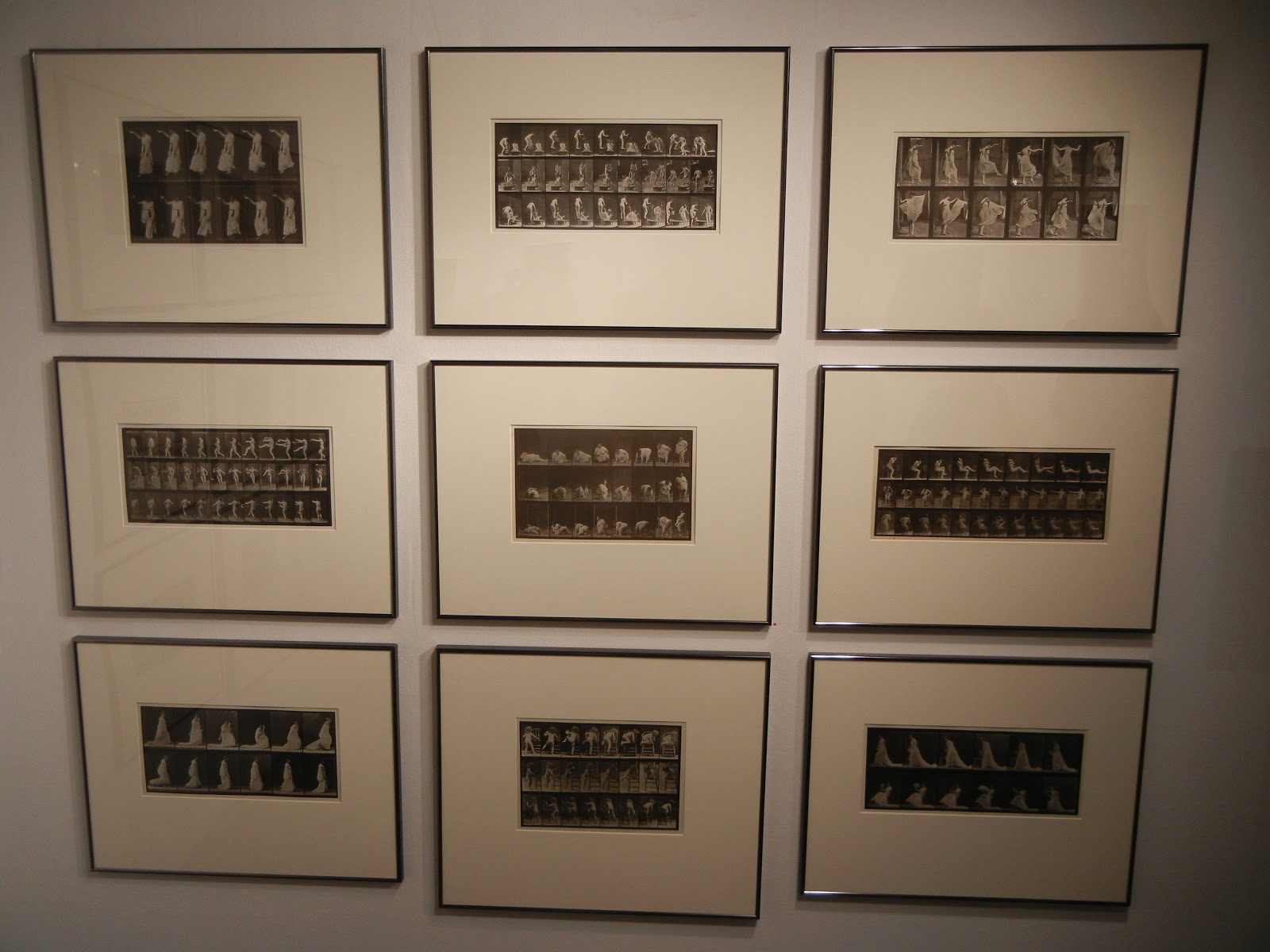
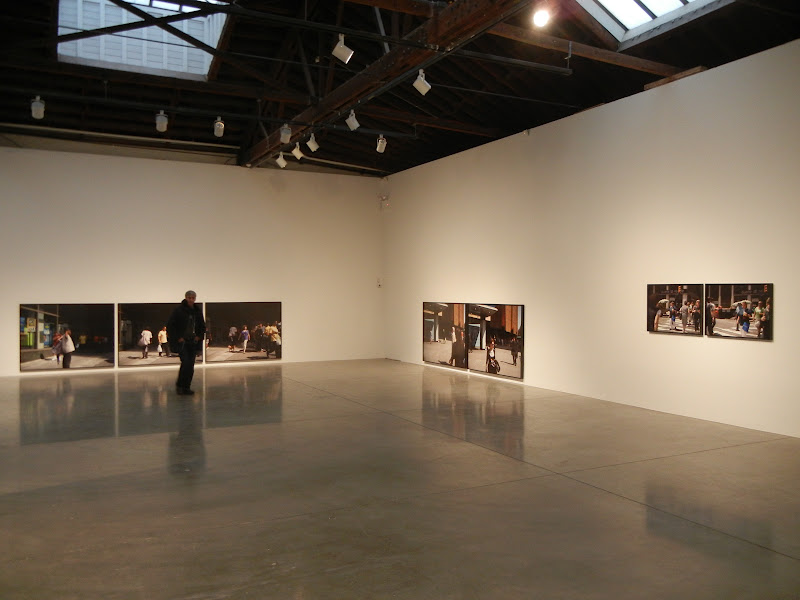
JTF (just the facts): A group show of the work of 14 photographers, variously framed and matted, and hung in a series of 4 divided rooms on the 3rd floor of the museum. All of the works are recent acquisitions. (Installation shots at right.)
 
The following photographers have been included in the exhibit, with the number of works on view and image details in parentheses:
  • Yto Barrada (1 set of 4 chromogenic color prints, 2004)
  • Liz Deschenes (1 chromogenic color print, 2009)
  • Robert Frank (7 gelatin silver prints, 1976-1998)
  • Paul Graham (21 pigmented inkjet prints, 1981-1982/2011)
  • Birgit Jürgenssen (1 gelatin silver print with applied ink, 1972, 1 gelatin silver print, 1976)
  • Jürgen Klauke (1 set of 4 gelatin silver prints, 1974-1975)
  • Běla Kolářová (4 gelatin silver prints, 1962-1963)
  • Lynn Hershman Leeson (3 gelatin silver print, 1974-1978, 1 16mm film, 1978, 5 chromogenic color prints, 1976-1978/2003, 1 silver dye bleach print, 1976, 4 chromogenic color prints, 1975-1976, 1 chromogenic color print, 1977/1999, 1 modacrylic fiber wig, 1 pigmented inkjet print, 1978, 1 offset lithograph, 1974, 1 pigmented inkjet print, 1975/2003)
  • Dora Mauer (1 set of 24 gelatin silver prints and graphite on paper, 1972, 1 set of 28 gelatin silver prints and graphite on paper with 1 map, 1979)
  • Oscar Muñoz (1 set of 12 chromogenic color prints, 2007/2012)
  • Mariah Robertson (1 chromogenic color print, 2012)
  • Alan Sekkula (18 dye transfer prints and 7 text panels, 1988-1995)
  • Stephen Shore (1 set of 32 gelatin silver prints, 1969/2013, 16 chromogenic prints, 1972-1979/2013, 4 chromogenic prints, 2012)
  • VALIE EXPORT (3 gelatin silver prints, 1968/2011, 1 gelatin silver print, 1968, 1 set of 40 gelatin silver prints with pencil and pen on paper, 1968/1973, 1 gelatin silver print with package of cigarettes, 1970/2005, 4 gelatin silver prints, 1972)
Additional works by Taryn Simon, Phil Collins, Stan Douglas, Leslie Hewitt, and Hank Willis Thomas will be added to the exhibit on August 23rd.

Comments/Context: The everyday trade-offs that are faced by museum accession committees and curators are often much more complicated and multi-faceted than outsiders might imagine. Start with a fixed budget (and one that it is inevitably smaller than might be desired) and an existing permanent collection with its own particular strengths and weaknesses, and add to that mix a shifting set of priorities, personalities, and upcoming shows. Should precious acquisition dollars be spent on new and emerging work that is representative of the current trends, or should gaping holes in the collection be filled with key masterworks? And which gaps in the collection are most pressing (assuming a perfect "solution" could be found at the right price)? If we can ascribe intention to the acquisitions process (and not just the random arrival of donations and gifts), those works a museum acquires in any given period can tell us something about how these choices are being made.

This show brings together a selection of MoMA's recent photography acquisitions and mostly finds the museum shoring up its foundations and deepening its commitment to certain thematic ideas. It's clear that Paul Graham, Stephen Shore, and Robert Frank are critical photographers in the history of the medium, so it's not surprising to see the museum filling in their holdings of these three masters; perhaps what is more unexpected is that this work wasn't already in the collection. New acquisitions include a selection of prints (unfortunately recent) from Paul Graham's early 1980s color classic A1: The Great North Road, a set of Robert Frank's darker, more psychologically raw later multi-image works (1970s-1990s), and a sampler of Stephen Shore's work, from modern prints from American Surfaces and Uncommon Places to an early conceptual piece and some recent images from Ukraine.

Thematically, the intersecting circles of feminism, gender studies, performance, and female photographers continue to get a strong push from the museum, often with a European bent. Běla Kolářová's circular radiograms from the early 1960s are paired with Dora Mauer's 1970s conceptual studies in the opening gallery, and a few rooms later, VALIE EXPORT, Lynn Hershman Leeson and Birgit Jürgenssen are collected in more breadth and depth. It's undeniably clear that the museum is interested in the evolving aesthetic and conceptual ideas in this strain of photography, and in using these and other artists as a platform for more current discussions of female identity.

The last gallery in the current show (another room will be added in August when the Brandt show comes down) is a grab bag of more recent work, from Alan Sekkula's comprehensive documentation of global port cities and seafaring industries to Liz Deschenes' vibrating field of abstract dots. Both Mariah Robertson's looping expressionistic roll of photograms and the systematically woven portraits of Oscar Muñoz seem like strong additions to the collection. That said, I look forward to the inclusion of the final room later in the summer, as the current configuration seems woefully incomplete in terms of exciting new photography.

All in, this is a summer group show without a theme, a disconnected but high quality gathering of photographs that provide a trail of bread crumbs for those interested in charting the museum's point of view. As always, the new acquisitions look like a delicate balance of reinforcing the core strengths of the collection, following the interests of the curators, and attempting to capture the best of what's new.
 
Collector's POV: Since this is a museum exhibition, there are, of course, no posted prices for the works on view. As such, we'll pass on the normal discussion of pricing trends and secondary market history that would usually appear here.
 
Rating: * (one star) GOOD (rating system described here)
 
Transit Hub:
  • Features/Reviews: Opening Ceremony (here)

XL: 19 New Acquisitions in Photography
Through January 6
 
11 West 53rd Street
New York, NY 10019

Wednesday, March 6, 2013

Photography in the 2013 ADAA Art Show

This year's ADAA Art Show wandered the stylistic line that it always does: somewhere between classy and snoozy. Only 12 booths out of a possible 72 had any photography in them, so photo collectors and enthusiasts can expect to travel along decent stretches of real estate without anything to tempt you. That said, each photography find is worthy of a closer look, so treat the whole thing like a treasure hunt and you won't be disappointed.

My notes from the fair are below, organized alphabetically by gallery name. For each booth, a list of photographers has been provided, along with the number of works on display, a highlight image or two, and the prices where appropriate.

Brooke Alexander, Inc. (here): John Baldessari (1 photogravure, $8500)
 
 
Alexander and Bonin (here); This entire booth was devoted to the work of Mona Hatoum, with a mix of photographs and sculptural objects. After expressing my interest in the flattened perspective severed fish head image ($6000), I was given a peek at the lovely cheese grater photograph tucked away in the very tiny closet ($12000).


Fraenkel Gallery (here): This booth was a solo showing of Robert Adams images from The New West. A total of 27 prints are on display.
 
 
Marian Goodman Gallery (here): This booth was filled with works by Tacita Dean (15 works, plus 1 glass box of overpainted postcards and 1 set of 3 sculptures). Most were gouaches over various 19th century photographic landscapes, where slivers of paint added a tree, a glacier, or a man perched on a rock outcropping. The work below is a Carleton Watkins Grizzly Giant image overpainted in misty white ($35000).
 
 
Sean Kelly Gallery (here): This booth contained a fine selection of Robbert Mapplethorpe's portraits of artists (20 in all). I enjoyed his image of De Kooning best, which of course was NFS (as was the portrait of Louise Bourgeois).
 
 
Barbara Krakow Gallery (here): This single work by Liliana Porter was the only photographic work in this booth ($10000). Notice the clever conceptual line that extends from the finger, travels across the photograph, jumps up on the mat, and eventually continues along the wall.
 
 
McKee Gallery (here): Two new Richard Learoyd prints were featured in this booth, one a portrait and the other this sculptural, fishing-lined pink flamingo ($65000). A show of Learoyd's new work is scheduled for this coming May.
 
 
Metro Pictures (here): This triptych of Louise Lawler images of a Degas sculpture was the focal point of this booth (there was one smaller Lawler on the outside wall, but that's all that was on display). The three versions have been alternately tinted in RGB (each $150000) and were surprisingly elegant close up. There were also 4 smaller Cindy Shermans hiding in the storage closet.
 
 
Laurence Miller Gallery (here): This booth was filled with Eadweard Muybridge collotypes from Animal Locomotion (a total of 33, individually priced between $3000 and $10000, plus 1 video, the leather case, cover plate, and supporting letter). I have to say that these seemed like an odd choice for this fair; perfectly fine to be sure, but I wonder whether a more contemporary choice might have been more powerful. There was also 1 Ray Metzker composite tucked away on a side wall.
 
 
Yossi Milo Gallery (here):  This booth contained a mix of gallery artists: Matthew Brandt (1), Chris McCaw (5), Sze Tsung Leong (5), and Alison Rossiter (12). These more angular Rossiters were fabulous and likely my favorites in the fair ($6500 each, these four all already sold!).
 
 
Pace/MacGill Gallery (here): This booth was smart mix of large and small prints: Paul Graham (1), William Eggleston (1 of the recent big prints), Richard Misrach (1), Vito Acconci (2 tiny prints), Irving Penn (1 small portrait), Hai Bo (2 huge full length portraits, apparently of his uncle), Andreas Gursky (1), Robert Rauschenberg (1), Harry Callahan (2 small light drawings). The image below is an up-close detail of the tiny colored spots in the Graham work from his Films series ($30000).
 
 
Skarstedt Gallery (here): Fitting that this summary should end with a blockbuster Cindy Sherman centerfold ($1300000), as what is an art fair without a bunch of Cindy Shermans? The booth also contained a Richard Prince cowboy and a large Cindy Sherman film still.


Monday, March 5, 2012

Paul Graham: The Present @Pace

JTF (just the facts): A total of 16 color works, framed in black and unmatted, and displayed in the entry and a winding series of three large rooms. There are 14 diptychs and 2 triptychs in the show, many hung very near the floor. All of the prints are pigment prints mounted on Dibond, with individual panels sized either 28x38 or 56x74. The works were made between 2009 and 2011, and are all available in editions of 3+2AP. The images are titled precisely by location, date, and exact time of day, down to the second. A monograph of this body of work is being published by Mack Books (here). (Installation shots at right.)
.
Comments/Context: Paul Graham's new street photographs are undeniably the most thoughtful body of new photography I have seen this year. I use the word thoughtful with special care in this case, in that there is a sense of deep, persistent, historically-aware thought that lies as a backdrop to these images. Graham has taken the traditions of the genre of street photography and systematically and meticulously destroyed them. This disassembly exercise is not a rebellious, thumbing his noise at history stunt, but instead a cerebral investigation of and meditation on the true nature of street photography. These pictures break every rule about what masters like Winogrand, Callahan, Meyerowitz, Friedlander and others have trained us to expect, and thus require a kind of mental rebooting to get into them. But once inside, there is a strong sense of Graham innovating within the confines of photography, rather than trying to show that he can go somewhere else. He is firmly rooted in the nature of straight photographic seeing, but he continues to ask questions about its limits.

My first reaction to these pictures was a profound sense of being entirely underwhelmed. The images are extremely unassuming, stepped back in space, with subjects basically centered, with a narrow band of focus positioned on the main figure. People walk past on sidewalks, exit from banks and fast food restaurants, cross streets, and linger outside landmarks like Penn Station. Aside from one woman who trips and falls, there is a singular lack of noteworthy action. Unlike every other street photograph you have ever seen, there is no coalescing of something dramatic, no juxtaposition of something ironic, no lucky matching of something happening. Most notably, there is no obvious narrative, no succinct, lucid story being neatly told in a single frame. In fact, nothing happens at all - people pass and move on; the flow of time continues.

Using pairs and triplets of images taken in the span of a few seconds, Graham shifts our attention away from traditional storytelling, making us see how his eye has wandered. His focus moves from one figure to the next, or to one in the foreground or background, quickly shifting and darting from moment to moment. A woman eating a banana traverses a crosswalk; a fraction of a second later, a blind man with a cane is right behind her. In the span of three frames, his focus moves from an apparently homeless man, a man with a plastic shopping bag, and a woman with a poodle, a bunch of tourists getting a sidewalk pitch from a tour salesman lingering in the blurry periphery. There is no clever connecting theme, no visual thread to unravel. Graham is exploring both the nature of eye movement and the compressing and expanding of time. Let me be clear, this is not cinematic. It is a jumpy, erratic progression, elusive and imperfect.

This is not to say that these selections are void of wit. Some of the pairings are quietly tricky: a man with an eye patch followed by a man winking, a woman with bright orange hair followed by another drinking orange soda, a man in a dapper suit followed by his alter ego in rags (in exactly the same spot), a policeman leaving a drugstore followed moments later by a mailman. Graham's powers of observation are clearly on high. But he has refused to follow the agreed upon rules. His pictures are about the interaction of time and photography, and about the uncertainty of selective focus. It's as though there is a "normal" street photograph to be had in all these fragmentary scenes, and yet Graham has opted instead for its alter ego, its negative.

For those who would claim that everything has been done in a genre like street photography, Graham's work is proof positive that there is always room for frame-breaking, original innovation. His images are both an homage and a deconstruction, an appreciation and a rejection. In some ways, they aren't about the images at all, but about capturing the in-the-moment present tense of the street that swirls and changes continually around us without ever being actively noticed. The only reason I can't find my way to three well-deserved stars for this show is that I find the pictures so disposable and boring. Of course, I know, this is exactly and entirely the point, but my mind is hard wired to seeing in the old way, and I need some more time to get my head around experiencing the world as gaps and absences. But without a doubt, the ideas here are revolutionary, and they merit a robust, public airing, if only to show that we can still coherently parse this ever-changing medium. This is the kind of show we should be talking about, folks, not the packaged-for-easy-consumption art with which we are all too familiar.

Collector's POV: The works in this show are priced as follows. The smaller "stacked" diptychs (28x38 panels) are $35000 each. The larger diptychs (56x74 panels) are $65000 each. The triptychs are $80000 each. Graham's images (from all periods of his career) have been remarkably absent from the secondary markets for photography, so gallery retail is still likely the best option for interested collectors at this point.
.
Rating: ** (two stars) VERY GOOD (rating system described here)
.
Transit Hub:
  • Artist site (here)
  • The Unreasonable Apple essay (here)
  • Artforum 500 words (here),
  • Reviews/Features: Financial Times (here), LPV (here)
Paul Graham: The Present
Through April 21st

The Pace Gallery
545 West 22nd Street
New York, NY 10011

Tuesday, March 9, 2010

Photography at the 2010 Armory, Part 5 of 6

Parts 1, 2, 3 and 4 of this multi-part Armory review post can be found here (part 1), here (part 2), here (part 3) and here (part 4). This post refers to the second half of the shorter hall to the left of the entrance area/cash registers, near the stairs up to Pier 92.

Corvi-Mora (here): Anne Collier (1), Dominique Gonzalez-Foerster (5)

Galeria SENDA (here): Eve Sussman (1), Massimo Vitali (1)

Bryce Wolkowitz Gallery (here): Susanna Majuri (1), Sandra Kantanen (1), Pertti Kekarainen (1), Niko Luoma (3), Hannu Karjalainen (2), Ola Kolehmainen (1). This show echoes the current show of Helsinki School photographers now on view at the gallery (which we haven't yet seen in person, but will certainly visit soon - I'm looking forward to educating myself more on many of these artists). I enjoyed the graphic quality and the detailed textures of the three images by Niko Luoma (stacks of newspapers, at right); they are priced at $8500 each. I continue to appreciate the glossy minimalist patterns of the work of Ola Kolehmainen, although the dark green example in the booth was less successful than others I have seen due to the bright reflections from the surrounding fair bustle; it was priced at $25000.

Ingleby Gallery (here): Francesca Woodman (1)

ONE and J. Gallery (here): Yunho Kim (5). Along one exterior wall of this booth, 4 panels by Yunho Kim were hung edge to edge, in a dense, colorful mosaic/typology of long distance bus images (each individual bus depicted in a rigorous, formal composition). Each panel was priced at $8000.
.
Taro Nasu Gallery (here): Futo Akiyoshi (1)

Yossi Milo Gallery (here): Robert Bergman (1), Loretta Lux (2), Myoung Ho Lee (8), Simen Johen (2), Youssef Nabil (5), Pieter Hugo (2), Sze Tsung Leong (7), Mohamed Bourouissa (1)
.
Aidan Gallery (here): Rauf Mamedov (9 images, available as one set or as 3 triptychs)

Sikkema Jenkins & Co. (here): Vik Muniz (4). These images (at right) are recreations of Piranesi's 18th century etchings of imaginary prisons, only constructed with black string and nails. I never seem to tire of Muniz' reconsiderations of art history; they always seem fresh and unexpected.

Jack Shainman Gallery (here): Zwelethu Mthethwa (1), Rashid Rana (1), Carrie Mae Weems (4)

Galerie Guy Bärtschi (here): Nan Goldin (2), Marina Abramovic (1)

Horton Gallery (here): Eve Fowler (8)

GDM Galerie de Multiples (here): Bill Owens (1 group of 4 images)

Hales Gallery (here): Sebastiaan Bremer (6)

Studio La Città (here): Vincenzo Castella (5), Roberto de Paolis (2), Michael Najjar (1), Franco Fontana (1)

Jiri Svestka Gallery (here): Miroslav Tichy (12)

carlier gebauer (here): Paul Pfeiffer (set of 24 color seascapes), Paul Graham (set of 7 images), Robin Rhode (set of 28 images). The Paul Graham works (at right) are a series from a shimmer of possibility, depicting a gas station in North Dakota at dusk.

Voges Gallery (here): Adrian Williams (20)

Layr Wuestenhagen (here): Julien Bismuth (4)

Other Criteria (here): Ross McNicol (1)

Monday, April 27, 2009

Paul Graham, Photographs 1981-2006 @Greenberg Van Doren

JTF (just the facts): A total of 12 works, 10 single images, and 2 series, variously matted and framed, hung in the entry and main gallery spaces. The images are from the period 1988 to 2007, many from the 1990s. The prints range in size from approximately 16x20 for the small series images, all the way up to wall sized 70x90. (Installation shots at right.)

Comments/Context: After enjoying Graham's current show on view at the MoMA (review here) and having quite a few follow-up discussions with various folks who helped educate me a bit further on Graham's work, I was eager to see how Greenberg Van Doren would present a broader array of his images, mini-retrospective style. The gallery has opted for the "appetizer sampler" approach: two or three images from a handful of different projects, served together, with the assumption that after trying each of them, we'll know what to order next time.

The first room has a grab bag of images: one from Empty Heaven of a Japanese woman about to cover her mouth (1992), one from New Europe of a suited man's knees (1988), and one of an amputated tree painted white (2005), from a shimmer of possibility. Each has its merits, but it's hard to draw much of a pattern from these three as group.
.
The main gallery has some of the same series from a shimmer of possibility that were presented at the MoMA clustered on opposite walls, and upon a second viewing, they're still excellent. Also in this room are a pair of large profile mug shot portraits of teenagers (1997) from End of An Age. These images are vaguely reminiscent of Thomas Ruff's deadpan frontal portraits from the 1980s, with a bit more adolescent angst thrown in for good measure. Three images from the Painting series (1999) share this wall; they are close up, color field like works of graffiti scratched walls, and they reminded me tangentially of Brassäi.

My favorites in the show were the two massive images from American Night (one 1998, one 2002). The first depicts a seemingly downtrodden man with an eye patch, standing in a darkened alley, near a graffiti covered corrugated steel security pull down and an array of gumball machines. The second shows a lone man standing in an empty parking lot in a pupil-dilating field of white brightness. Both of these works take what at first glance is a simple documentary image and make it something altogether more powerful. We'll certainly go in search of more images from this particular project to get a wider view of the whole effort.

Overall, this show is a bit uneven, but it certainly worth a visit as further background on the evolution of Graham's career.

Collector's POV: The series images from a shimmer of possibility are $35000 and $40000. The pictures from the Painting series are $17500 or $25000. The American Night images are priced at $40000, while the various images in the entry gallery are between $15000 and $20000. The two portraits from End of An Age are not for sale. All the prints are made in editions of 3, 5, or 6. Paul Graham's photographs have been virtually unavailable at auction, although the MoMA show will likely shake some loose in the coming seasons I would imagine. As a collector, I came away from this show with a deeper appreciation for both the American Night works, as well as those from a shimmer of possibility.

Rating: * (1 star) GOOD (rating system described here)

Transit Hub:
  • Paul Graham Archive (here)
  • 2009 Deutsche Borse Prize (here)
  • 2009 Interview with PDN (here)
  • American Night (here)
Paul Graham, Photographs 1981-2006
Through May 2nd

730 5th Avenue
New York, NY 10019

Monday, March 2, 2009

Paul Graham, a shimmer of possibility @MoMA

JTF (just the facts): A total of 49 color images, displayed as 8 sequences of between 4 and 9 images each, and two single images. All of the images were taken between 2004 and 2006. The prints are made in varying sizes, framed in white, without mats and with very little wall text, and hung at varying heights in a two room gallery with a single dividing wall. The curator of the exhibition is Susan Kismaric. (Installation shots at right.)

Comments/Context: I'm going to go out on a limb here, but I think British photographer Paul Graham is a complete unknown for most collectors. Even though he has had a nearly 30 year career, published a dozen high quality books, and made some memorable pictures, I think he has been overlooked by many, mostly because he isn't easily categorized. While one might attach the labels "color" or "documentary" to his work, his isn't the first name that comes up when you think of these terms, and so I'm afraid many folks have missed out on some amazing photography (ourselves included for the most part, I must admit).
.
The new show at the MoMA takes a sampling from his most recent work, a shimmer of possibility, a group of images he took during many trips across America from 2004 to 2006. What is surprising is that this work is not a group of standard, stand alone documentary pictures. Instead, the images are sequenced into spare narratives, with almost cinematic slices of time (reframing the subjects minute to minute) propelling the stories along, sometimes quite linearly but often in a more elliptical undirected flow.

In many ways, nothing much happens in these stories; they are tiny vignettes of ordinary life. Here are a few of the moments that are captured:

  • A woman eats takeout at a bus stop, and then smokes
  • A man camps out near a Jack-in-the-Box trash can
  • A girl with her toys on the sidewalk
  • A man mows the grass, as it begins to rain
  • Kids play basketball as the sun sets
  • A man sells flowers on a street corner
  • A man on a break savors a cigarette
The overall mood of these short stories is the same exhausted melancholy that permeates Alec Soth's recent work. And yet, Graham's economical narratives are oddly engaging and satisfying; the details all seem to matter a bit more. The exact moments when the rain falls on the man mowing the grass (sparkling in the sunlight), or when the smoker exhales, or when the basketball is released all have a hyper reality, saturated with our attention. And then there is a sense that life goes on - the open ended stories will all continue. While this show is relatively small, take your time to savor each thread; they'll grow on you.
.
The artist's website can be found here. The 12 volume set of books published by Steidl can be found here.

Collector's POV: Paul Graham's work has been virtually unavailable in the secondary markets in the past few years, except for a few copies of his first book A1, The Great North Road, which have started to show up in the newer photo book auctions. Graham is represented in New York by Greenberg Van Doren Gallery (site here), who will be having a retrospective show of his work starting later in March.

Rating: ** (two stars) VERY GOOD (rating system described here)

Through May 18
.
11 West 53rd Street
New York, NY 10019
.
5B4's review of the books can be found here.
.
UPDATE: My email has been full of readers with links and ideas for educating us further about Paul Graham (a few politely pointing out just how out of touch and misinformed we are). There is currently a show of the 2009 Deutsche Borse finalists up at the Photographers' Gallery in London (site here). A second good resource is the Anthony Reynolds Gallery in London (site here), who has represented the artist for most of his career and has access to all of his work. Perhaps there is a real difference in knowledge of Graham's work between working photographers and other photo "insiders" (who all know Graham well) and many collectors (particularly in America) who only know him tangentially.