Showing posts with label Walker Evans. Show all posts

Friday, August 9, 2013

Walker Evans, American Photographs @MoMA

JTF (just the facts): A total of 57 black and white photographs, framed in white and matted, and hung against white walls in a single room gallery on the 4th floor of the museum. Aside from one bulletin page (found in a glass case), all of the works are vintage gelatin silver prints, made between 1929 and 1936. The exhibition was organized by Sarah Hermanson Meister and Drew Sawyer. A 75th anniversary edition of American Photographs has been published by the museum (here) and can be purchased in the bookshop for $35. (Installation shots at right.)

Comments/Context: At this point, some 75 years after its first display, there isn't much to debate about Walker Evans' American Photographs. It was the first one-person exhibit of photography at the MoMA in 1938 (a ground breaking feat at the time) and the accompanying catalog became a defining classic for the photobook genre. The photographs that made up the exhibit and book have influenced generations of downstream artists, capturing Depression-era America with a sense of exacting clarity and respectful austerity. Whether his camera was pointed at flourishes of 19th century architecture, examples of vernacular culture, or scenes of intimate social reality, his images consistently found a careful balance between poetic dignity and straight-on directness. These were, and still are, undeniable masterworks in the history of the medium, full stop.

Given the historical importance of the anniversary and the deserved reverence applied to these images, the curators of this show were actually faced with some thorny issues. Should they stay true to the original exhibition and recreate it with meticulous attention to detail (so as to preserve the artist's original intent), or should they reinterpret the body of work in search of new insights and fresh connections? In many ways, their answer lies somewhere in the middle, more a "spirit of the law" effort than a blind adherence to the original specifics. This show is smaller than its predecessor (many of the original 100 images edited out), opts for frames rather than prints glued directly to the walls (no surprise there, given the rarity of the vintage prints on view), and alternates the sequencing of the images between direct image by image fidelity and wholesale reordering. The photographs themselves are no less impressive, but the look and feel of the exhibit is somewhat different.

Part of the contemporary resonance that comes from this exhibit is its connection to the current Renaissance in photobook publishing. American Photographs was one of the first photobooks to be designed and sequenced with a perfectionist's eye for intent; Evans made careful decisions about which pictures went in which order, and how the two sections of the book worked together. No self-respecting photobook enthusiast has failed to spend hours poring over this volume and considering how it was put together. So if the curators of the current show were making a case for the importance of this work in the history of photobooks, and were making a particular point about the genius in the sequencing, I'm a bit surprised that they didn't try to recreate Evans' layout exactly. While the exhibit does have sections which follow his sequencing image by image, most of the walls remix the images into new lines of visual thought. This is not to say that the new sequencing is any less eloquent or well considered; in fact, some of the new groups and progressions seem clearer in terms of the hand offs between adjacent photographs. But if I'm a purist, they aren't exactly what Evans laid out, and if we're celebrating his fierce bookmaking intent, then I think we're off the mark just a bit.

The other new idea introduced here is the sense of broader context with the rest of American art. This exhibit is not huddled off in the photography galleries flanked by the history of photography, but dropped directly into the progression of the permanent collection of paintings and sculpture. To get to the Evans gallery, the viewer must first pass through the Abstract Impressionism of De Kooning, Pollock, Newman, and Rothko; to its side lies a gallery of Rauschenberg and Johns, and it is followed by the beginnings of Pop Art (Warhol, Lichtenstein, and Ruscha). While the chronological progression is slightly off (the Evans photographs are from the mid 1930s), Evans' placement amid this pantheon is well deserved. There are fascinating connections in every direction: the bold contrast between Evans' puritanical restraint and the heroic gestures (and scale) of the AbEx painters, the dialogue between Evans' vision of America and the one implied by Jasper Johns' encaustic flag or a Rauschenberg combine, and the interest in vernacular signage and cultural signifiers starting with Evans and being reconsidered by the Pop artists. It is long overdue to see a major photographer placed on equal footing with other bold faced artistic names, and found to be just as influential and critical to our understanding of the evolution of American art.

So while much of what is on view here will be familiar to most photography fanatics, the astonishing quality of the photographs is undiminished and the small riffs on the canon that have been introduced help keep the exhibit fresh. Those that were hoping for a historical rehanging of the original icon will be somewhat disappointed, but Walker Evans' American Photographs remains a landmark body of work, and I expect when we see it again in another 25 years, it will be even more integrated into the larger narrative of the American artistic experience.

Collector's POV: Since this is a museum exhibition, there are, of course, no posted prices for the works on view. Evans' prints are routinely available in the secondary markets, with dozens of prints coming up for auction every year, mostly later prints and broken up portfolios. Recent prices have ranged from $1000 to nearly $200000, with vintage prints of his most iconic images at the top end of that range.

Rating: ** (two stars) VERY GOOD (rating system described here)

Transit Hub:
  • Features/Reviews: New York Times Lens (here), New York Times (here), New Yorker (here), Ahorn (here), MoMA Inside/Out (here)
Through January 26
 
11 West 53rd Street
New York, NY 10019

Tuesday, April 9, 2013

Auction Results: The Modern Image, Photographs from an Important American Collection, April 5, 2013 @Sotheby's New York

The results from this single owner sale at Sotheby's last week are proof that if the overall Buy-In rate can be kept low, even if prices aren't particularly frothy, the Total Sale Proceeds will likely come in in an acceptable range. Roughly 35% of the lots that sold in this auction found buyers below their pre-sale estimates, but with a Buy-In rate of just under 17%, the aggregate proceeds fell right in the middle of the range.

The summary statistics are below (all results include the buyer’s premium):

Total Lots: 59
Pre Sale Low Total Estimate: $1943000
Pre Sale High Total Estimate: $2950000
Total Lots Sold: 49
Total Lots Bought In: 10
Buy In %: 16.95%
Total Sale Proceeds: $2544376

Here is the breakdown (using the Low, Mid, and High definitions from the preview post, here):

Low Total Lots: 21
Low Sold: 16
Low Bought In: 5
Buy In %: 23.81%
Total Low Estimate: $181000
Total Low Sold: $156875

Mid Total Lots: 25
Mid Sold: 21
Mid Bought In: 4
Buy In %: 16.00%
Total Mid Estimate: $598000
Total Mid Sold: $487126

High Total Lots: 13
High Sold: 12
High Bought In: 1
Buy In %: 7.69%
Total High Estimate: $2180000
Total High Sold: $1909375

The top lot by High estimate was lot 18, Edward Weston, Two Shells, 1927, estimated at $600000-900000; it was also the top outcome of the sale at $533000.

Only 65.31% of the lots that sold had proceeds in or above the estimate range. There were a total of 4 surprises in the sale (defined as having proceeds of at least double the high estimate):

Lot 16, Edward Steichen, Anna May Wong, 1930, estimated at $7000-10000, sold at $25000
Lot 17, Edward Steichen, Douglass Lighters (for J. Walter Thompson), 1926, estimated at $40000-60000, sold at $203000 (image at right, top, via Sotheby's)
Lot 28, Walker Evans, Defensa Carniceria, Havana, 1933, estimated at $6000-9000, sold at $20000 (image at right, bottom, via Sotheby's)
Lot 55, Irving Penn, Nude Torso, Soaping, New York, 1978/1992, estimated at $15000-25000, sold at $59375 (image at right, middle, via Sotheby's)

Complete lot by lot results can be found here.

Sotheby's
1334 York Avenue
New York, NY 10021

Monday, March 18, 2013

Everyday America: Photographs from the Berman Collection @Kasher

JTF (just the facts): A total of 115 black and white and color photographs, variously framed and matted, and hung against white walls in the North and South gallery spaces, as well as the alcove and the smaller viewing room in back. A total of 32 different photographers are represented in the show. Sizes range from 6x4 to 55x45 (or reverse), and negative dates range from 1929 to 2004. All of the works come from the Berman collection. (Installation shots at right.)

The following photographers are included in the show, with the number of prints on view and their dates in parentheses:
  • Margaret Bourke-White (2 gelatin silver prints, 1935/1996, 1936/1996)
  • Harry Callahan (1 gelatin silver print, 1948/1970s)
  • William Christenberry (1 digital pigment print, 1976/2005)
  • William Clift (1 gelatin silver print, 1970)
  • Robert Dawson (1 chromogenic dye coupler print, 1985/1990)
  • William Eggleston (2 chromogenic dye coupler prints, 1970s)
  • Mitch Epstein (8 chromogenic dye coupler prints, 1973/2005, 1983/2005, 1996/1997, 1997, 2000, 2001, 2002, 1 Fujicrystal archive print, 2004)
  • Terry Evans (2 archival inkjet prints, 2003, 2004)
  • Walker Evans (22 gelatin silver prints, 1929/1971, 1930/1971, 1931/1971, 1931/1974, 1930s/1971, 1935/1960s, 1935/1971, 1936/1971, 1936/1974, 1945, 1946, 1948, 1962/1960s, 1969)
  • Robert Frank (3 gelatin silver prints, 1953/1970s, 1956/1980, 1950s/1979)
  • Todd Hido (1 chromogenic dye coupler print, 2000)
  • Evelyn Hofer (4 gelatin silver prints, 1963/later, 1965/later)
  • John Humble (5 chromogenic dye coupler prints, 1991/2006, 1995/2003, 1995/2005, 1997/2005, 1998/2005)
  • David Husom (2 chromogenic dye coupler prints, 1981/2002, 2001, 1 Ektacolor print, 1978/1994)
  • Birney Imes (4 chromogenic dye coupler print, 1986, 1986/2004, 1989/2003)
  • Dorothea Lange (13 gelatin silver prints, 1930/1935, 1930s, 1935/1950, 1936/1950s, 1937, 1938, 1941, 1942, 1951/1965, 1952, 1957/1960s)
  • Russell Lee (4 dye transfer prints, 1940/1986)
  • Helen Levitt (2 gelatin silver prints, 1937/later, 1939/later)
  • Martin Parr (1 chromogenic dye coupler print, 2001)
  • Christian Patterson (1 chromogenic dye coupler print, 2003)
  • Sheron Rupp (2 chromogenic dye coupler prints, 1983/1990s, 1990/1990s)
  • Gene Peterson (9 gelatin silver prints, 1950)
  • Stephen Shore (1 dye transfer print, 1981/1982)
  • Aaron Siskind (3 gelatin silver prints, 1935/later, 1937/1976, 1938/1976)
  • Mike Smith (2 chromogenic dye coupler prints, 1996, 2000)
  • Joel Sternfeld (2 Ektacolor prints, 1983/1986, 1993/1994, 2 chromogenic dye coupler prints, 1997, 2005)
  • George Tice (1 gelatin silver print, 1970/1993)
  • John Vachon (1 dye transfer print, 1940/1985)
  • Chris Verene (1 chromogenic dye coupler print, 1993/2002)
  • Camilo Jose Vergara (4 chromogenic dye coupler prints, 1977, 1980, 1983, 1988)
  • James Welling (4 gelatin silver prints, 1990/1990s, 1991/1990s)
  • Henry Wessel (1 gelatin silver print, 1974)

Comments/Context: By its very definition, the word collector implies a focus on hunting, gathering, search and acquisition. It's a forward looking, accretive mindset, generally adding up rather than subtracting. But at the end of every collecting road, there is a less well publicized unwinding, where artworks once treasured by the collector must find new homes. The three classic Ds (debt, death, and divorce) often act as catalysts for the breaking up process, but we tend not to spend much time talking about the best ways to actually make this disassembly take place smoothly.

The unpacking of the Berman collection of photography has been a particularly public example of the dispersion of a large collection. Once tallying up at over 2500+ photographs, its break up has been and continues to be a huge undertaking. To date, the remonetization of the collection has included donations to various Los Angeles museums (LACMA, MOCA, and the Getty), a series of auctions at Christie's, and now the first of likely a few gallery shows of additional slices of material, with the overall process measured in years and heading for an end to end duration of nearly a decade.

This show combines lower priced and lesser known material that was likely not a terrific fit for auction with a number of vintage gems that somehow avoided earlier pick throughs. As a reminder, the Berman collection had a focus on American photography, with particular interest in built structures and vernacular architecture, mixing 20th century and contemporary work. This particular selection is heavy on work by Walker Evans and Dorothea Lange (both vintage and later prints), with a solid dose of Mitch Epstein and a sprinkling of Frank, Sternfeld, Siskind, Levitt and many others, known and unknown. Building facades, commercial signage, and sidewalk storefronts are common subject matter, mixing urban and rural locales with equal measure. The rigid geometries of Evelyn Hofer's stone windows give way to John Humble's saturated color California strip architecture, and Walker Evans' New England interiors connect to Birney Imes' vibrant Southern juke joints. Dorothea Lange's Funeral Cortege, End of an Era in a Small Valley Town, from 1935 is the star of the show, with its classic pained expression caught in the hearse window.

All in, this is a lively compendium of American photography, covering roughly 75 years of artistic history. Hung up and down in jumping pairs and groups, there's plenty to catch your eye and compare.

Collector's POV: The prints in the show are priced as follows:
  • Margaret Bourke-White: $3000 each
  • Harry Callahan: $12000
  • William Christenberry: $4000
  • William Clift: $3500
  • Robert Dawson: $2000
  • William Eggleston: $12500, $20000
  • Mitch Epstein: $7500, $9500
  • Terry Evans: $3500 each
  • Walker Evans: $5000, $6000, $8000, $8500, $12000, $12500, $15000
  • Robert Frank: $8500, $12500, $25000
  • Todd Hido: $4800
  • Evelyn Hofer: $7500, $8500
  • John Humble: $5000 each
  • David Husom: $1800 each
  • Birney Imes: $1500, $2000, $4000, $5500
  • Dorothea Lange: $6000, $7000, $9000, $10000, $12000, $15000, $20000, $40000, $50000
  • Russell Lee: $3000 each
  • Helen Levitt: $6000 each
  • Martin Parr: $5500 
  • Christian Patterson: $2500
  • Sheron Rupp: $1800 each
  • Gene Peterson: $1200 each
  • Stephen Shore: $9000
  • Aaron Siskind: $6000, $15000
  • Mike Smith: $2000 each
  • Joel Sternfeld: $5000, $12500, $15000
  • George Tice: $3000
  • John Vachon: $3000
  • Chris Verene: $15000
  • Camilo Jose Vergara: $3000 each
  • James Welling: $5000 each
  • Henry Wessel: $7000

Rating: * (one star) GOOD (rating system described here)

Transit Hub:
  • Features/Reviews: Wall Street Journal (here), Le Journal de la Photographie (here)

Everyday America: Photographs from the Berman Collection
Through March 23rd

Steven Kasher Gallery
521 West 23rd Street
New York, NY 10011

Monday, November 12, 2012

FSA Photography & Contemporary Social Realism @Robert Miller

JTF (just the facts): A group show containing a total of 41 photographs by 10 different photographers, hung in the front room, the common area, and the two middle gallery spaces. (Installation shots at right.)

The following photographers are included in the main show, with the number of prints on view and image details as background:
  • Horace Bristol: 5 gelatin silver prints, framed in white/black and matted, sized between 9x7 and 14x11, from 1938
  • Jack Delano: 2 dye transfer prints and 2 gelatin silver prints, framed in white/black and matted, each 10x15 or 11x14, from 1940-1941
  • Walker Evans: 5 gelatin silver prints, framed in white/black and matted, sized from 5x8 to 7x11, from 1935-1945
  • Debbie Grossman: 5 inkjet prints, framed in black and matted, each 11x14, from 2010
  • Dorothea Lange: 3 gelatin silver prints, framed in white and matted, each roughly 8x9, from 1935-1936
  • Russell Lee: 3 dye transfer prints, framed in white and matted, each 10x13, from 1940
  • Arthur Rothstein: 2 gelatin silver prints, framed in black and matted, each 14x11, from 1936-1939
  • Zoe Strauss: 5 archival pigment prints, framed in white and unmatted, sized 13x27, 18x27, or 20x30, from 2001-2006
  • Emma Wilcox: 7 gelatin silver prints, framed in black and unmatted, each 20x24, in editions of 7, from 2002-2012
  • Marion Post Wolcott: 2 gelatin silver prints, framed in black and matted, sized between 10x6 and 7x10, from 1936
Large black and white photographic portraits by Josh Lehrer hang in the back gallery, but are designated separately on the checklist (Project Room) and have not been included in the discussion here.

Comments/Context: While an exhibit pairing photographs from the 1930s Farm Security Administration with contemporary social realism certainly sounds promising in general, this particular show doesn't quite fire on all cylinders. This isn't so much a reflection on the quality of the work (which is excellent from the FSA bunch and plenty strong from the more current artists) as it is a lack of interesting parallels and unexpected connections. The chasm between the two time periods is wide enough that even though there are some common issues (poverty first among them), there isn't a clear continuum of visual ideas connecting the past and the present in the selected pictures. As a result, the show feels a bit disjointed and awkward, instead of resonating with juxtaposed insight.

The only true pairing in this show is the side by side hanging of Russell Lee's 1940s small town farmers and Debbie Grossman's digital manipulations of those same images sixty years later, where she has carefully replaced all the men with women, creating a fictional all female world. It's a clever old/new mix, where the physical labor of homesteaders is done by women and stoic square dancing families have two female parents; traditional gender roles are smartly upended and reconsidered. Many of the other FSA works on view are penetrating vintage portraits: Rothstein's Montana rancher, Wolcott's coal miner, Bristol's bearded migrant, and Lange's disembodied weathered hands, wearing torn work clothes and holding a wooden hoe. On the contemporary side, Zoe Strauss offers shot appliances and and the texture of a yellow curtain, while Emma Wilcox plumbs the depths of darkness, via shadowy checkout aisles, stenciled skulls, and an aerial town shot with the residence of a thief indicated by large white letters and an arrow.

I think this show would have benefited from the inclusion of a few more contemporary photographers and a more conscious and repeated mixing of the two time periods; instead of bigger single artist groups, small side by side comparisons might have helped to tease out the similarities and differences. That said, there's plenty of solid work worth seeing here, even if the thematic construct isn't hugely effective.
 
Collector's POV: The works in this show are priced as follows:
  • Horace Bristol: $10000, $12500, $15000 or NFS
  • Jack Delano: $3500, $4000 or $6000
  • Walker Evans: between $9500 and $26000
  • Debbie Grossman: $2500 or $3500
  • Dorothea Lange: between $8000 and $12500
  • Russell Lee: $6000 or $7000
  • Arthur Rothstein: $2500 or $3500
  • Zoe Strauss: $2600, $3250, or $3600
  • Emma Wilcox: $1850 each
  • Marion Post Wolcott: $3000 or $5000
The work of the FSA photographers is generally available in the secondary markets, ranging from the iconic and expensive to the lesser known and very reasonably priced. The work of the contemporary photographers in this show (Grossman, Strauss, and Wilcox) is much less available at auction, so gallery retail will likely be the best option for following up on these three.

Rating: * (one star) GOOD (rating system described here)

Transit Hub:
  • Features/Reviews: New Yorker (here)
  • Debbie Grossman artist site (here)
  • Zoe Strauss artist site (here)
  • Emma Wilcox artist site (here)
FSA Photography & Contemporary Social Realism
Through November 17th

Robert Miller Gallery
524 West 26th Street
New York, NY 10001

Wednesday, March 14, 2012

Photography at the 2012 Armory Show

In previous years, my review of the photography at the Armory Show has required a handful of posts, breaking the fair up into smaller, more easily digestible chunks, since there was so much to write about. This year, I have collapsed all of the data into one single mega-post, the entire experience boiled down to something you can read in a few minutes. The reason I have chosen this approach is that for the first time in my many years of attending this fair, I was generally underwhelmed by what I saw on offer.

Taking pot shots at art fairs is far too easy to be any fun, and I have long been one of the few hold outs who actually enjoys the process of wandering through the bazaar, poking my head into booth after booth in search of something exciting hiding on an interior side wall. Perhaps it is because I already see so much here in New York that I felt that a spark was somehow missing this time; I bounced along the hallways, dutifully making my notes, but mostly nodding my head and moving along rather than digging in to engage the gallery owners. The fact that I could systematically cover the entire fair (both Piers) in just under two and half hours is proof that I didn't stop much to inquire more. I would hate to feel like I'd seen it all before, but that was certainly part of my reaction this year.

The second part of my conclusion was that I saw much more clearly a focus on what was sellable. For many of the non-photography specialist venues, I think the mantra was, when in doubt, put up a Cindy Sherman. From an economic standpoint, this makes complete sense - cover the walls of your booth with art that will sell (and sell for high prices) to ensure that you cover your costs of renting the space and doing all the work the fair entails; hopefully you'll sell a few pieces, meet some new collectors/clients, and come out ahead. The challenge is that if every gallery operates in this same manner, the fair takes on a quality of sameness that becomes dull. The richness of a fair comes in its diversity and risk taking, which is potentially at odds with maximizing profits. As I traveled the crowded halls, I felt the pressure of this commercial push and pull much more acutely than I had before. Of course, none of this is news, I just noticed it more than usual this year.

In any case, my notes from the fair are below, grouped by Pier and arranged by my path through the halls. For each booth, a list of photographers has been provided, with the number of works on display in parentheses. Additional commentary, prices, and pictures of the installation are also included as appropriate.

Pier 94

Galerie Anhava (here): Hreinn Fridfinnsson (1 set of 6)

NoPlace (here): Ingvild Langgård (1), Kjetil Berge (2), Kristine Jakobsen (2), Tommy Høvik
 (3)

Galleri Christian Torp (here): Marianne Hurum (1)

V1 Gallery (here): Peter Funch (1 triptych)

Christian Larsen Gallery (here): Charlotte Gyllenhammer (1), Joakim Eneroth (1). I liked the crisp abstract geometries of this series of red Swedish buildings by Eneroth. A monograph of the work is being published by Steidl. The print was priced at $10000.


Gallery Niklas Belenius (here): Leif Elggren (1 set of 18), Miriam Bäckström (2). There were two of these circular portraits by Bäckström in this booth. I was told the subjects are famous theater actors, but what I found intriguing was the heavy mirrored framing, tinted to match the photograph. The works were priced at $40000 each.


ELASTIC (here): Per Mårtensson (1 set of 8), Maria Hedlund (1 triptych, 1)

CRYSTAL (here): Julia Peirone (1 triptych, 1)

Galerie nächst St. Stephan Rosemarie Schwarzwälder (here): James Welling (1)

Galerie Nathalie Obadia (here): Youssef Nabil (1 diptych)

Whitechapel Gallery (here): Susan Hiller (1), Richard Wentworth (1), Paul Graham (1), Thomas Struth (1), Zarina Bhimji (1), Franz West (1), John Baldessari (1)

Richard Heller Gallery (here): Corey Arnold (4)

Howard Greenberg Gallery (here): Saul Leiter (6, plus 6 gouaches), Aaron Siskind (9), Charles Jones (4), Edward Burtynsky (1 diptych, 1), Vivian Maier (6), Weegee (5), Bruce Davidson (3), Robert Mapplethorpe (1), William Klein (1). I continue to enjoy Leiter's color work, and a grid of Siskind divers is always a high contrast visual statement.

Cardi Black Box (here): Shirana Shahbazi (1 diptych). I have been hearing more about this Iranian photographer's work lately, but haven't actually seen much of it in person. This diptych was priced at 25000€.


Upstream Gallery (here): Jeroen Jongeleen (1)

Bruce Silverstein Gallery (here): Shinichi Maruyama (3), Andre Kertesz (grid of 20, 1), Trine Sondergaard (2), Silvio Wolf (1), John Wood (1), Frederick Sommer (1 collage), Edward Weston (1), Constantin Brancusi (1), Robert Frank (1), Michael Wolf (1), Aaron Siskind (grid of 36), Todd Hido (2), Keith Smith (1 book), Zoe Strauss (grid of 12). There were several strong grids of work in this booth: the Kertesz distortions, the Siskind rock walls, and the Strauss color images on the outside wall.

Yossi Milo Gallery (here): Tim Hetherington (3), Matthew Brandt (1), Alison Rossiter (4 diptychs, 1), Simen Johan (1), Chris McCaw (1 diptych, 1), Sze Tsung Leong (1), Pieter Hugo (2)

Angles Gallery (here): Soo Kim (2), Ori Gersht (1 diptych), Augusta Wood (1), Judy Fiskin (2)

Frederic Snitzer Gallery (here): Kehinde Wiley (1), Sean Dack (1)

Galeria Senda (here): Ola Kolehmainen (1)

Galerie Crone (here): Rosemarie Trockel (2), Adrien Missika (4)

Michael Kohn Gallery (here): Simmons & Burke (5)

Rhona Hoffman Gallery (here): Robert Heinecken (1 triptych, 1 set of 6), Luis Gispert (1)

Galerie Parisa Kind (here): Mike Bouchet (1)

Peter Blum Gallery (here): Su-Mei Tse (1), John Beech (2)

Sprüth Magers (here): Louise Lawler (1), Cindy Sherman (3), Peter Fischli and David Weiss (3), Andreas Gursky (1), Barbara Kruger (1). I thought these perilously staged sculptural images by Fischli/Weiss were the best thing I saw at the fair. They were priced at 55000€ each.


Galleria Continua (here): Shilpa Gupta (1)

Mai 36 Galerie (here): John Baldessari (1 triptych, 1 diptych), Lugi Ghirri (1), Thomas Ruff (1), Robert Mapplethorpe (2). Hard to beat a monumental Ruff head shot portrait for being eye-catching and imposing.

Corvi-Mora (here): Anne Collier (1)

Kukje Gallery (here): Candida Höfer (1), Yeondoo Jung (1)

Corkin Gallery (here): Barbara Astman (1 group of 6, 6), Brett Weston (1), Marjorie Content (1), Berenice Abbott (1), Garry Winogrand (2), Robert Frank (1), Margaret Bourke-White (1), Herbert Bayer (1), Walker Evans (1), George Platt Lynes (2), Andre Kertesz (1), Guy Bourdin (1), Francesco Scavullo (3), Thaddeus Holownia (16), Frank Madler (4), Ian Baxter (1)

Galeria Filomena Soares (here): Joao Penalva (1), Carlos Motta (21), Helena Almeida (1), Vasco Araujo (1)

Dirimart (here): O Zhang (1)

Kalfayan Galleries (here): Hrair Sarkissian (3), Breda Beban (3)

Ai Kowada Gallery (here): Hiroshi Sugimoto (3)

moniquemeloche (here): Aaron Siskind (2), Laszlo Moholy-Nagy (1)

BISCHOFF/WEISS (here): Michael Reisch (3)

Ratio 3 (here): Geof Oppenheimer (3), Matthew Hale (1)

Cherry and Martin (here): Robert Heinecken (1 triptych, 1 set of 5), Amanda Ross-Ho (1)

Jack Shainman Gallery (here): Hank Willis Thomas (1), Gauri Gill (1)

González y González (here): Patrick Hamilton (3), Jota Castro (2)

Carolina Nitsch (here): Cindy Sherman (1), EV Day (1), Carsten Holler (5), Vera Lutter (1)

Galeria Nara Roesler (here): Lucia Koch (2), Marcos Chaves (1)

Galerie Georg Kargl (here): Cindy Sherman (1)

Galerie Bob van Orsouw (here): Nobuyoshi Araki (16), Shirana Shahbazi (2). This wall of Araki images from the 1960s/1970s was looser and less staged than his later, more recognizable work.

Lisson Gallery (here): James Casebere (1), Gerald Byre (1 set of 16), Tim Lee (1)

Max Wigram Gallery (here): Mustafa Hulusi (2)

Ingleby Gallery (here): Peter Liversidge (1), Garry Fabian Miller (1)

Bryce Wolkowitz Gallery (here): Pertti Kekarainen (2), Ola Kolehmainen (4), Jorma Puranen (4), Susanna Majuri (2), Niko Luoma (4)

Other Criteria (here): Polly Borland (2)

Parkett Publishers (here): Zoe Leonard (1), Tracy Emin (1)

Mary Ryan Gallery (here): Sangbin Im (1 dipytch, 1)

Poligrafa Obra Grafica (here): Tony Oursler (1)

Galerie Anne de Villepoix (here): Sam Samore (1)

Kavi Gupta (here): Roe Ethridge (3)

Edward Tyler Nahem Fine Art (here): Andres Serrano (13). An entire booth of bold silhouetted toys and action figures, derivative of David Levinthal I thought.

Andréhn-Schiptjenko (here): Matts Leiderstam (14)

Victoria Miro (here): William Eggleston (1), Stan Douglas (1), Issac Julien (1), Francesca Woodman (3), Alex Hartley (1 diptych), Doug Aitken (1 lightbox)

Sean Kelly Gallery (here): James Casebere (2), Frank Thiel (1), Idris Khan (3), Robert Mapplethorpe (2), Alec Soth (3). These new images of London landmarks by Khan seem less ridigly conceptual than his earlier works, while still employing the ghostly multiple overlayed exposure technique. This print was priced at £35000. The Soth images were from his series of goth girls.


Leo Koenig Inc. (here): Gerhard Richter (3), Sigmar Polke (1)

Mendes Wood (here): Paolo Nazareth (7)

ONE AND J. Gallery (here): Kang Hong-Goo (6, 1 triptych, 1 wall installation)

On Stellar Rays (here): Clifford Owens (1 wall installation)

Henrique Faria Fine Art (here): Marta Minujin (6), Alessandro Balteo Yazbeck (1), Pedro Teran (2), Anna Bella Geiger (1 set of 18)

Galerie Forsblom (here): Chen Jiagang (1), Ola Kolehmainen (1). I haven't seen images by Chen this large before; it appeared to be in three integrated panels. The work was priced at $60000.


Luciana Brito Galeria (here): Caio Reisewitz (1)

Galerie Daniel Templon (here): James Casebere (1)

BLAIN/SOUTHERN (here): Mat Collinshaw (1), Wim Wenders (4)

Marianne Boesky Gallery (here): Anthony Pearson (5)

Baro Galleria (here): Claudia Jaguaribe (2)


Pier 92

Vivian Horan Fine Art (here): Cindy Sherman (2), John Baldessari (1), Elger Esser (1)

Springer & Winckler Galerie (here): Hiroshi Sugimoto (1), Arnold Odermatt (3 color, 6 black and white), Georges Rousse (1), Andy Goldsworthy (1), Bernd and Hilla Becher (1 set of 4). I think these black and white Odermatt car crashes are wonderfully formal; while I've seen many of them before, they continue to grow on me. They were priced between $4000 and $8000 each.


Galerie Thomas (here): Thomas Struth (1)

Galerie Sho Contemporary Art (here): Helmut Newton (1)

Wetterling Gallery (here): Nathalia Edenmont (2), Mike and Doug Starn (2)

HackelBury Fine Art (here): Garry Fabian Miller (4, 1 set of 11), Mike and Doug Starn (5)

Senior & Shopmaker Gallery (here): Jan Dibbets (1), Richard Long (1)

Mireille Mosler Ltd. (here): Ed Van Der Elsken (1), Philip-Lorca diCorcia (1), Cindy Sherman (8), William Wegman (1 diptych). I really enjoy the clever absurdity of Wegman's early 1970s conceptual work. This work is entitled Which Tube Attracts the Dog?; Wegman holds a tiny tube on the left and a massive one on the right. The dog's head peeks in from the left in the right panel. The work was priced at $30000.


Marc Selwyn Fine Art (here): Robert Heinecken (3), Matt Lipps (1), Richard Misrach (1)

Alan Koppel Gallery (here): Walker Evans (1), August Sander (1), Hiroshi Sugimoto (4), Diane Arbus (1), Yves Klein (1). For our particular collection, this tiny Walker Evans was the best fit at the fair. I have always coveted the few images from this series of train tracks he did in the late 1920s, and this is one of the best I've seen. It was priced at $20000.


James Barron Art (here): Luigi Ghirri (3)

Chowaiki & Co. (here): Marilyn Minter (2), Cindy Sherman (1), Gregory Crewdson (1), Nobuyoshi Araki (1 diptych), Shirin Nehsat (1)

Gerald Peters Gallery (here): Alfred Steiglitz (2), J. Henry Fair (2), Craig Varjabedlan (3). The two O'Keeffe nudes by Stielglitz were on a side wall.

Robert Klein Gallery (here): Francesca Woodman (7), Mario Giacomelli (4), Edward Burtynsky (1), Irving Penn (10), Bill Jacobsen (3)

Yancey Richardson Gallery (here): Jitka Hanzlova (6), Andrew Moore (1), Sharon Core (5), Rachel Perry Welty (2), Bryan Graf (3), Olivo Barbieri (1), Sebastiao Salgado (1), Victoria Samburnaris (1), Bernd and Hilla Becher (1 set of 9), Kenneth Josephson (1)

Ricco Maresca Gallery (here): Tim Freccia (4)

Carl Hammer Gallery (here): Blythe Bohnen (3)

Wednesday, December 21, 2011

The Wedding (The Walker Evans Polaroid Project) @Rosen

JTF (just the facts): A total of 83 color photographs by Walker Evans, framed in white and matted, and hung in the large single room main gallery. All of the works are SX-70 Polaroids made in 1973 or 1974, sized roughly 4x3. The exhibit also includes 4 photographic diptychs by Roni Horn. These works are iris-printed photographs on Somerset Satin paper, each panel sized 22x22. The images were made in 1998, 1999, 2000, and 2007, and are available in editions of 15+3AP. Additional supporting photographs include an 1887 Eadweard Muybridge collotype from Animal Locomotion (sized 19x24), and a Eugene Atget albumen storefront from 1900 (sized 9x7); these two photographs are displayed in the entrance area. The installation also includes a selection of oak furniture by Gustav Stickley, an 19th century architectural model of a cooper's workshop, and a 19th century English birdhouse. This exhibit was curated by Ydessa Hendeles; a spiral bound catalog of the show is available for free at the reception desk (and is worth taking). (Installation shots at right.)

Comments/Context: One of the unforeseen consequences of a proliferation of art on the Internet is that we have inadvertently (and permanently) diluted the meaning of the word "curator". We're all choosers, selectors, organizers, editors and like-ers now, whether we are celebrities, gallery owners, scholars/academics, collectors, or idle watchers. At one level, this is mighty freeing and empowering, breaking down old restrictive barriers and letting in some much needed fresh air. But at another, we seem to be losing sight of the nuances of old school curating craftsmanship and excellence that go miles beyond just gathering a bunch of pictures under a clever theme for a group show.

While this show takes place at the Andrea Rosen Gallery and selling is ostensibly going on, a retail experience seems wholly beyond the point of this exhibition. The art objects on view transcend being works by Walker Evans or Roni Horn or whoever, and become elements of an elaborate theatrical set piece. Taken together, the individual items have been meticulously arranged and sequenced to highlight internal relationships and connections that have very little to do with their inherent Walker Evans-ness or Roni Horn-ness. The hand of the curator is so evident here that it trumps the underlying works themselves; we've entered the carefully controlled world of Ydessa Hendeles, and it is the sum of the parts that matters.

This kind of mixed media, open ended, metaphorical curation is rarely seen in Chelsea these days; it's such an unusual animal that we've almost forgotten how to react to such a complex presentation. My first reaction upon entering the main gallery space was to notice its clean geometries and the manipulation of scale going on: tiny Polaroids interrupted by larger prints, surrounding small church pews leading to a grand central object, in this case, an ornate, domed birdcage made of intricate polished wood. As I circled the gallery, the Evans Polaroids drew me into an intimate dialogue, vicariously wandering and circling the vernacular architecture just like Evans himself, moving in and out, around and across, seeing silhouettes and then details in succession. The Horn images of birds forced me to physically move back, to take them in as objects related to the central bird cage, and then to move back in to see their delicate layers of feathers in an architectural manner. The overall result is a sense of fluidity and motion that isn't linear but more swirling and rhythmic, the movement through space not strict and rigid, but more loose and serendipitous than it appears on the surface.

While there are a number of individual standouts mixed in among the works on display, many of the Evans Polaroids aren't hugely memorable, and are of more interest as a process flow, like contact sheets where we can see the photographer moving from frame to frame with deliberate action. There is a palpable sense of Evans testing the limits of the camera, figuring out how his eye could control the output of the device in ways that he wanted. Some work and some don't, but seen together, there is the real feeling of being along for the ride with a master.

What I like best about this installation is that there is some curatorial risk taking going on here. Hendeles didn't just give us a static ring of Evans Polaroids, but an immersive environment that draws from those Polaroids, one that offers additional less obvious pathways to explore; there are multiple "ways in" to this exhibit, leading to different contextual conclusions. I also appreciate the clear move to take photography out of its own separate artistic silo and to mix it together with other decorative arts that can provide alternate resonances. Her setting provides a richer experience of Evans' late work, offering us ways to look and see that are beyond the simple or straightforward.

Collector's POV: The prints in this show are priced as follows. The Walker Evans Polaroids are priced at $7000 each, and the Roni Horn diptychs are either $85000, $120000, or NFS (she is represented by Hauser & Wirth here). Evans' late Polaroids do come up for sale at auction from time to time; prices in recent years have ranged between $1000 and $5000.
.
Rating: * (one star) GOOD (rating system described here)
.
Transit Hub:
  • Features/Reviews: Vogue (here), Opening Ceremony (here)
The Wedding (The Walker Evans Polaroid Project)
Through February 4th
.
Andrea Rosen Gallery
525 West 24th Street
New York, NY 10011

Monday, December 12, 2011

The Exacting Eye of Walker Evans @Florence Griswold Museum

JTF (just the facts): A total of 185 photographs, variously framed and matted, and hung in a series of three connected gallery spaces. The prints are a mix of gelatin silver prints, archival pigment prints and Polaroids, taken between 1930 and 1975. While no dimensions or edition information was available on the wall labels, the prints range in size from small SX-70 instant prints to much larger posthumous enlargements. The exhibit also includes 5 Fortune spreads and 6 actual magazines (in glass cases), 1 exhibition poster, and a group of 20 signs, displayed either as actual artifacts or framed scans. (Installation shots at right.)
.
Comments/Context: While the level of scholarship applied to the work of master photographer Walker Evans has been exactingly high over the years, this sampler-style exhibit is a reminder that there are plenty of pleasures to be had in simply seeing (again) selected great works from an important artist's career. It's been over a decade since the Met's last retrospective (not including the superlative postcard themed show a few years ago), so perhaps we are due for a refrain from Evans, if only as a reminder of his lasting originality and continuing influence.
.
The first room of this show is a parade of Evans' Depression-era photography, mixing "normal" sized prints with eye-catching enlargements of some of his most famous images: Alabama tenant farmers, the penny picture studio, spare geometric churches and vernacular storefront architecture, painted murals and folk art signage, the auto graveyard. That every picture in the room was made between 1935 and 1936 is a testament to just how productive and innovative Evans was during that time.
.
The next room tries to wrap an "editor" label around a bunch of disparate work; I'm not sure this catch-all tells us much about nearly three decades of Evans' output, but I don't think it matters much. There are standout images from Cuba and the subway portrait series on display, as well as a number of spreads from Fortune. These are matched with some of Evans' early color work from the late 1950s, his massive tool still lifes, and two portfolios of his "best" images produced in the 1970s, along with a handful of lesser known Connecticut themed pictures from his time living nearby and teaching at Yale.
.
The final room is dedicated to Evans' well known love of American signage and his late exploration of the SX-70 Polaroid. A few actual signs are intermixed with digital scans of rusty relics and product advertising; these are then juxtaposed with Evans' photographs capturing abstract fragments of lettering or documenting particularly quirky examples of American graphic history. Two nearby grids of close-up, flash-strewn facial portraits show Evans searching for the visual boundaries of this new camera.
.
While this show can't claim to be comprehensive or to break new academic ground, I think it does provide a solid, viewer friendly round-up of many of Evans' important bodies of work. It left me feeling like I wanted to dig deeper into his Fortune years and his last decade in color, both of which lie a bit outside the mainstream of the Evans narrative. All in, if you're hankering for an authentic dose of Evans' "lyric documentary" style, a quick trip up the road to Old Lyme will amply satisfy your cravings.
 
Collector's POV: Given this is a museum show, there are, of course, no posted prices. Evans' prints are routinely available in the secondary markets, with dozens of prints coming up for auction every year. Recent prices have ranged from $1000 to nearly $200000, with vintage prints of his most iconic images at the top end of that range.
.
Rating: ** (two stars) VERY GOOD (rating system described here)
   
Transit Hub:
  • Special exhibit companion site (here)
  • Features/Reviews: Hartford Courant (here), The Day (here)
The Exacting Eye of Walker Evans
Through January 29th
.
96 Lyme Street
Old Lyme, CT 06371

Tuesday, May 24, 2011

Auction: Photographies Modernes et Contemporaines, May 27, 2011 @Yann Le Mouel

Yann Le Mouel continues the Paris auction season for photographs later this week with its various owner sale. As usual, the material is heavily French/European and almost all at the lower end of the price range. Andre Villers is the total lot leader, helped by a selection of whimsical painted cutouts holding Rolleiflex cameras. Overall, there are a total of 342 lots on offer, with a Total High Estimate of 744200€.
.
Here's the breakdown:

Total Low Lots (high estimate up to and including 7500€): 332
Total Low Estimate (sum of high estimates of Low lots): 592200€

Total Mid Lots (high estimate between 7500€ and 35000€): 10
Total Mid Estimate: 152000€

Total High Lots (high estimate above 35000€): 0
Total High Estimate: NA

The top lot by High estimate is lot 32, Jaromir Funke, Composition a la bouteille, 1925, at 20000-30000€. (Image at right, top, via Yann Le Mouel.)

Here is a short list of the photographers who are represented by five or more lots in the sale (with the number of lots in parentheses):

Andre Villers (35)
Robert Doisneau (11)
Brassai 10
Man Ray 10
Edouard Boubat (9)
Andre Kertesz (7)
Henri Cartier-Bresson (5)
Lucien Clergue (5)
Izis (5)
Francois Kollar (5)
Nicolas Yantchevsky (5)
.
(Lot 139, Walker Evans, House with Cast Iron Grill Work, New Orleans, Louisiana, 1936, at 10000-15000€. Image at right, bottom, via Yann Le Mouel.)

The complete lot by lot catalog can be found here.

Photographies Modernes et Contemporaines
May 27th
.
Yann Le Mouel
22, Rue Chauchat
75009 Paris

Wednesday, March 9, 2011

Photography at the 2011 ADAA Art Show

As always, this year's ADAA Art Show was characterized by its consistent quality from booth to booth and its extraordinarily high production values. Even though there is a wide spread of work on display in this show, the ratio of wheat to chaff is generally much higher than the other fairs. Once again, many of the exhibitors opted for solo shows or tightly edited groups of work, meticulously hung against colored walls or linen wallpaper. It's a thoroughly sophisticated approach to an art fair; the challenge is that without a few jolts of roughness or energy, this hushed environment can lull you to sleep.

This post is organized by my path through the fair, starting to the left from the entrance, and winding back and forth before returning to the front to exit. Like our Armory posts, for each booth, a list of photographers has been provided, with the number of works on display in parentheses. Additional commentary, prices, and pictures of the installation are also included where specific images stood out.

Marian Goodman Gallery (here): Gabriel Orozco (2)

McKee Gallery (here): Richard Learoyd (1). Learoyd's portraits are growing on me as I see them more. This one was priced at $35000.


Robert Miller Gallery (here): Diane Arbus (11)

Jill Newhouse (here): Anonymous (13). This booth was filled with Rodin sculptures and drawings, as well as quite a few photographs of his sculptures. It wasn't clear who the photographer of record was for these images, as many were signed by Rodin himself. I particularly liked this set of three variant images. In general, the prints were reasonably priced, between $800 and $4500 each.


Zabriskie Gallery (here): Paul Strand (16). This booth was devoted to Strand, and aside from one industrial image and one Taos church, all of the works were from his garden in Orgeval, France. I very much enjoyed these two florals (look for the bees in the second one), both of which were priced at $24000.


Cheim & Read (here): Diane Arbus (1), William Eggleston (2), Walker Evans (1). The contrasts in this Evans were spectacular; however, it wasn't for sale.


CRG Gallery (here): Lyle Ashton Harris (1), Joel-Peter Witkin (1)

Hans P. Kraus Jr. Fine Photographs (here): Bisson Freres (1), Jean Laurent (2), Felix Teynard (1), Auguste Salzmann (1), Louis-Remy Robert (2), Louis-Emile Durandelle (2), William Henry Fox Talbot (7), James Nasmyth (2), Anna Atkins (2), Louis Pierre Rousseau (1), Dr. Alfred Donne (1), Unknown (2), Edward Steichen (1), JB Greene (2), Andre Adolphe Eugene Disderi (2), James Ross and John Thomson (1), Nevil Story-Maskelyne (1), Duchenne de Boulogne and Adrien Tournachon (1), Circle of Charles Simart (1), Julia Margaret Cameron (1), Charles Marville (2). As usual, Kraus' booth was a smorgasbord of 19th century photographic treasures. I had seen the two Atkins cyanotypes previously, so I was more intrigued by the Robert negative image, with its intersecting lines made by the cart and tools. It was priced at $60000.


Skarstedt Gallery (here): Cindy Sherman (2), Richard Prince (group of 4)

Fraenkel Gallery (here): Carleton Watkins (7), Robert Adams (10). This booth featured a smart pairing of Watkins and Adams, where echoes of land forms (rivers, masses of boulders, horizon lines, etc.) were matched together. I liked the Adams on the top left below, with its jagged shadow contrast and the hidden train track running below. The Adams images were priced between $12000 and $18000; the Watkins images were between $45000 and $190000.


Donald Young Gallery (here): Jeanne Dunning (2), James Welling (5), Rodney Graham (1 + 1 diptych), Mark Wallinger (stills on video screen)

Howard Greenberg Gallery (here): William Klein (20 + 1 video + 4 books). A brash booth full of Klein photographs was a bit of a surprise from Greenberg, which has often opted for a selection of iconic highlights in this kind of fair setting. I thought it was fresh and fantastic.


James Cohan Gallery (here): Katie Patterson (4)

Leslie Tonkonow Artworks + Projects (here): Laurel Nakadate (12)

Pace/MacGill Gallery (here): Irving Penn (20). This booth contained a selection of Penn's innovative corner portraits, where his famous subjects have been pushed into a narrow confining space. I enjoyed the two portraits of Georgia O'Keeffe on the inside wall of the booth, but perhaps my favorite was the Truman Capote on the front wall; I liked the way the space is taken up by the chair and Capote's large coat, and I think the introduction of the vertical line of the wall opens up the strict formula of the composition. The Capote portrait was priced at $95000.


Nicole Klagsbrun Gallery (here): Mika Rottenberg (2), Barney Kulok (1). I liked the jumble of spaces and volumes in this large Kulok image; it was priced at $6000.


Regen Projects (here): Catherine Opie (3). There is certainly an echo of Hiroshi Sugimoto or Renate Aller in these Opie seascapes and sunsets, but there's no denying the serene lushness of the pure blue images. These were priced at $30000 each.

Wednesday, December 1, 2010

Auction: Photographs, December 2, 2010 @Bloomsbury London

As usual, Bloomsbury's upcoming London Photographs sale is a lower end mix of mostly lesser known vintage material. With the vast majority of lots having a high estimate of £2000 or lower, it will certainly possible to pick up some prints at reasonable prices. Keep your eyes open for Brassaï's city cats. Overall, there are a total of 236 lots on offer, with a Total High Estimate of £335620.

Here's the breakdown:

Total Low Lots (high estimate up to and including £5000): 227
Total Low Estimate (sum of high estimates of Low lots): £271120

Total Mid Lots (high estimate between £5000 and £25000): 9
Total Mid Estimate: £64500

Total High Lots (high estimate above £25000): 0
Total High Estimate: NA

The top lot by High estimate is tied between two lots: lot 176, Horst P. Horst, Corset, Paris, 1939/Later, and lot 177, Horst P. Horst, Round the Clock I, 1987/Later, both at £8000-10000.
.
Here is a short list of the photographers who are represented by four or more lots in the sale (with the number of lots in parentheses):

Brassaï (14)
Erwin Blumenfeld (6)
Edouard Boubat (4)
Julia Margaret Cameron (4)
Robert Doisneau (4)
De Lancey Gill (4)
Weegee (4)

The complete lot by lot catalog can be found here. While we won't have the opportunity to do a statistical analysis on Bloomsbury's Rome Photographs sale coming up on December 3rd, the lot by lot catalogue can be found here.

(Lot 21, Julia Margaret Cameron, Cecilia Tennyson, 1871-1872, at £3000-5000, at right, bottom, lot 77, Walker Evans, Fulton Market Area, New York, c1934, at £3000-4000, at right, middle, and lot 195, Ed van der Elsken, Vali a St-Germain-des-Pres (Reve), 1952, at £600-800, at right, top, all via Bloomsbury.)

December 2nd

24 Maddox Street
Mayfair
London WS1 1PP

Tuesday, November 30, 2010

Snapshots from Paris Photo, Part 1

While we weren't able to visit Paris Photo this year, that doesn't mean we weren't dying to know what went on. With the help of a couple of intrepid correspondents armed with their snapshot cameras, we've been able to cobble together a thoroughly random sampler of highlights. From a larger pile of images taken in booths and around the fair, I've edited the group down to the small selection below (caption information is below each image). In the visual overload of an art fair, what catches one person's eye may be overlooked by the next person, so calling this "representative" of what was on display may or may not be entirely accurate. So why these and not others? Who knows, I'm just happy to get a glimpse of the fun.


Jaroslav Rössler at Howard Greenberg


Pierre Dubreuil at Barry Friedman


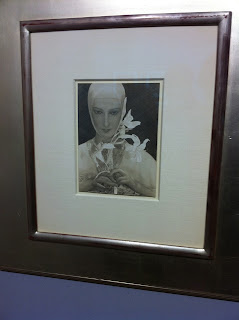
Baron Adolph de Meyer at Robert Klein


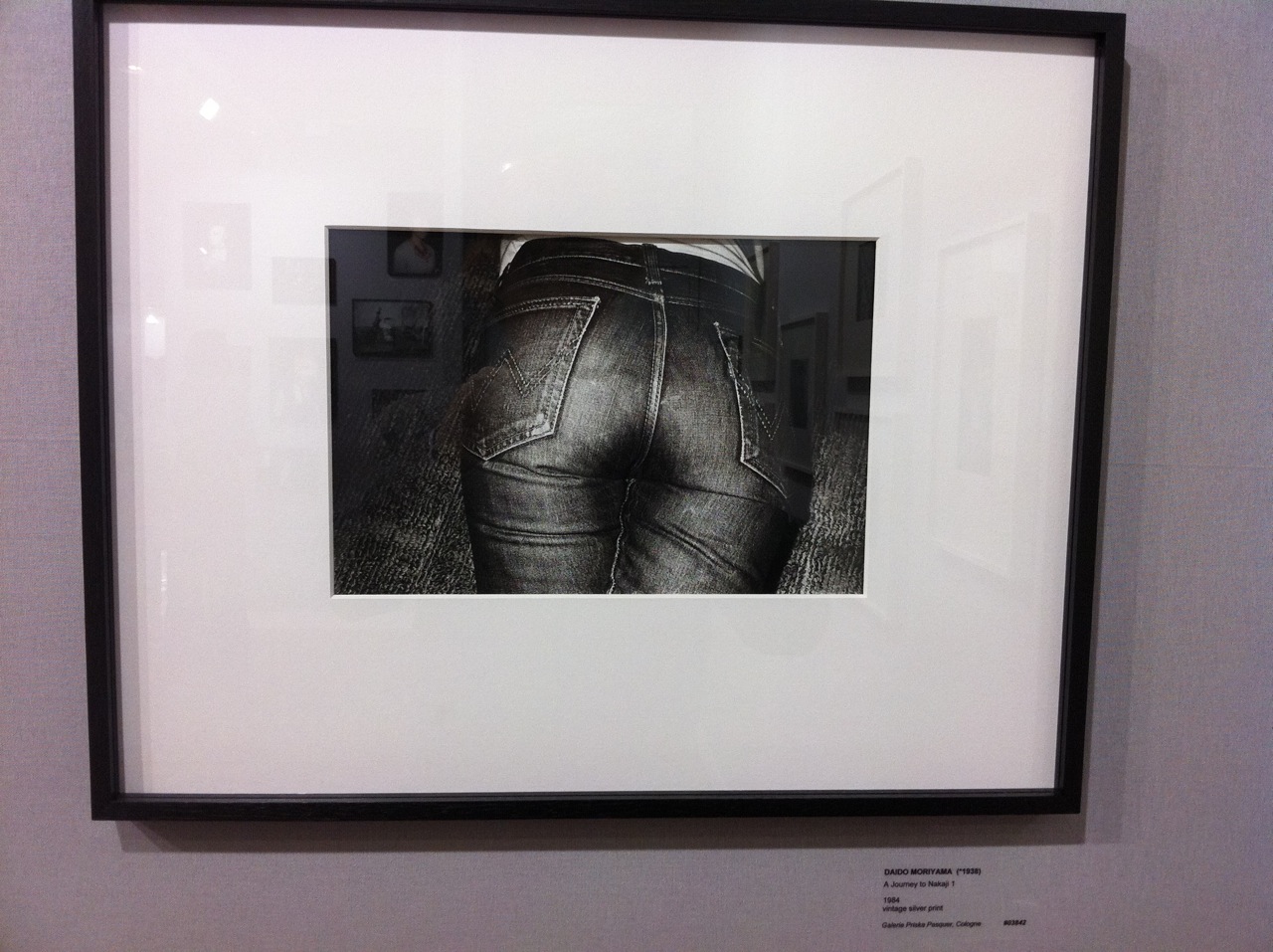
Daido Moriyama at Priska Pasquer


Margaret Watkins at Robert Mann


V. Dijon at Robert Hershkowitz

Ruud van Empel at Flatland
.

Tina Barney and Lee Friedlander at Janet Borden. For those gallery folks out there who have heard me drone on about the tyranny of the standard white wall, check out the exuberant pink walls in this booth!

A fan in a gorilla suit at the Martin Parr book signing.
.
Walker Evans at Edwynn Houk


Hamiltons booth


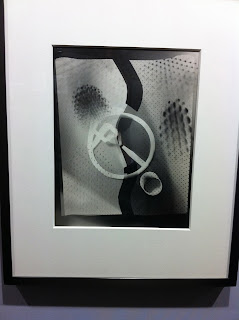
László Moholy-Nagy at Stephen Daiter


Toni Schneiders at Bernheimer

Sze Tsung Leong at Yossi Milo


Phaidon booth

Later this afternoon, I'll be posting Parts 2 and 3 of this series, a similarly eclectic gathering of pictures from some of the photo exhibitions around Paris during the fair.